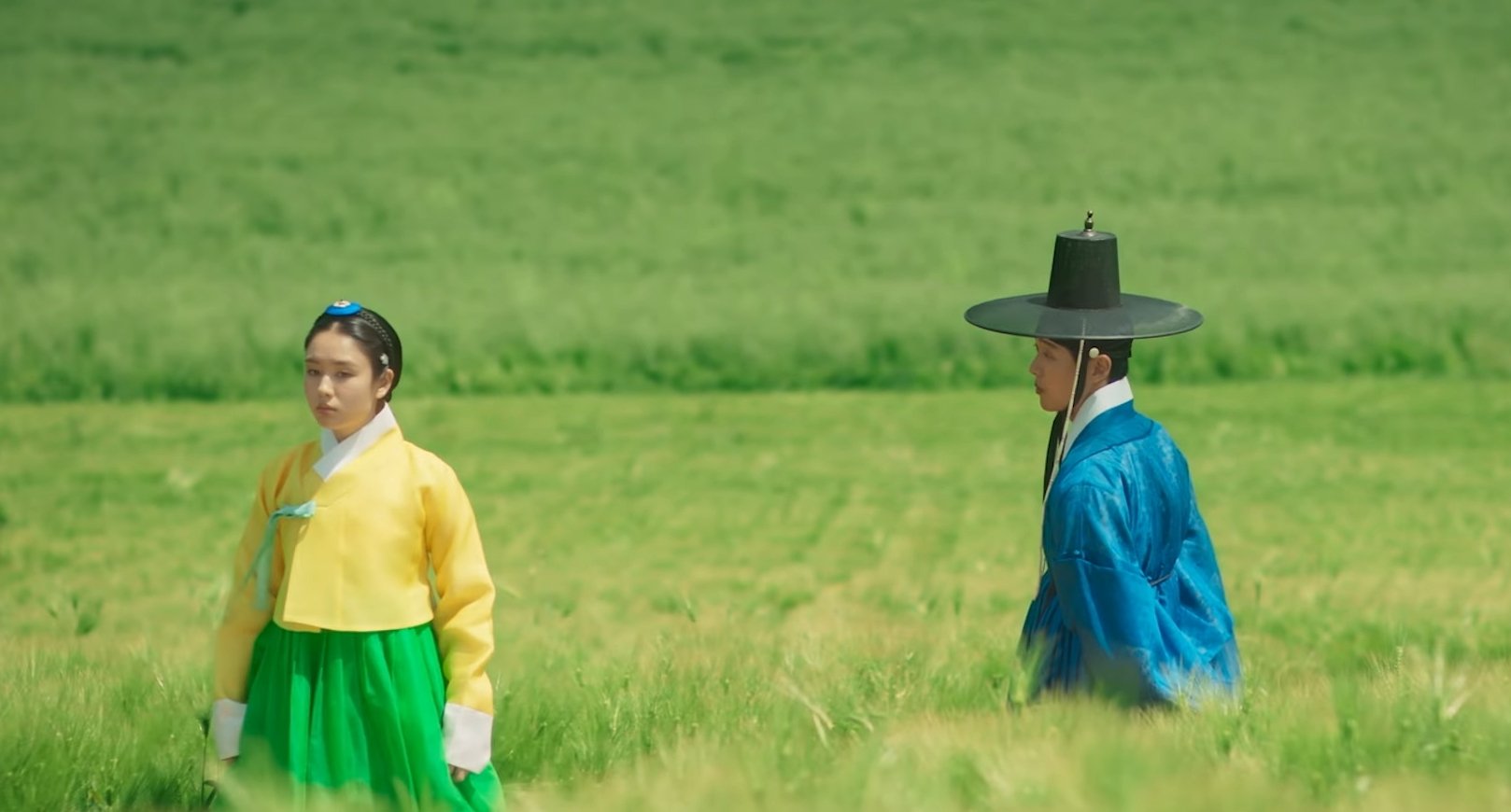
In the pale dawn of war, where smoke veils the sky like a heavy shroud and the soil is darkened by human blood, "My Dearest" stages not only the longing between two souls but also the existential memory of a nation’s resistance. Set in the late 17th century under the shadow of the Qing invasion, the series transforms the fragile structure of Joseon society into a psycho-sociological mirror through personal tragedies. The love it portrays is not a mere romantic sentiment – it becomes a strategy for preserving one’s identity, conscience and search for meaning amid historical destruction.
The narrative abandons the familiar linear structure of conventional romance and internalizes the temporal fractures of war, exile and survival. Its episodic rhythm – oscillating between remembering and forgetting – forces characters to confront their past traumas in their present choices. In this sense, the plot is a “psychological map of time:” the shadows of the past intervene, both implicitly and explicitly, in the decision-making of its characters. As the story unfolds, small gestures, glances and silences – deliberately placed by the writer and director – become illuminating; for in "My Dearest," the true carrier of meaning lies not in monologues but in the intermittent silences where inner conflicts surface.
The drama, while recounting a historical conflict, constructs a psychological cartography of love, loyalty, national identity and existential endurance. Starring Namkoong Min (Jang Hyun) and Ahn Eun-jin (Yoo Gil Chae), the series transforms their unreachable lives into symbols of both personal fate and collective sorrow. Its visual precision and poetic dialogue elevate "My Dearest" into one of the most artistically and thematically distinguished works in Korean television.
In the pale morning of war, where smoke covers the heavens and blood stains the earth, "My Dearest" becomes a stage upon which not only two people’s longing but a nation’s collective memory unfolds. It redefines love – not as a decorative romantic motif, but as an act of self-preservation, a way to protect one’s identity, faith and conscience amid ruin. Jang Hyun’s hidden reckoning with his past and Yoo Gil Chae’s resistance between pride and affection reflect both personal trauma and collective memory. Through this dialogue between individual emotion and social identity, "My Dearest" reminds us that even in humanity’s darkest hour, to love is to resist.
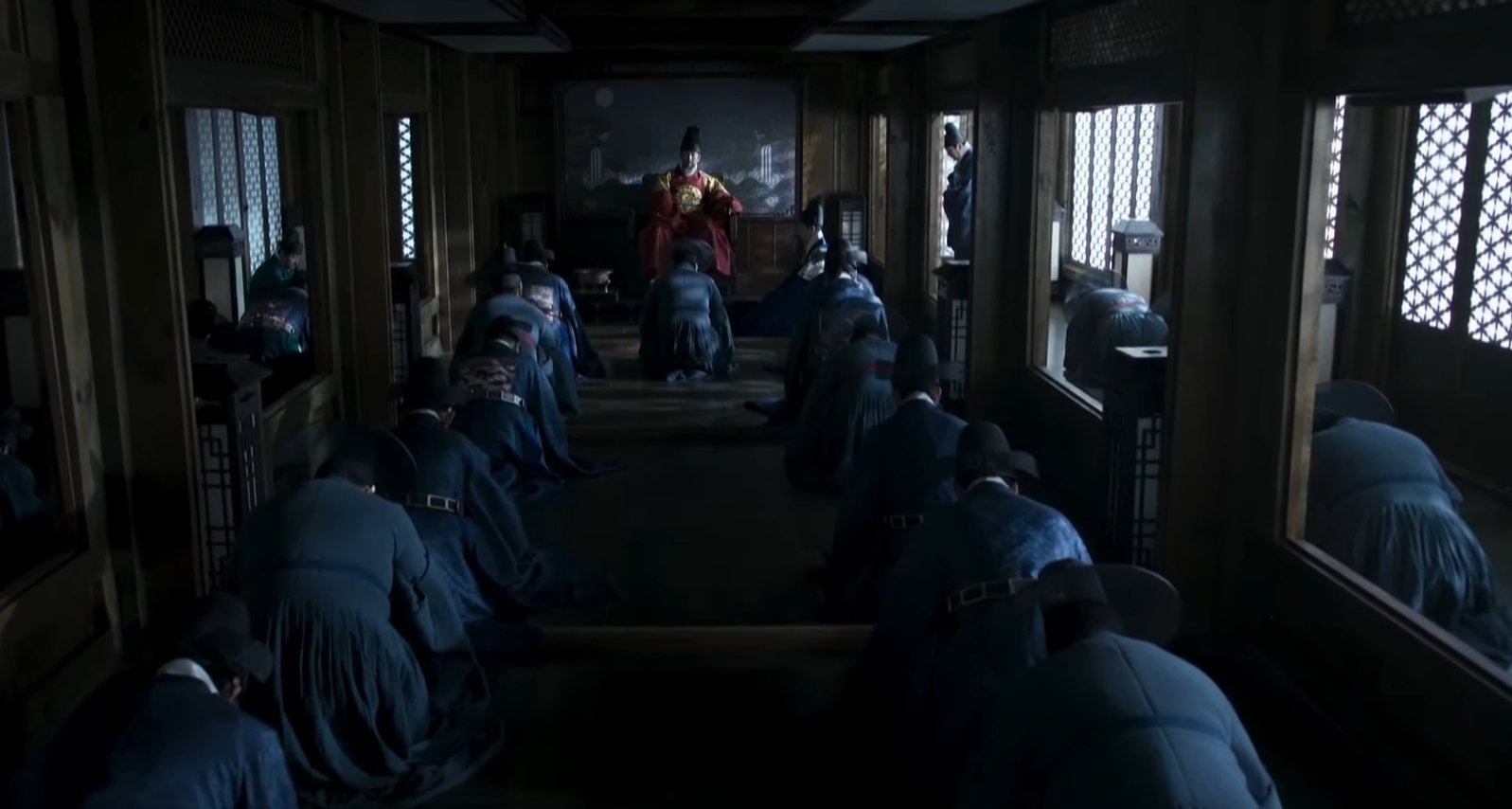
Jang Hyun’s silence, filled with unresolved reckonings, becomes a symbol of both personal trauma and a suppressed national conscience. His emotional detachment is a survival mechanism – his calm expression the quiet manifestation of war’s deforming effect on the soul. In contrast, Yoo Gil Chae embodies a woman confined by patriarchal order, waging a war between love and dignity, sacrifice and selfhood. Her transformation is not merely personal maturation but a process of historical subjectivity; an emergence into agency.
At the intersection of these two figures, "My Dearest" shows how personal affection intertwines with national identity and individual mourning merges with collective trauma. The heart ceases to be a refuge and becomes the most fragile site of memory – shaped by passive-aggressive echoes of cultural loss. Every moment of intimacy is simultaneously a reenactment of cultural fracture. In this permeability between the inner world and the historical context, love ceases to be an escape; it becomes the most aesthetic form of resistance. Within that resistance, each character rises again from their ashes; for in the world of "My Dearest," to love is the final act of remembering and remembering is the last form of being human.
In "My Dearest," war destroys not only the world outside but also the inner landscapes of its characters. Every explosion, every scream leaves an echo within the psyche; memory bears a heavier burden than time itself. Thus, the series treats trauma not as a wound but as a mode of remembrance.
The unconscious of its characters is haunted by ghosts wandering through the ruins of repression. Behind Jang Hyun’s every faint smile lies a defiance of death; in Gil Chae’s gaze lingers the cold hand of the past. Their emotional rhythm swings like a pendulum between denial of loss and persistence of hope; a dance of repression and projection. In Freudian terms, they seek in each other the lost fragments of themselves.
The postwar mood – a kind of “melancholic mourning” – acts as a leitmotif throughout. Freud defined melancholia as the guilt that turns inward when one loses a beloved object; here, that guilt evolves into both a personal and national trauma. The historical memory of Korea – marked by invasion, loss and rebirth – becomes a living metaphor inscribed into the psychological map of the characters.
Jang Hyun: Stranger at edge of being
At the heart of the story stands Jang Hyun, a man who conceals his emotions even amid the chaos of war, his past veiled in mist. At first, his calm, almost indifferent demeanor appears to reflect charisma; yet beneath it lies the awareness of absence, a mask for existential void. The scene in which he walks among the corpses after the Qing invasion marks his symbolic breaking point. It recalls Sartre’s notion: “Existence begins when being becomes aware of its own nothingness.” The emptiness in his eyes evokes the unbearable weight of being human on the threshold between life and death.
Psychologically, he embodies Heidegger’s Dasein, a being thrown into the world, seeking to comprehend its existence amid the absurdity of war. Every life he saves becomes an act of atonement, echoing Freud’s “repetition compulsion” – the drive to reenact trauma not to heal it but to understand it.
His love for Yoo Gil Chae is therefore not mere passion but a longing for purification. In her, he seeks redemption, innocence and perhaps the restoration of his own fragmented past. Yet love, for him, is no salvation; it only mirrors the void at his core. Throughout the series, Jang Hyun’s identity oscillates between ethics and desire, duty and guilt; his story is a reflection of the soul that seeks meaning even when it has become its own shadow.
Yoo Gil Chae: Harmony of pride, love
Yoo Gil Chae exists within the narrow confines of social expectations, a woman bound by patriarchal order amid war. Her journey carries both the gravity of love and the weight of pride. In the early episodes, when she says, “A woman’s heart must remain silent even in war,” she is in fact suppressing her very existence. Yet as the story progresses, her silence transforms into defiance.
One of the most striking scenes comes when she learns that Jang Hyun is presumed dead. Her frozen expression fractures, embodying Aristotelian pathos – the emotion that both overwhelms and purifies. She enters a liminal state between grief and love, honor and surrender. Her tears in that moment signify not merely loss, but the rediscovery of selfhood.
Psychologically, Gil Chae embodies the search for existential autonomy. Echoing Kierkegaard’s belief that “to be an individual is to stand alone before God,” she learns to exist beyond social approval and the traditional role of womanhood. In losing the man she loves, she finds herself; in loving him, she redefines who she is.
Her character arc follows three psychodynamic phases: repression (hiding her emotions behind pride), conflict (the tension between social identity and inner desire) and acceptance (embracing love as a shameless act of being). Her silence in the final episodes signifies not repression but the serenity of wisdom. She transforms love from sentiment into philosophy – from surrender into resistance.
Two poles of love: Between Eros, Thanatos
The psychological axis of "My Dearest" unfolds between Freud’s two primal drives: Eros (the life instinct) and Thanatos (the death instinct). Jang Hyun’s oscillation between life and death represents Thanatos’s silent call, while Gil Chae’s steadfast grip on love, honor and hope embodies Eros’s rebirth. The series stages its conflict through the language of passion.
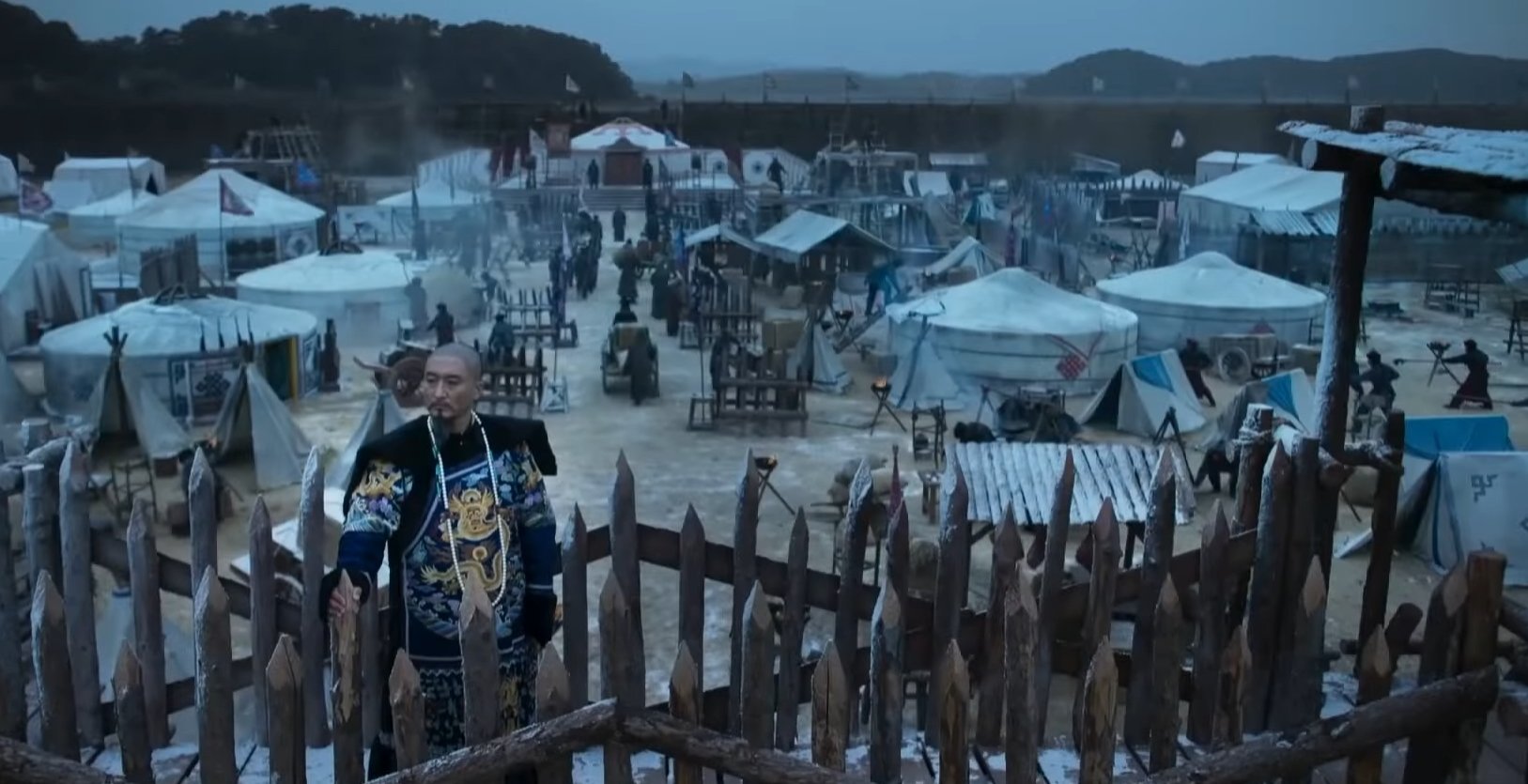
When Jang Hyun risks his life to rescue Gil Chae from a village swarming with Qing soldiers, his act is not mere heroism – it is an aesthetic flirtation with death. Beneath his courage lies the allure of self-destruction; for sometimes, one finds meaning in the very person one is doomed to lose. Philosophically, this mirrors Nietzsche’s Amor fati – the love of one’s fate. Jang Hyun’s repeated returns are not acts of surrender but of conscious acceptance.
One of Korea’s most accomplished television actors, Namkoong, elevates contemporary screen acting to a new level with his performance in "My Dearest." His work in the series serves as a lesson in the very meaning of acting itself. With disciplined grace, an intimate connection to his character and an ability to charge silence with dramatic depth, Namkoong delivers a rare integrity seldom found in modern Korean television.
While many actors merely express emotions, Namkoong shapes, conducts and refines them, transforming feeling into a story engraved within the audience’s heart. In his hands, "My Dearest" transcends its narrative framework, becoming an emotional composition that surpasses the boundaries of cinematic language.
His portrayal of Lee Jang-hyun is not that of a historical hero but of a man defined by the fractures of his inner world. Namkoong does not simply play this character – he constructs him with precision, balancing emotion and restraint with almost mathematical discipline.
"My Dearest" is more than a visually stunning period drama; it is an introspective journey through the human spirit, tested by war, loss and love. At the center of this odyssey stands Namkoong, offering not just a character but the anatomy of a soul. The most striking quality of his performance lies in how he externalizes internal intensity without ever tipping into excess. A glance, a breath, or a pause is enough to command the entire scene.
From an acting discipline perspective, Namkoong redefines the Stanislavskian method of internalization through his own distinct aesthetic. Every emotion in his performance is deliberate, yet none feels artificial. His micro-expressions, controlled body language and finely tuned vocal tone subtly reveal the character’s inner state – not through exposition, but through presence. It is this mastery that makes him the “invisible architect of emotion” in Korean television.
By imbuing Lee with a keen sense of historical consciousness, Namkoong deepens the role’s dramatic texture. He weaves the sociopolitical tensions of the era into the layers of personal tragedy. The result is a performance that transcends mere storytelling and becomes a cultural narrative medium.
His transitions between scenes, his command of emotional tempo and the psychological continuity he sustains throughout the series reflect a kind of craftsmanship rarely achieved. His on-screen presence never feels forced; instead, it exerts a quiet gravitational pull that draws the viewer in effortlessly.
Namkoong’s approach in "My Dearest" merges the internalization of the Stanislavski method with the understated elegance of Korean performance aesthetics. He resists the temptation to portray an outward hero; instead, he focuses on the internal fractures of a man caught in the existential struggle to survive amid war.
The defining elements of his acting are emotional control and the rhythm of expression. He deliberately lowers his vocal tone, allowing each word to linger in the air like an echo. This measured slowness carries the invisible weight of the character’s exhaustion. In some scenes, a single breath or a subtle narrowing of the eyes conveys more meaning than an entire monologue.
Namkoong’s mastery of micro-mimicry transforms his close-ups into internal soliloquies. Every subtle movement of facial muscle captures a fragment of emotion. In cinematic terms, this can be described as “controlled emotional fragmentation” – revealing not the entirety of feeling, but its distilled essence.
Visually, "My Dearest" is defined by its sophisticated balance of light and shadow. Within this aesthetic space, Namkoong exists not as a mere figure but as a visual heartbeat. Director Kim Sung-yong centers his inner energy within the frame, ensuring the audience’s gaze never drifts away.
The camera converses with him. In close-up shots, his face becomes a map – the creases of silence trace the scars of memory, and his eyes reflect the uncertainty of an unpromised future. Here, the actor performs not only through dialogue but through cinematic awareness. Each frame completes itself through his gestures; each shadow echoes the emotional undercurrent.
Lee Jang-hyun represents both the devastation of a war-torn nation and the rebirth of a soul through love. Namkoong manages this duality with remarkable finesse, embodying both the stoicism of a soldier and the fragility of a lover within a single physical presence.
One of the most impressive aspects of his work is his commitment to psychological continuity. The emotional arc that unfolds over 20 episodes is meticulously structured. The guarded composure of the early episodes slowly yields to inner surrender as the story progresses – a transformation that demonstrates exceptional sensitivity to character timing and emotional architecture.
Namkoong’s performance carries a philosophical undertone that transcends the dramatic. In his craft, silence is not absence – it is the purest form of presence. This reflects the timeless wisdom of Eastern theatre: “say little, feel deeply.” He bridges that philosophy with modern cinematic realism, achieving an emotional stillness that resonates beyond the screen.
Watching him is not merely witnessing an actor perform; it is observing the quiet labor of a human soul in motion. Thus, "My Dearest" emerges not just as a historical drama, but as a cinematic poem – a mirror reflecting the inner landscapes of humanity.
Throughout the series, silence speaks louder than words. Trauma finds expression not through speech but through bodies, glances and pauses. In the postwar scenes, the long silences mark moments where words can no longer carry meaning; where language yields to the unspeakable.
These silences echo Wittgenstein’s dictum: “Whereof one cannot speak, thereof one must be silent.” In "My Dearest," silence is not retreat but wisdom. When Jang Hyun gazes at Gil Chae without touching her, the audience is transported to a depth beyond words; for feeling has surpassed language itself. Thus, the series communicates not only through dialogue but through the philosophy of silence.
In the final scenes – war ended, yet the inner wars unhealed – "My Dearest" crystallizes its central message: to love is to remember and to remember is the noblest form of survival. Jang Hyun’s lingering glance and Gil Chae’s serene acceptance are not endings, but acts of spiritual restoration.
Camus once wrote, “Man’s tragedy is his search for meaning in an absurd world.” "My Dearest" aestheticizes that search through love. In the transformation of affection lies an ontological resistance: an act that affirms life amid death, turning the fragility of existence into beauty.
"My Dearest," with its psychological depth and philosophical foundation, presents love as both emotion and cognition. Jang Hyun becomes the emblem of a man seeking himself in war; Gil Chae embodies the grace of loving without losing identity; the art of being. Their story is not merely of two hearts, but of consciousness itself, tested at the edge of humanity.