A serious claim could be made that "Eugene Onegin," by the 19th-century Russian poet Alexander Pushkin and for which he drew on his life experiences, is the best literary work of all time. However, for the recently released Russian biopic on Alexander Pushkin, "The Poet," which is obviously about his life experiences, a claim, unfortunately, could not seriously be made that this is even one of the best films released in 2025.
As a great fan of Pushkin, I was disappointed to find that this film, a musical directed by Felix Umarov, while not a disaster, fails in conveying a real sense of the genius of the poet to the audience.
Although it is normally a major faux pas on the part of a film reviewer to give away the whole of the plot of a film, I am purposefully going to do so in this case. My reasons are that, in being based on Pushkin’s life, the film reveals nothing that is not already known, and that, as far as I can see, the film has not reached a wide audience, at least in Türkiye, and thus the reader may wish to have a full overview of what it contains.
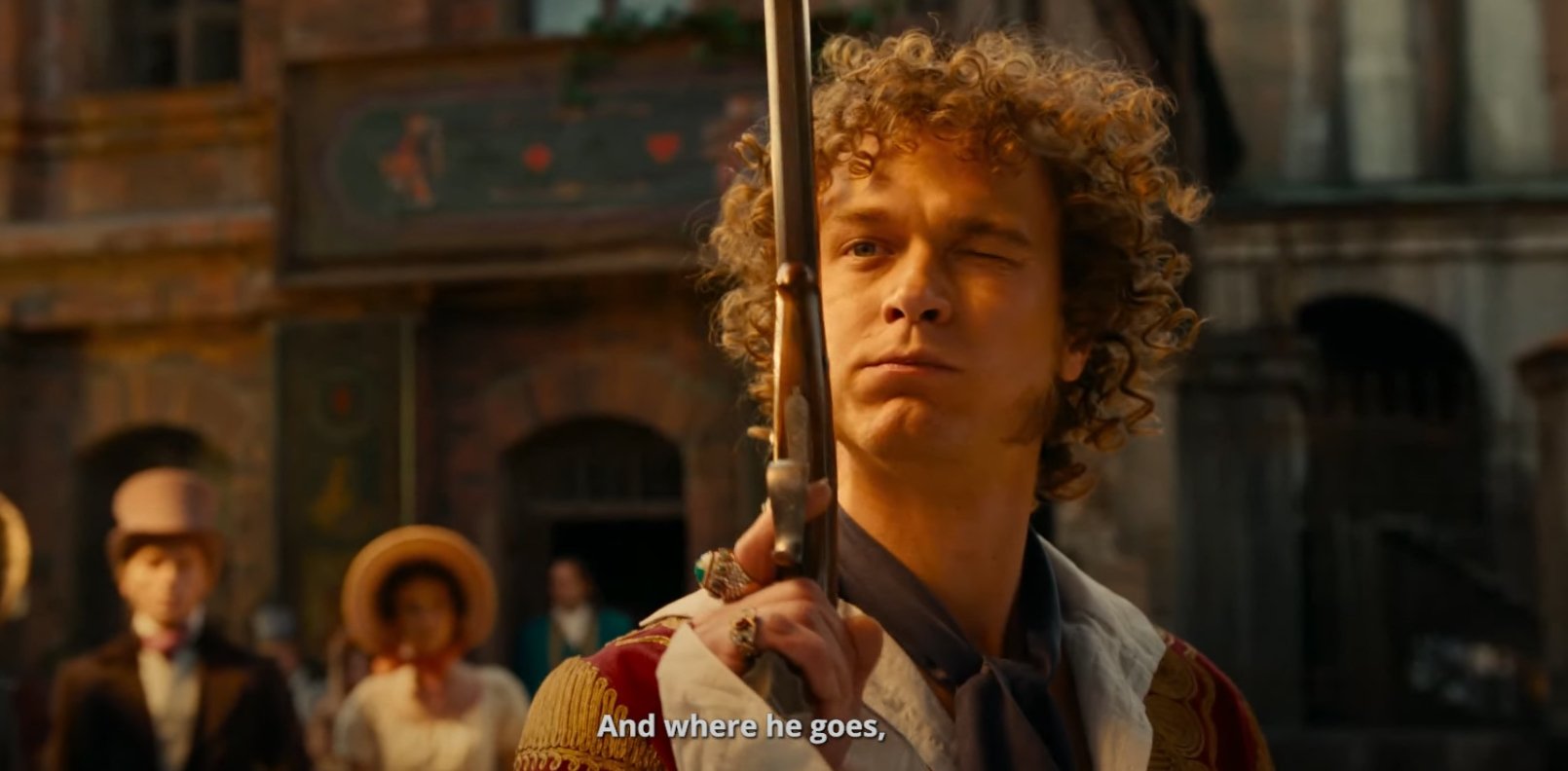
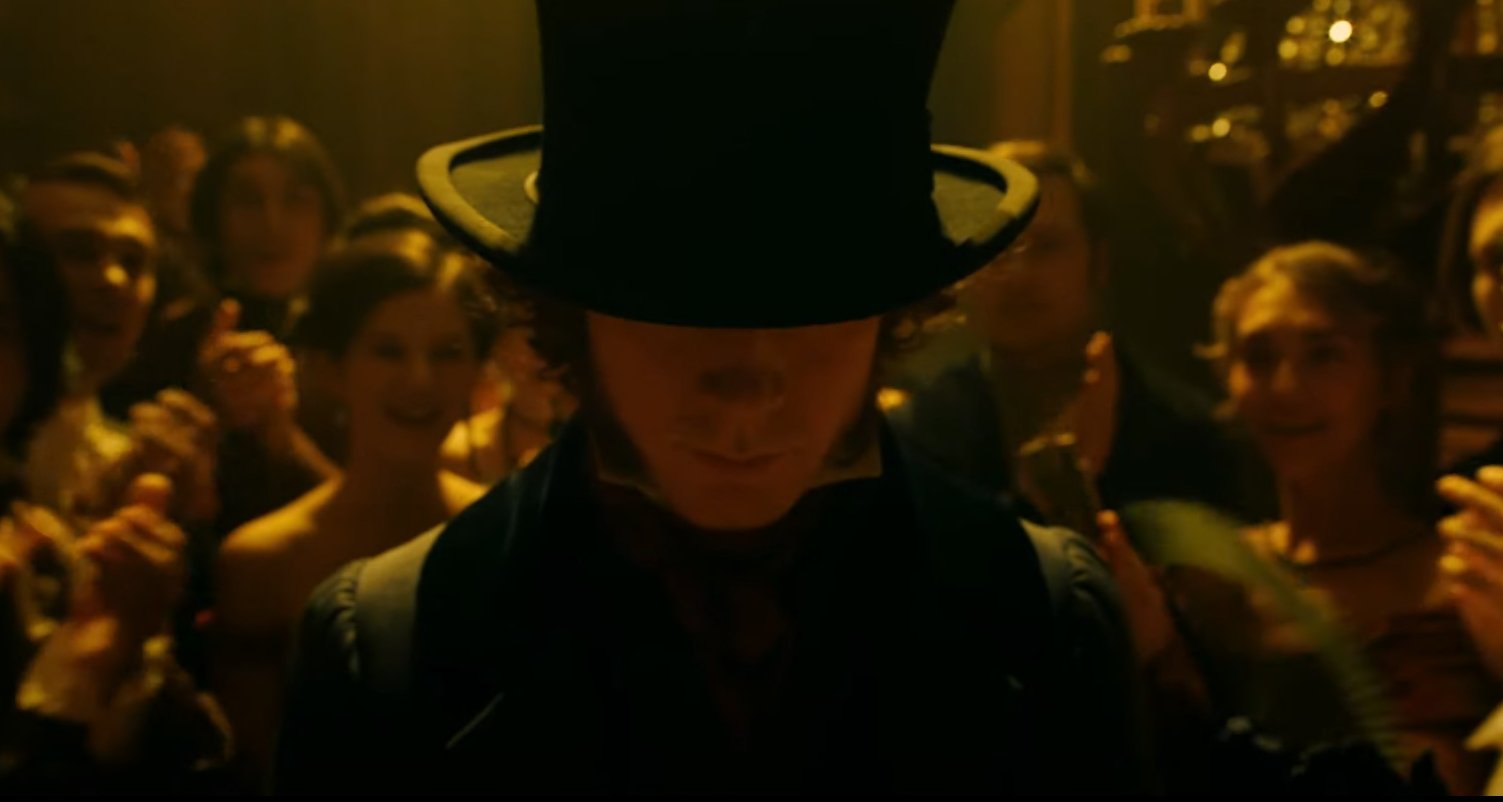
The film opens with a bookshop in 19th-century Saint Petersburg, the then-capital of Russia, with crowds of book buyers eager to snap up Pushkin’s latest work, setting up how great a literary star Pushkin was in his own lifetime. It then jumps back to 1814, when Pushkin, played here by Kay Aleks Getts, is a teenage student at the lyceum set up by the Tsar Alexander I. Pushkin here is shown as a boy who justifies a later description of him by a fortune-teller as “wild” souled. This teenage Pushkin verbally challenges, through a rap battle, his teacher and physically challenges a fellow school boy with whom he fights a non-lethal duel. His unbridled nature is not unruliness, though. The film sets Pushkin up as a devotee of freedom, who bristles at the discipline of the school.
At school, Pushkin is also revealed to be a failure in terms of academic achievement, and his teacher tells him that he is “lazy and talentless.” Talentless he is not, though, for his poetic ability has already manifested itself, and he even, once again, through rap, impresses the aged Gavril Derzhavin, the greatest living Russian poet of the time, who pays a visit to the lyceum.
Then the film switches time and actors, Pushkin from henceforth is portrayed by Yura Borisov, bringing us forward a few years to Pushkin in Saint Petersburg, where the young poet, with his friends Ivan Pushchin (Ilya Vingororsky) and Konstantin Danzas (Roman Vasiliyev), revels in the night life that the city has to offer, while increasingly making his mark on society as a poet.
There is then a powerful scene of the meeting of a highly inebriated Pushkin with a fortune teller played by Polina Kutepova. She cryptically foretells certain events that will befall the poet, but most significantly, she tells him that he has the choice of “happiness” or of “death and immortality.”
Pushkin is then arrested for what to the authorities is his unacceptable verse and is to be exiled, though his already not inconsiderable contacts prevent this from being in frozen Siberia. He is sent to the mild south of the Russian Empire instead. Here he meets his first serious romantic encounter, the married Elizaveta Vorontsova (Anna Chipovskaya), who inspires him with the example of Lord Byron to be more adventurous. The two decide to run away to Western Europe, though Elizaveta backs out on the night they were to leave. Her jealous husband assaults Pushkin and has him sent to far-off Mikhaylovskoe, Pushkin’s rural estate, instead.
In his study in his home, a weirdly fantastic scene takes place in which Pushkin is engulfed by some of the key themes in his poetry, such as the "Bronze Horseman." Then he is visited by Pushchin, who tells Pushkin that “he has lit the flame of freedom” in Russia. However, it is Pushchin who is going to be burned by it, for returning to Saint Petersburg alone, Pushchin plays a leading role in the Decembrist Revolt, which in 1825 attempted to make Russia a constitutional state, but which was crushed by the new tsar, Nicholas I.
Pushkin is shown as wishing to follow in the sled tracks of Pushchin, but he is turned aside by a superstitious omen. Pushkin is then, though, brought back to Saint Petersburg on the behest of the newly triumphant tsar, Evgeny Shvarts. The meeting of the autocrat and the poet is tense and involves a rap battle, but Pushkin displays his fundamental integrity by telling the tsar when questioned on it that had he been in the capital at the time, he would have been with the Decemberists.
Pushkin resumes his old life in Saint Petersburg, but soon encounters Natalia Goncharova (Alonya Dolgolenko), whom he is so smitten with that he declares, “To hell with poetry.” Natalya’s mother, knowing of his unsavory reputation, disapproves of Pushkin, though, and he is only able to overcome this by getting an official certificate declaring his “honorable character” from the tsarist authorities. The scene in which Pushkin goes to them for this being another rap battle.
Pushkin marries Natalya, and they are initially happy together, as evidenced by their growing family. They retire to Mikhaylovskoe, but then Natalya prevails upon Pushkin to bring them back to Saint Petersburg. Here, though, everything starts to go wrong. Pushkin has to take a demeaning position with the tsar because he is so badly in debt. Natalya is pursued by a French officer named George-Charles d’Anthes (Florian Desbiendras). In the end, this causes Pushkin to become so unhinged with jealousy that he challenges d’Anthes to a duel.
In a snowy field, the fateful duel is fought, both men hitting the other, though d’Anthes’ wound is simply in the leg, whereas Pushkin is hit in the stomach. He returns bleeding to his home, where there is an emotional scene between him and Natalya. With his impending death, the mist of jealousy is dispersed, and Pushkin is able to clearly see her for the loyal partner that she has been. The scene in which she confronts his actual death is also moving.
The film ends with the appearance of Mikhail Lermontov (Ivan Zlobin), who can justly be regarded as Pushkin’s heir.
The film depicts well the difficulties Pushkin faces as a poet. Early on, he exclaims that a poet can't live on his work in Russia and that he has to have other employment. At that time, true, his extravagant lifestyle explains his constant debt. Then, although he has married the woman of his dreams, and, as alluded to above, even disavows poetry in his initial infatuation with her, Pushkin turns out never to be able to fully commit to her, for he has divided loyalties between his calling and Natalya. This leaves Natalya feeling somewhat extrinsic and causes her to fatefully persuade Pushkin to return to Saint Petersburg.
The film also shows the tense relationship between the poet and authority. This is not only evidenced in Pushkin’s exile, but also when Nicholas I prevails upon Pushkin to write something on Peter the Great that will please him, and that Pushkin cannot do in the way desired. Moreover, within wider Russian society, we see Pushkin as a subject of mass adulation, but we also see him later on suffering from its fickle taste.
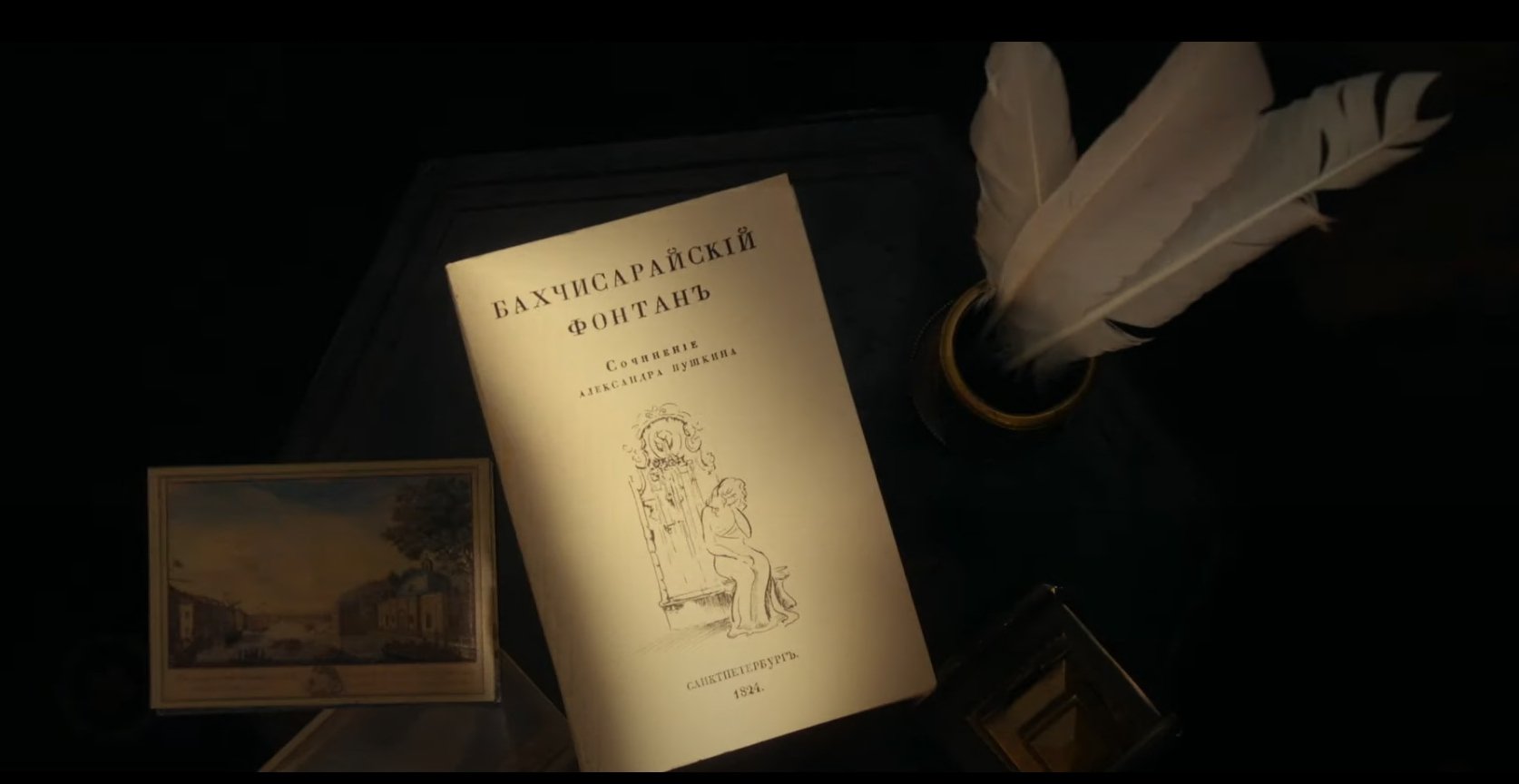
In one sense, the film depicts Pushkin well. He comes across as fiery, headstrong and at the mercy of his own emotions. It also shows his keen interest in women and gambling, and we can see the outline of his famous life. The main problem that I have with the film is that this is simply insufficient. It is all effectively external. Viewers of the film do not really get to see Pushkin the poet at all. For instance, save for the slogan of “freedom,” we do not see what inspires him to be a poet, and we are not shown the complexity of conception that goes into his poetry. Similarly, throughout the film, references are made to new publications by Pushkin, but the inspiration for them is left unrevealed. As an example, in the middle of the film, Pushkin’s “Fountain of Bakhchisaray” is mentioned. However, from the film, the viewer could not know that this poem was inspired by Pushkin’s visit to the actual Crimean site of this famous fountain while in exile.
What is even more inexplicable is that the film omits perhaps the most significant contextualization of Pushkin. His English contemporary, William Wordsworth, declares that “the child is father of the man.” This expression is now usually understood to mean that to understand a person, one needs to know the familial and other circumstances in which they were formed. This seems especially true if that person’s childhood has been a difficult one. That is the case with Pushkin, and I will go into some detail to explain how much is lost in the film by omitting this.
The biographer of Alexander Pushkin, Elaine Feinstein, notes that “the character of Alexander Pushkin was formed in a childhood of such neglect and disorder that in later life he described the experience as ‘intolerable.’” The most distressing element of Pushkin’s childhood is the relationship he had with his mother, whom Feinstein reveals “took against him quite early.” Feinstein thinks that the reason for his mother’s hostility can be found in Pushkin’s appearance. For, as she notes, “unlike her other children, Alexander had pronounced African features.”
Pushkin’s mother was the granddaughter of Abram Gannibal, an African slave brought to Russia from Istanbul who became a favorite of the tsar and was eventually ennobled. Ganibal’s son, the father of Pushkin’s mother, had a very difficult relationship with his daughter. Thus, it may not have been colorism that caused Pushkin’s mother’s dislike of her son, with Feinstein speculating that it may be a reflection of traumatic associations of her own.
Whatever the case, Pushkin himself was proud of his African heritage. Yet, it also gave him an awareness of being different. Thus, his race also played a role in his self-definition. It is possible that the film touches on this issue with Pushkin. In the film, he is twice called a “monkey,” which, to me, would seem a clear racist insult and an allusion to Pushkin being mixed race. However, in the film, the actors that play Pushkin are white, and this insult is all that I saw concerning Pushkin’s heritage. What is more, it is possible I have even misread this, for my Russian is very limited, and although this word would be a racist insult in English, it can be used in Turkish, for instance, as an insult without racist overtones.
His father, though he could be harsh, was a feckless individual and had less of an impact on Pushkin. It is, however, surely due to this hostile family environment that Pushkin turned inward and, as Feinstein puts it, “the extraordinary precocity of his mind and imagination began to appear.” Pushkin was helped to feed this by the extensive library of his father, which enabled the boy to become familiar with Western European literature. It is also to be noted that the Pushkin family, like other noble Russian families, spoke French rather than Russian at home.
Then there is another significant side to Pushkin’s early life that is missing from the film. Pushkin’s early life was not wholly destitute of affection. He was loved by his maternal grandmother and by his nanny, Arina Rodionovna. The former is the one who taught him to read and write Russian, and the latter, although illiterate, was an extremely important figure in the development of Pushkin as a poet. In his early years, she fed him with stories and folklore and connected him to the land and traditions of Russia.
This influence, intermixed with that of Western European literature already mentioned, laid the basis for what makes Pushkin such a phenomenal poet. He is able to own dichotomies and not be bound by either side of them. Although almost a half a century after Pushkin’s death, attempts were made to own Pushkin by the pro-European Ivan Turgenev and on the other side by the Slavophil reactionary Fyodor Dostoyevsky, he is really neither and both, for he does not fit into a single easily-defined tradition, but brilliantly forges his own.
In the film, though, the above-mentioned elements in Pushkin’s life are missing. And their absence makes Pushkin a less understandable figure. As an example, were his relationship with his mother had been made clear, his uneasiness with other women in the film would have been rendered much more explicable.
Moreover, for the adult Pushkin, his complexity as a poet, which I have mentioned in terms of cultural traditions but which is far more encompassing, is also missing. Yet, it is his complexity that makes him such a great poet. For instance, the film does show the hedonistic attractions that a night out in Saint Petersburg has to offer. Pushkin certainly was fully responsive to these, as the film clearly shows. Yet, this only presents a partial understanding of Pushkin, who, as his writing reveals, in addition to reveling in hedonism, is also aware of its fundamental vacuity.
And in the political realm, while Pushkin was certainly a devotee of freedom as the film particularly stresses, he is also more complex than that. His poem, “The Bronze Horseman,” on Peter the Great, the Westernizing tyrant tsar of Russia, shows that within Pushkin there is perhaps a coexisting tendency towards authoritarianism. This is presumably the reason why, even though Pushkin had close connections with the Decemberists, he was never taken into the heart of their conspiracy.
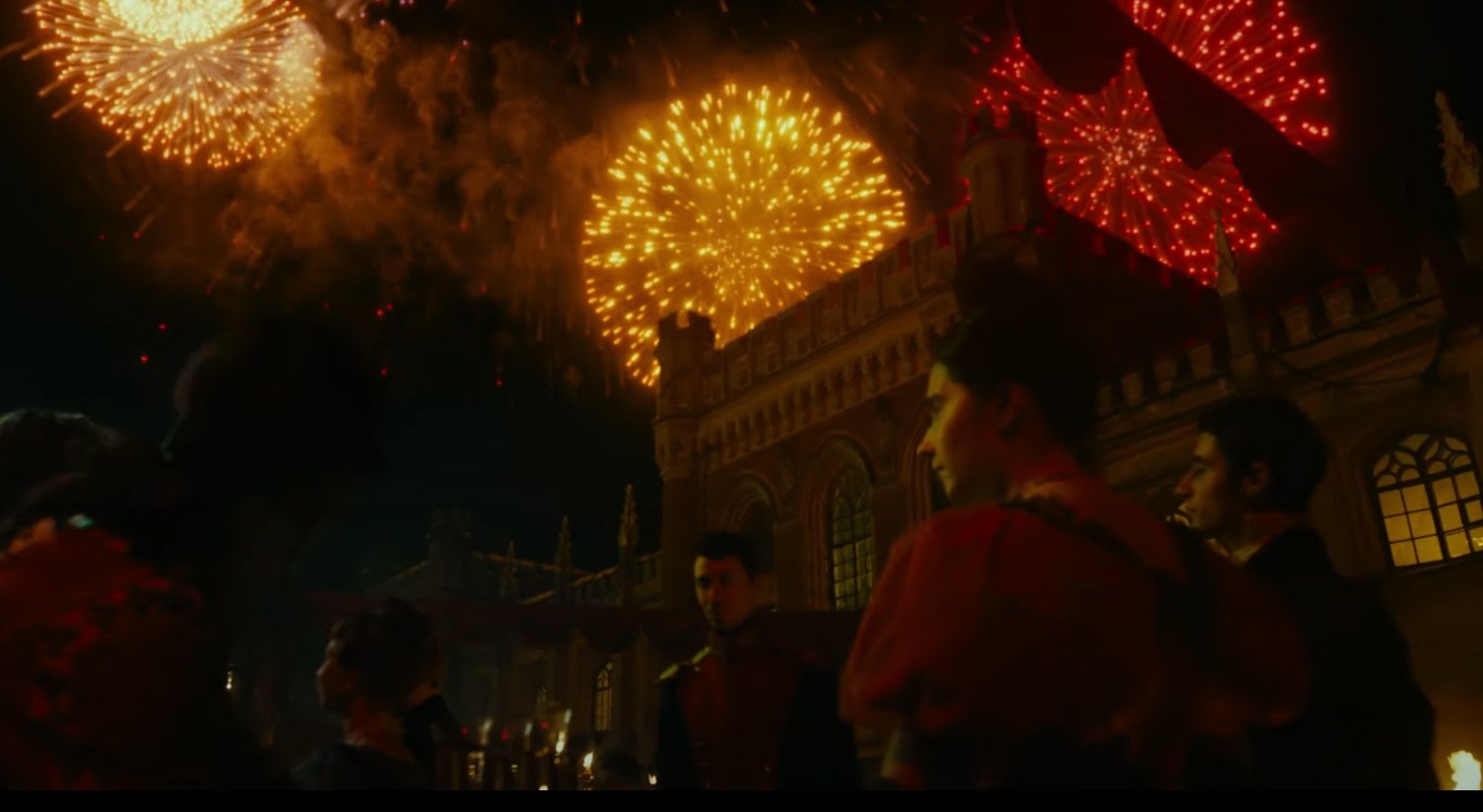
As concerns other elements in the film, as a non-Russian speaker, I cannot give any fair judgment on the use of rap by Pushkin in the film. It did take me by surprise, but the choreographed rap scenes are mostly, though not always, aurally and visually impressive. Indeed, the visual elements of the film are generally to be commended, especially the scenery, such as that of the beautiful architecture of Saint Petersburg under a crescent moon, or a glimpse of a Russian forest which is as evocative as an Isaac Levitan painting.
But due to the problems already mentioned, added to its also being oddly fast paced and yet relatively boring at the same time, unlike the inimitable poetic work of its subject, this film cannot be strongly recommended.
Review: 2¼ from 5