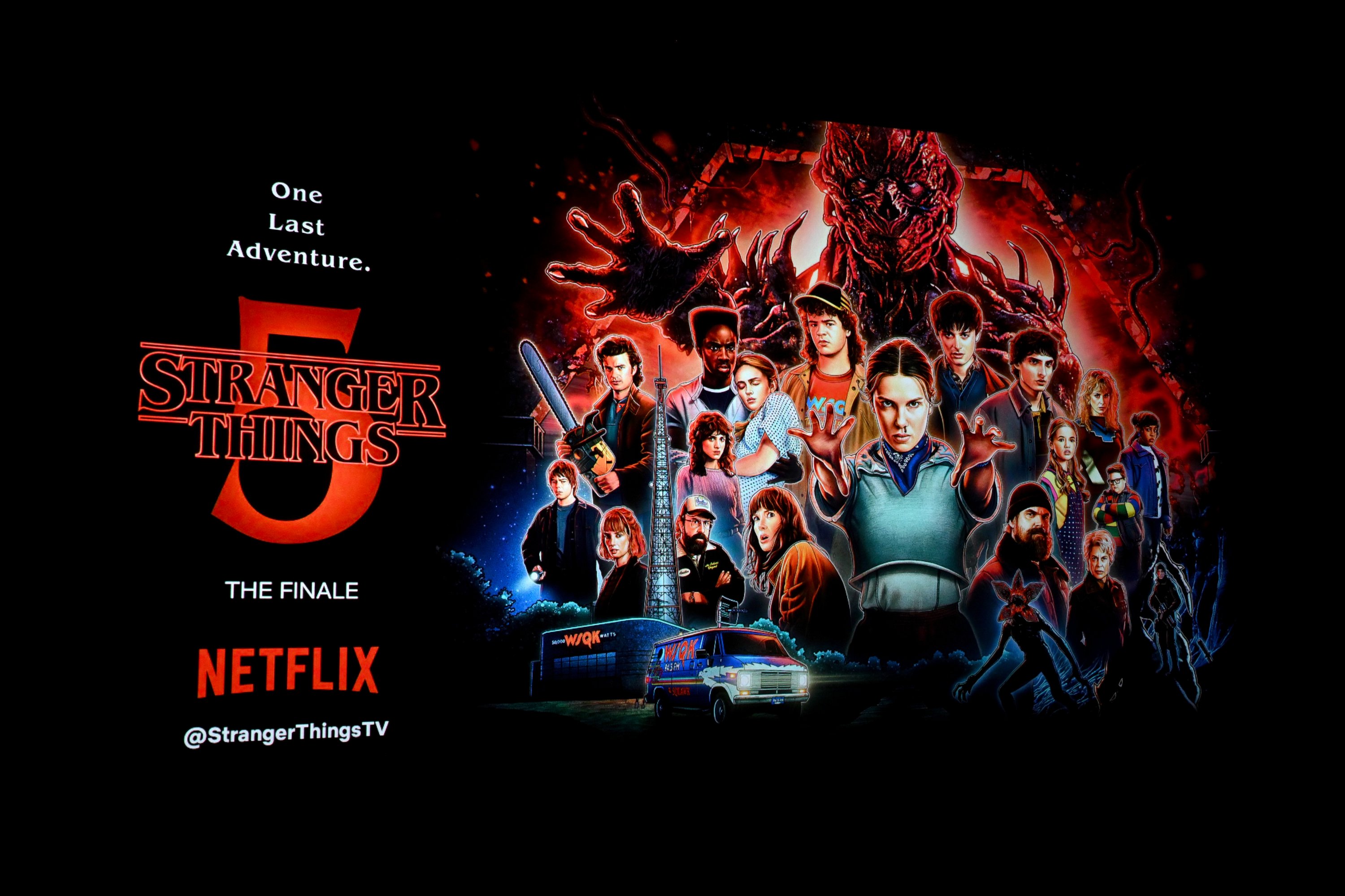
The world-famous Netflix series "Stranger Things" said goodbye to viewers with its final episode, creating a major reaction worldwide. Created by the Duffer Brothers, the series was inspired by the 1980s and built around monsters, parallel dimensions and the story of a small group of children. Although such global success was not expected at first, "Stranger Things" quickly became one of Netflix’s biggest productions, with every season highly anticipated.
Set in the fictional town of Hawkins, Indiana, the series starred Millie Bobby Brown, Winona Ryder and David Harbour. The story, which began in 2016, came to an end after nearly 10 years with a two-hour-long finale. The final episode was even screened in cinemas in the United States and Canada, showing how large the series’ impact had become.
The fifth season, in general, disappointed some fans due to its storyline and the relative lack of large-scale battle and action scenes compared with previous seasons. Many viewers believed that unanswered questions would be resolved in the finale, but this expectation was not fully met, emerging as one of the episode’s main shortcomings. These gaps, felt throughout the season, directly shaped expectations for the final chapter.
The children’s graduation and the idea that they reached a happy ending were warmly welcomed by audiences. However, the unclear fate of Eleven became one of the most discussed elements of the finale. According to a theory mentioned by Mike, Eleven did not actually die but was protected by her sister Kali and chose to make it appear as if she was gone. Some fans supported this theory, believing Eleven may have done this both for herself and for the others. Others strongly disagreed and argued that Eleven truly died. In my opinion, leaving the ending open-ended made the finale more effective by placing it in the audience’s imagination.
One of the strongest scenes in the final episode was, without a doubt, the moment when all the characters came together to fight the Mind Flayer. While this scene showed unity and determination, the Mind Flayer being defeated too easily became another point of criticism. Since the creature had been portrayed as extremely powerful in every season, many expected a longer and more strategic battle.
Scenes in which Henry confronted his fears and revisited the first murder he committed as a child carried strong emotional weight. Jamie Campbell Bower’s performance played a major role in making these moments impactful. Another emotionally intense scene was the farewell between Hopper and Eleven. Even though Hopper knew Eleven would put herself in danger, he had no choice but to respect her decision after her speech, creating a moment that felt very much like a real father-daughter goodbye.
During Eleven’s farewell speech inside Mike’s mind, however, Finn Wolfhard’s performance fell short of carrying the emotional depth of the scene. On the other hand, several performances throughout the finale helped strengthen the emotional tone of the story.
Showing the graduation of Mike, Max, Dustin and Will was another meaningful moment. For viewers who had followed these characters for years, it felt as if they were watching their own children or siblings graduate and move on to new stages of life. Ending the series where it began - with the children playing Dungeons & Dragons, followed by their siblings continuing the game - created a strong sense of nostalgia.
While the "Stranger Things" finale may have fallen slightly below expectations, it still offered a well-designed and visually strong conclusion. With its open-ended choices and unanswered questions, the series avoided giving clear answers and instead left room for interpretation.
This leads to a final question: Will "Stranger Things" be remembered for its ending, or for the journey it created over 10 years, the atmosphere it built and the bond it formed with its audience? If what remains after leaving Hawkins is not a perfect ending but the memory of growing up with these characters, then "Stranger Things" may have already fulfilled its purpose.