
Daily Sabah logo

Politics
Diplomacy Legislation War On Terror EU Affairs Elections News Analysis
TÜRKİYE
Istanbul Education Investigations Minorities Expat Corner Diaspora
World
Mid-East Europe Americas Asia Pacific Africa Syrian Crisis Islamophobia
Business
Automotive Economy Energy Finance Tourism Tech Defense Transportation News Analysis
Lifestyle
Health Environment Travel Food Fashion Science Religion History Feature Expat Corner
Arts
Cinema Music Events Portrait Reviews Performing Arts
Sports
Football Basketball Motorsports Tennis
Opinion
Columns Op-Ed Reader's Corner Editorial
PHOTO GALLERY
JOBS ABOUT US RSS PRIVACY CONTACT US
© Turkuvaz Haberleşme ve Yayıncılık 2025

Daily Sabah - Latest & Breaking News from Turkey | Istanbul

  • Politics
    • Diplomacy
    • Legislation
    • War On Terror
    • EU Affairs
    • Elections
    • News Analysis
  • TÜRKİYE
    • Istanbul
    • Education
    • Investigations
    • Minorities
    • Expat Corner
    • Diaspora
  • World
    • Mid-East
    • Europe
    • Americas
    • Asia Pacific
    • Africa
    • Syrian Crisis
    • Islamophobia
  • Business
    • Automotive
    • Economy
    • Energy
    • Finance
    • Tourism
    • Tech
    • Defense
    • Transportation
    • News Analysis
  • Lifestyle
    • Health
    • Environment
    • Travel
    • Food
    • Fashion
    • Science
    • Religion
    • History
    • Feature
    • Expat Corner
  • Arts
    • Cinema
    • Music
    • Events
    • Portrait
    • Reviews
    • Performing Arts
  • Sports
    • Football
    • Basketball
    • Motorsports
    • Tennis
  • Gallery
  • Opinion
    • Columns
    • Op-Ed
    • Reader's Corner
    • Editorial
  • TV
  • Arts
  • Cinema
  • Music
  • Events
  • Portrait
  • Reviews
  • Performing Arts

Serbia’s naive art tradition nominated for UNESCO heritage list

by Associated Press

KOVACICA, Serbia Dec 29, 2024 - 8:42 am GMT+3
Pavel Babka, gallerist and naive art expert shows painting of a horse-drawn cart and a yellow house dating back to Austro-Hungarian times in the village of Kovacica, Serbia, Nov. 28, 2024. (AP Photo)
by Associated Press Dec 29, 2024 8:42 am

Nearly a century ago, two farmers in an ethnic Slovak village in northern Serbia began painting to pass the time during the long winter months. Their art is now being considered for inscription on UNESCO's Intangible Cultural Heritage list.

The farmers' paintings and those of others from the village of Kovacica are what is known as naive art – a form that depicts everyday scenes, landscapes, village life and farm surroundings with a childlike simplicity.

With their bright colors and folk motives, the self-taught naive painters of Kovacica, about 50 kilometers (30 miles) northeast of Belgrade, Serbia's capital, have developed a unique tradition among the country's ethnic Slovak minority.

"Naïve art in Kovacica began in 1939 when Martin Paluska and Jan Sokol started painting,” explained Ana Zolnaj Barca, the head of the Gallery of Naive Art in the village. "They were farmers with only four grades of elementary school.”

Paluska and Sokol initially painted scenes they saw on postcards, such as Venetian gondolas or wild animals, explained Zolnaj Barca. But their art really bloomed over time, when they turned to their own surroundings rather than far-away lands, she said.
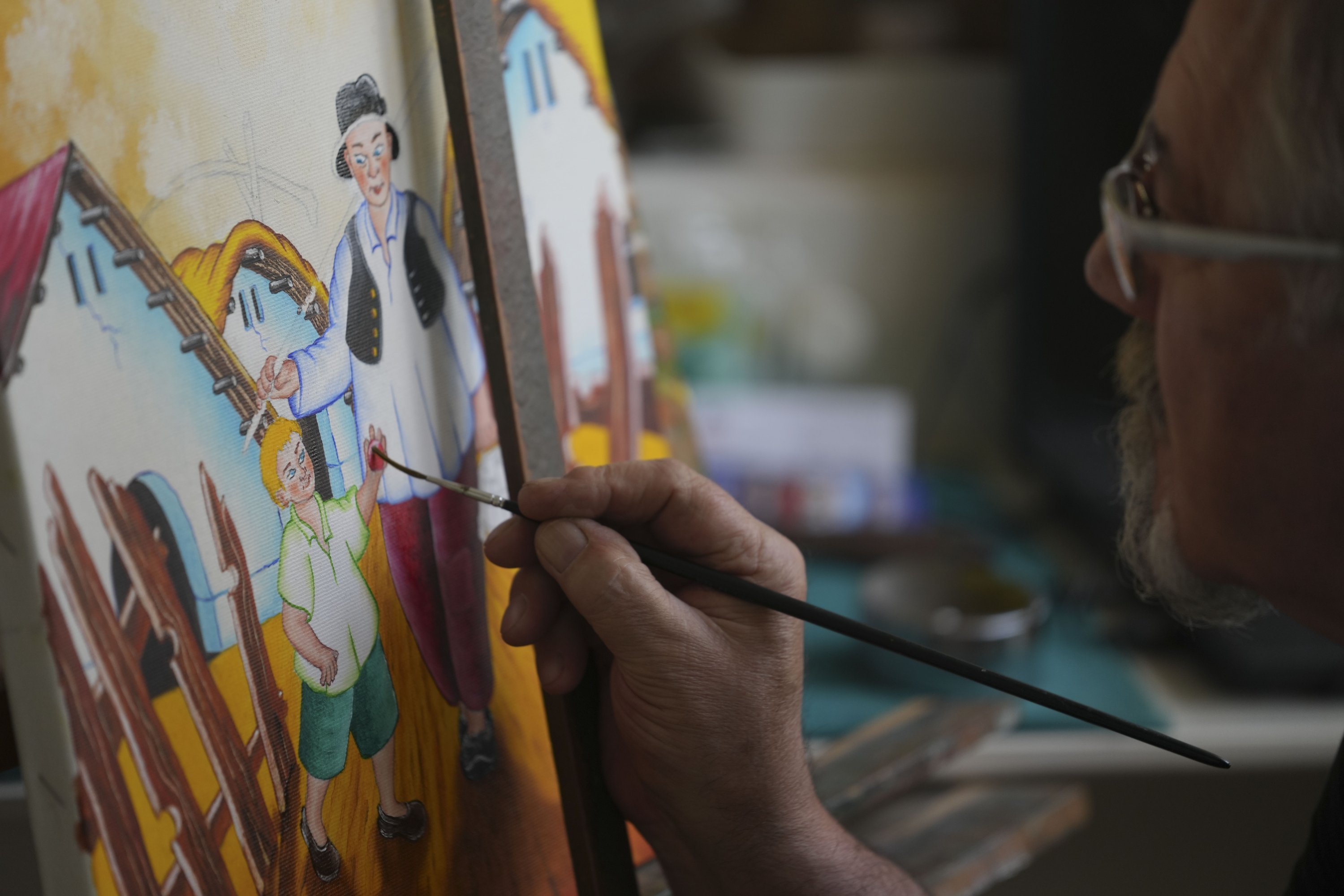
Stefan Varga paints in his room in the village of Kovacica, Serbia,  Nov. 28, 2024. (AP Photo)
Stefan Varga paints in his room in the village of Kovacica, Serbia, Nov. 28, 2024. (AP Photo)

The village's naive art gallery, established in 1955, now holds the works of nearly 50 recognized artists and hosts some 20,000 visitors each year.

Among its most famous artists is Zuzana Chalupova, who often painted children and whose work was featured on millions of UNICEF postcards. Another Kovacica artist, Martin Jonas, depicted farmers with oversized hands and feet but small heads - meant to symbolize their hard-working life.

And though the Kovacica style of naive paintings originated in the village, it has since spread far beyond the area.

"An identifying factor, the practice is a means of transmitting the cultural heritage and history of the Slovak community in Serbia,” UNESCO said in its citation.

Serbia’s government said Tuesday that the UNESCO decision to inscribe Kovacica's naive paintings confirms the Balkan nation’s "promotion of cultural diversity.”

For gallerist and expert Pavel Babka, naive art represents a treasure chest of traditional ways and customs - he points to a painting in his gallery showing a girl in traditional Slovak multi-layered skirt being sent off to church alone for the first time.
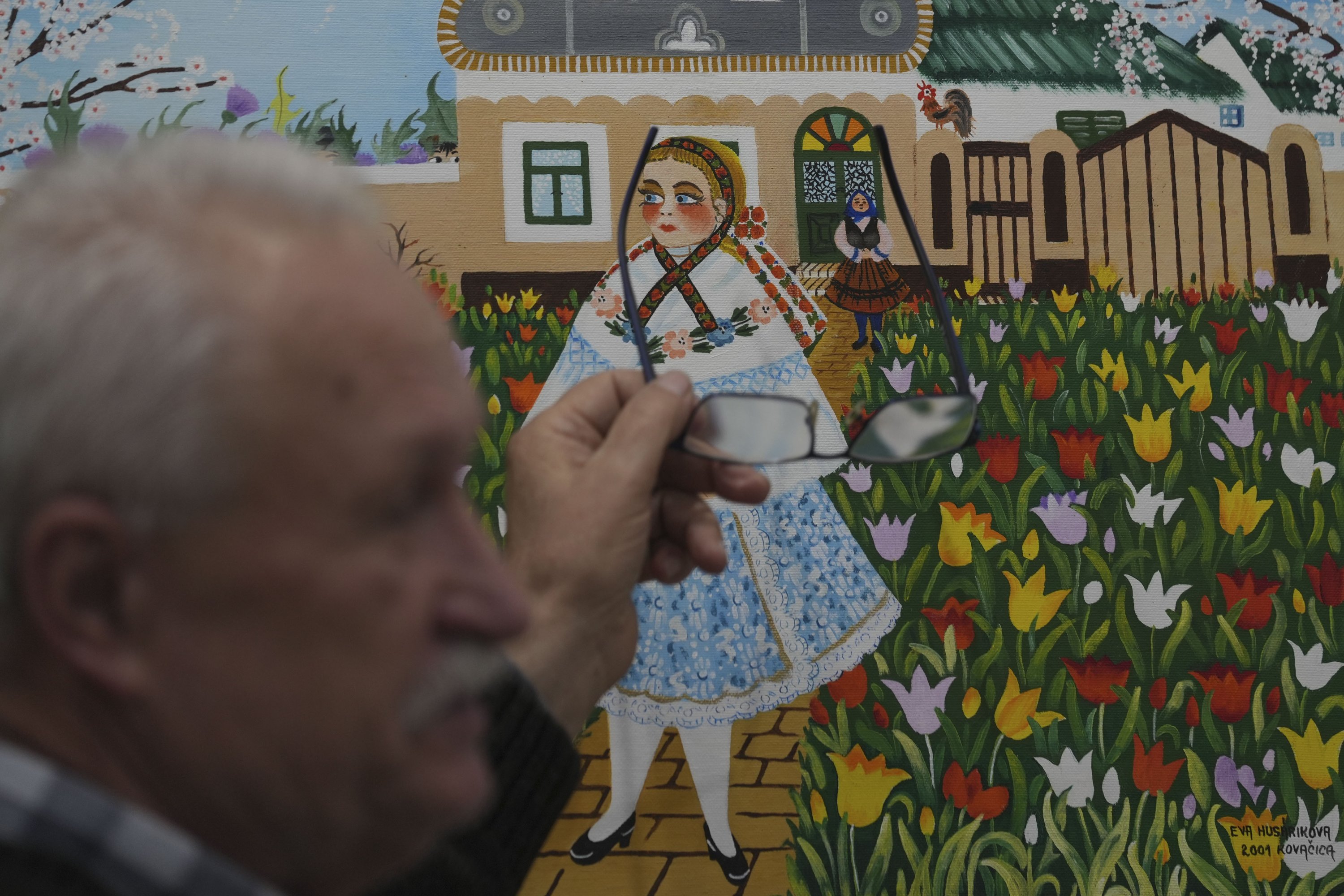
Pavel Babka, gallerist and naive art expert shows painting of a girl in traditional Slovak multi-layered skirt in the village of Kovacica, Serbia, Nov. 28, 2024. (AP Photo

Another painting in Babka's gallery features a horse-drawn cart and a yellow house dating back to Austro-Hungarian times, testifying of the long presence of the ethnic Slovak community in what is today Serbia.

Contemporary naive artists, Babka said, often also seek inspiration in the tales of the past and "would rather paint a horse than a tractor.”

Artist Stefan Varga, 65, agrees. He said he paints images based on the "stories my grandmother told me from when she was a little girl."

Those times weren't easy but they were "simple and beautiful,” he said.

Varga’s paintings feature cheerful, red-cheeked villagers in traditional clothes, bright colors, farm animals and huge pumpkins. The main characteristics of naive painting are "joy and purity, the purity of heart and colors," he said.

"Naive painters usually use simple colors,” said Varga. They "use the simplest way to say what they want to say so everybody can understand them, whether they are Chinese, Japanese, English or Serb.”


  • shortlink copied
  • Last Update: Dec 29, 2024 11:41 am
    KEYWORDS
    unesco world heritage serbia balkans arts painting
    The Daily Sabah Newsletter
    Keep up to date with what’s happening in Turkey, it’s region and the world.
    You can unsubscribe at any time. By signing up you are agreeing to our Terms of Use and Privacy Policy. This site is protected by reCAPTCHA and the Google Privacy Policy and Terms of Service apply.
    No Image
    Fishing in Türkiye's Lake Beyşehir
    PHOTOGALLERY
    • POLITICS
    • Diplomacy
    • Legislation
    • War On Terror
    • EU Affairs
    • News Analysis
    • TÜRKİYE
    • Istanbul
    • Education
    • Investigations
    • Minorities
    • Diaspora
    • World
    • Mid-East
    • Europe
    • Americas
    • Asia Pacific
    • Africa
    • Syrian Crisis
    • İslamophobia
    • Business
    • Automotive
    • Economy
    • Energy
    • Finance
    • Tourism
    • Tech
    • Defense
    • Transportation
    • News Analysis
    • Lifestyle
    • Health
    • Environment
    • Travel
    • Food
    • Fashion
    • Science
    • Religion
    • History
    • Feature
    • Expat Corner
    • Arts
    • Cinema
    • Music
    • Events
    • Portrait
    • Performing Arts
    • Reviews
    • Sports
    • Football
    • Basketball
    • Motorsports
    • Tennis
    • Opinion
    • Columns
    • Op-Ed
    • Reader's Corner
    • Editorial
    • Photo gallery
    • DS TV
    • Jobs
    • privacy
    • about us
    • contact us
    • RSS
    © Turkuvaz Haberleşme ve Yayıncılık 2021