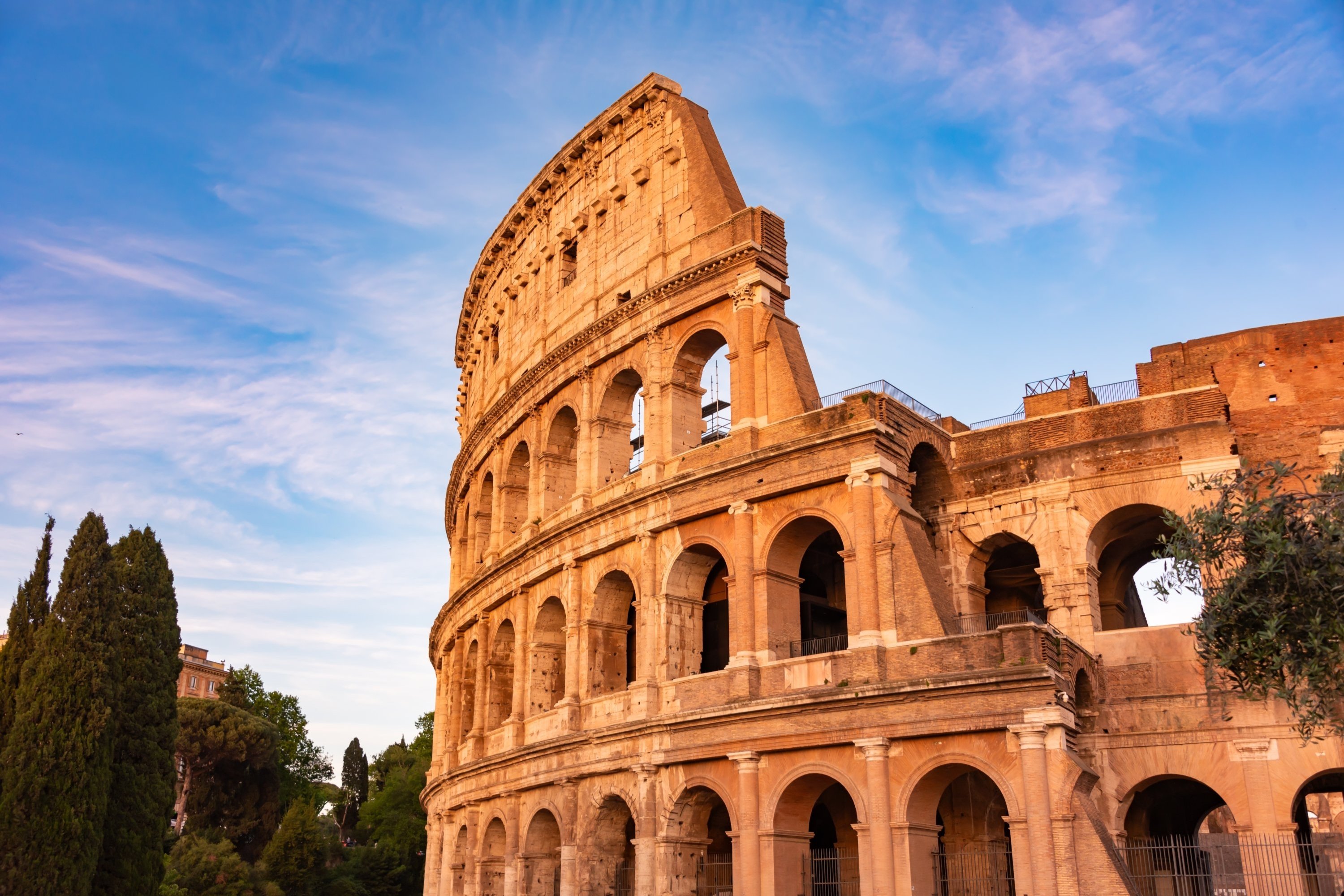
The Colosseum, one of the most iconic monuments of the Roman Empire, is set to come alive through a cutting-edge experience museum developed by Turkish company DEM Museums.
The UNESCO World Heritage Site, which welcomed 14.7 million visitors last year, will showcase its history and legendary stories through advanced visual and auditory technologies, offering visitors an immersive journey into the past.
DEM Museums, which pioneered experience-based museums in Türkiye with the Hagia Sophia History and Experience Museum and the Ephesus Experience Museums, is now taking its expertise international. The Colosseum, with its nearly 2,000-year history and status as a key tourist attraction in Rome and Italy, will be presented through the same innovative model.
Uğur Esin, chairperson of DEM Museums, said the company is proud to represent Türkiye on a global stage. He traced DEM’s roots back 35 years to ASTEL, which helped develop private broadcasting in Türkiye. Over time, the company expanded into cinema digitization, transportation and high-security venues. For the past 15 years, DEM Museums has applied this technological expertise to culture and art, merging traditional museology with technology and pioneering experience-based museums in Türkiye. “Our projects and awards enable us to represent our country proudly on the international stage,” Esin said.
Esin emphasized that culture should not only be preserved but also actively shared. “Culture is our identity, our connection to the past and the most valuable legacy we can pass to future generations,” he said. Experience-based museums, he explained, spark interest in history across society, particularly among Generation Z, who have grown up in the digital world. Modern technologies help young people understand history more easily and transform cultural heritage into educational opportunities, significantly increasing engagement among younger audiences.
Experience-based museology, Esin added, is essential not just for tourism but also for education and the responsibility of passing down cultural heritage. By combining decades of audiovisual technology experience with this mission, DEM creates a lasting bridge between people and heritage. “Each project revitalizes a culture, and every experience conveys the past to the future in a meaningful way,” he said.
At DEM, cultural stories are not just told – they are brought to life. Esin described a holistic approach that integrates content production, experience design, exhibition planning, and daily operations into a single vision. “This approach guides every decision, from storytelling flow and visitor movement to technical system design. Our systems transform cultural heritage into a living experience that immerses visitors, fosters emotional connections and immortalizes artifacts,” he said.
The Colosseum museum in Rome will follow the same model. DEM Museums will manage all aspects of the project, from storytelling and spatial planning to visitor flow and ticketing and will operate the museum once renovations are complete. “That a Turkish company is realizing such a comprehensive international project is a source of great pride for our country,” Esin said.