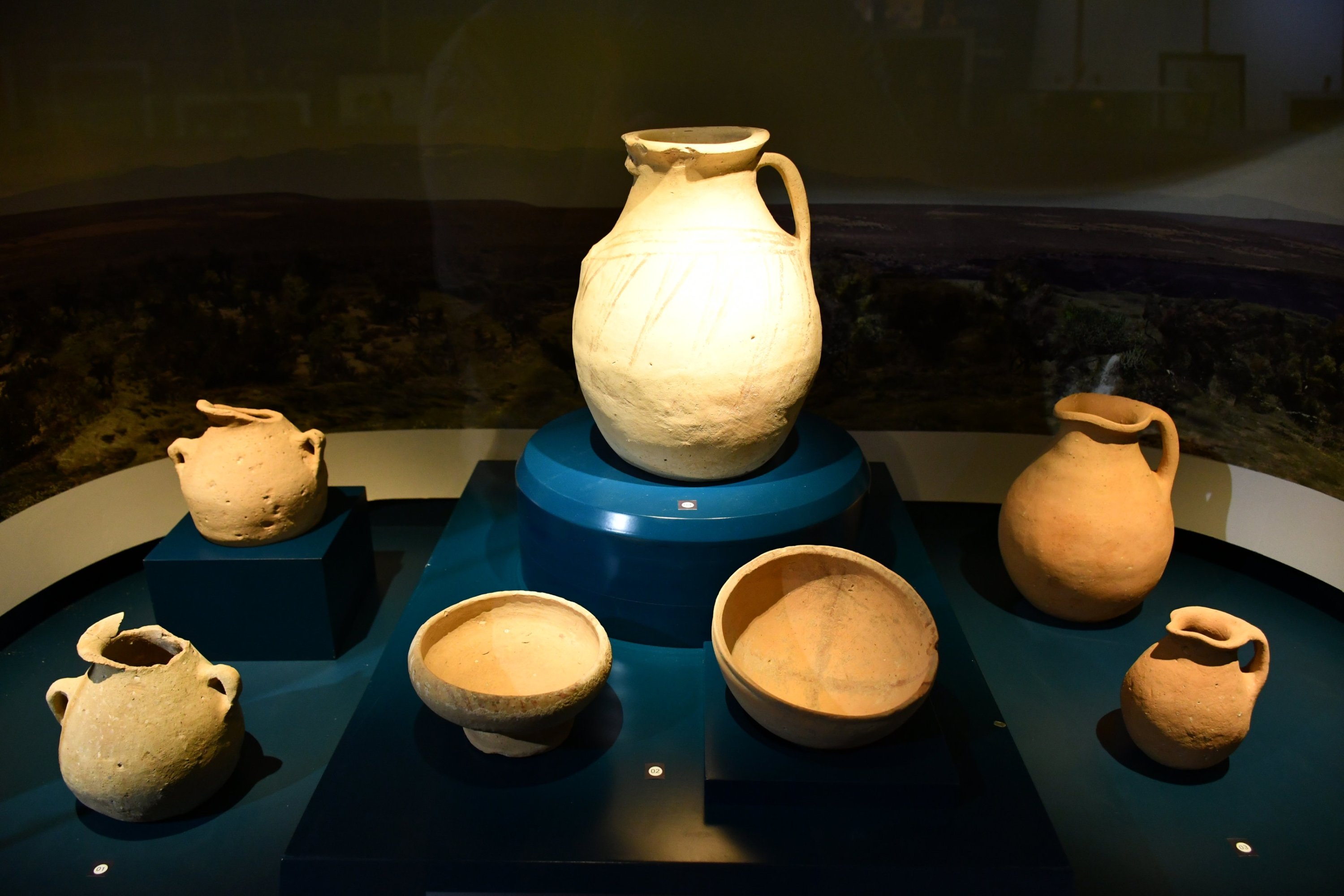
In the historic district of Hasankeyf, located in Batman, southeastern Türkiye, 26 ancient artifacts dating back 2,300 years have been exhibited for the first time at the Hasankeyf Museum.
As part of the Ministry of Culture and Tourism’s "100-plus-2 Temporary Museum Exhibitions Project," 26 of the 39 artifacts recovered from rescue excavations last year in the village of Akalın, near Hasankeyf, have been put on display. These artifacts date back to the Hellenistic and Persian periods.
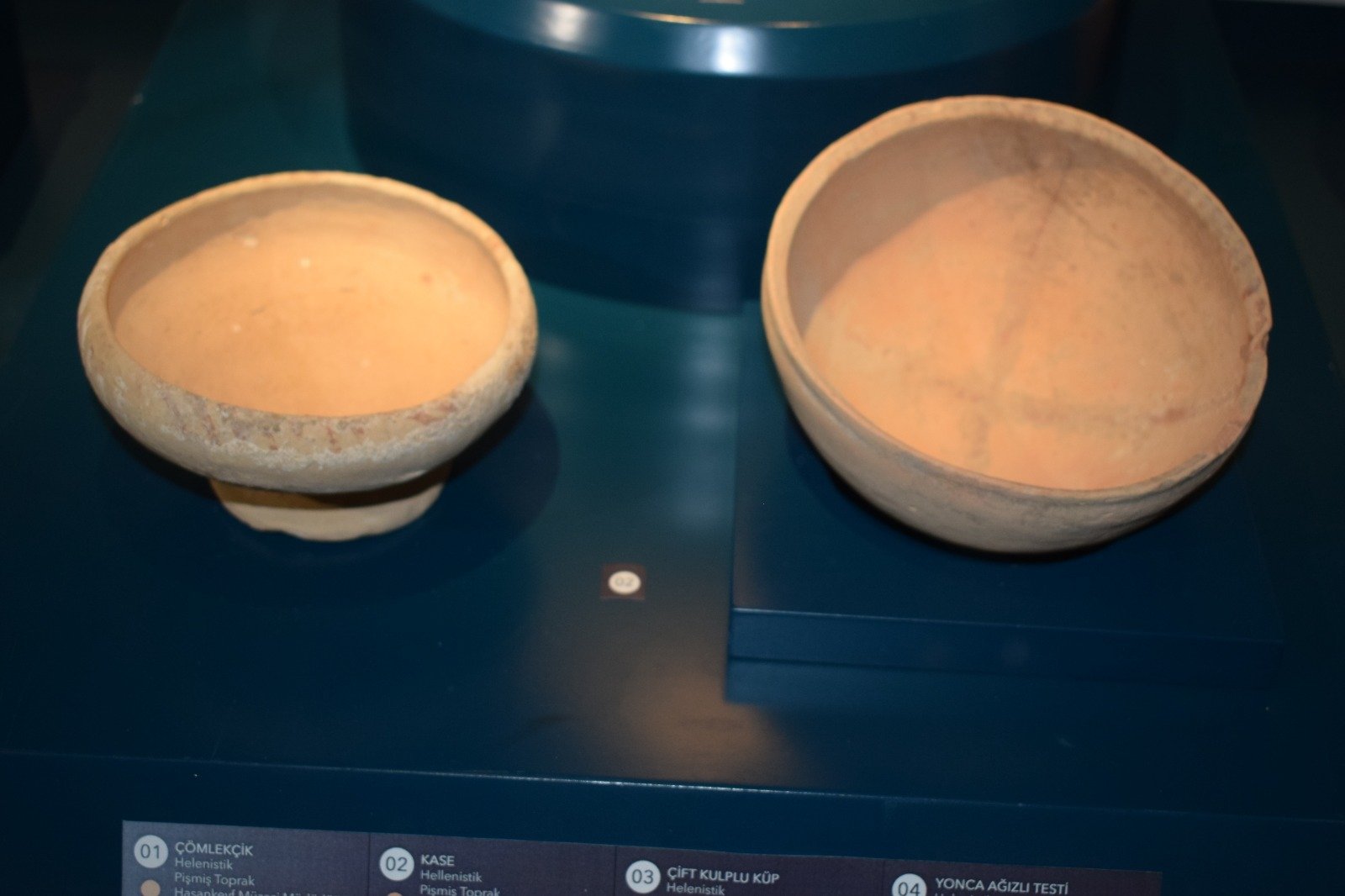
The exhibition includes a variety of items such as coins, earrings, rings, bracelets, seals, kohl containers and terracotta bowls – all approximately 2,300 years old. The display will be open to visitors for three months.
Mehmet Ali Imrak, the district governor of Hasankeyf, told reporters that the district, which has a rich history spanning 12,000 years, holds historical treasures in every corner.
He recalled that the rescue excavations in Akalın village uncovered 79 rock tombs last year. "As a result of the rescue operation, approximately 79 tombs were reached. The artifacts found within these tombs have now been exhibited at the Hasankeyf Museum as part of the ministry’s 100-plus-2 Temporary Museum Exhibitions Project," Imrak explained.
Imrak also noted that excavation work is ongoing in the district and that the archaeological team has quickly contributed many artifacts to the museum’s collection.
Şeyhmus Genç, director of the Hasankeyf Museum, shared that after the gendarmerie apprehended treasure hunters in Akalın village, detailed studies were carried out in the rock tombs.
During these studies, artifacts from the Hellenistic and Persian periods, around 2,300 years old, were discovered and added to the museum’s collection.
“Among the artifacts are significant seals and silver coins from the Hellenistic era. Thanks to the ministry’s project, these pieces have now been put on public display,” Genç stated.