For decades, the art world has repeated a sentence so often that it began to sound like wisdom: a woman artist should not marry if she wants to remain free. Marriage, we were told, domesticates the female imagination. Love distracts. Partnership compromises. If a woman wanted to create work that mattered, work that resisted, challenged and endured, she was expected to stand alone, or at least appear to do so.
But history, when read carefully rather than conveniently, tells another story.
What limited women artists was never love itself. It was the absence of an equitable partnership. It was the weight of emotional labor carried alone. It was the expectation that a woman would nurture everyone else’s potential before her own. The problem was not intimacy, but imbalance. And as that imbalance slowly begins to collapse in the 21st century, a different figure is emerging with increasing clarity: The woman artist whose creativity does not shrink within partnership, but expands, quietly, decisively and with profound social consequence.
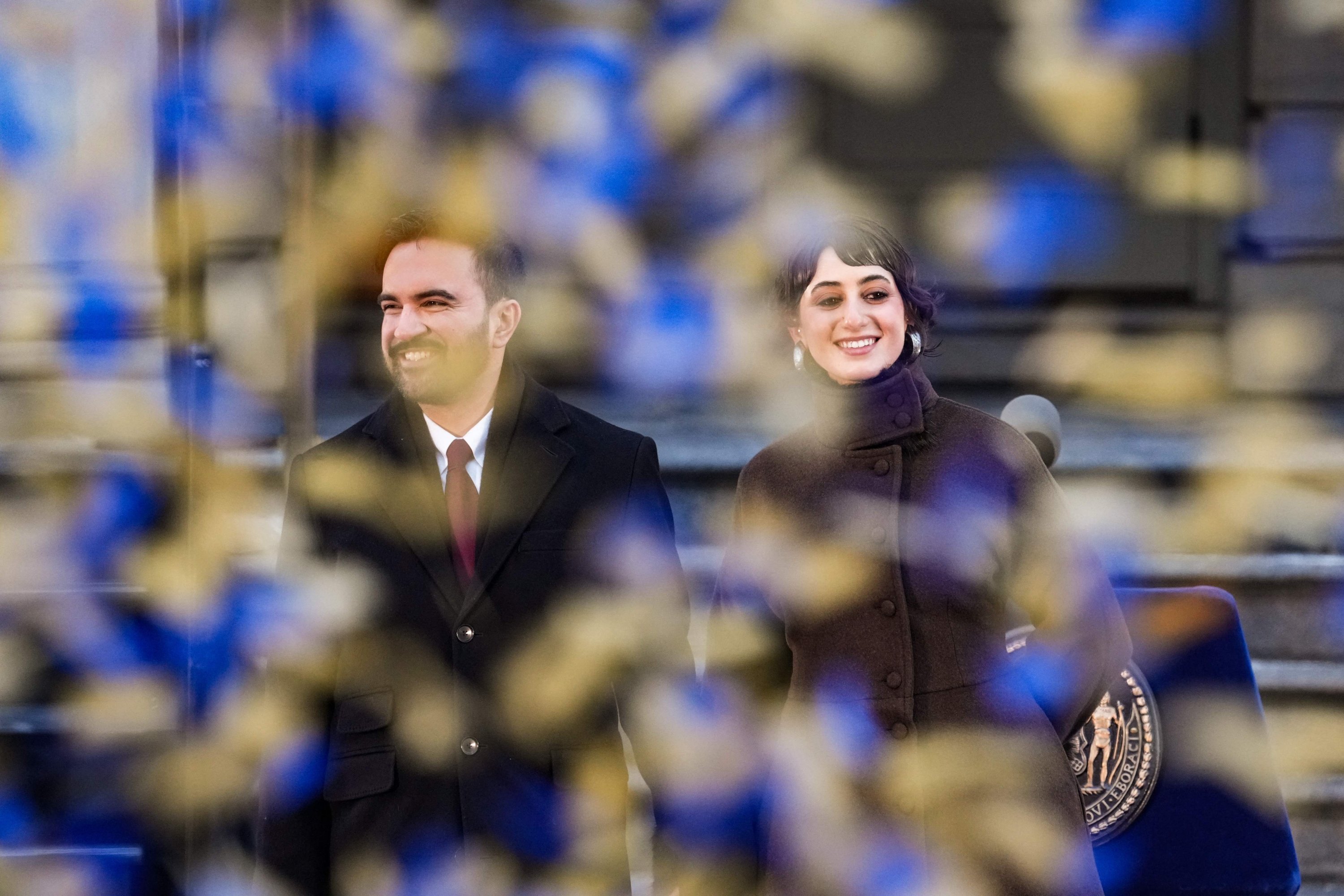
In this sense, the story unfolding around Zohran Mamdani and his wife Rama Duwaji is not simply a personal narrative. It is a cultural signal. It marks the arrival of a new archetype: an artist whose presence at the heart of political leadership does not soften power into sentimentality, but re-educates it into humanity.
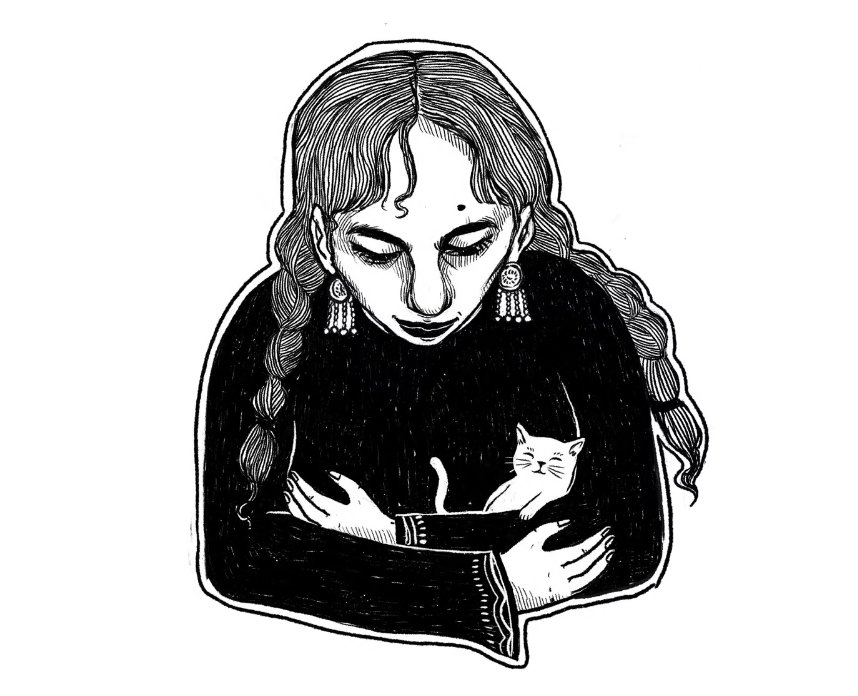
Rama Duwaji is not an accessory to power. She is an artist in the deepest sense of the word, someone trained to see what language often cannot articulate. Her work, published widely in global platforms, is distinguished not by volume or provocation, but by precision. She does not overwhelm the viewer. She invites them in. Through spare lines, muted palettes and symbolic clarity, she renders themes of migration, war, identity, home and longing without spectacle. Her images linger because they trust the intelligence of the viewer.
This artistic temperament is not neutral in the life of a political leader. It is formative.
Politics, especially in a city like New York, is an unforgiving environment. It rewards certainty, decisiveness and speed. It hardens language. It reduces people into categories: voters, opponents, demographics and numbers. Leaders who survive in such systems often do so by building armor around perception. Over time, that armor can become distant. Distance from nuance. Distance from vulnerability. Distance from the quiet human truths that policies inevitably shape.
To live daily with an artist like Rama Duwaji is to have that armor gently, persistently questioned.
Art trains attention. It teaches patience. It insists on complexity without demanding resolution. These are not decorative traits; they are radical in a political ecosystem driven by urgency and polarization. When Mamdani speaks of his wife as someone who inspires him every day, the phrase should not be read romantically, but structurally. Daily inspiration means daily recalibration. It means returning, again and again, to a way of seeing that refuses simplification.
During the election campaign, this influence was visible long before it was acknowledged. Duwaji’s artistic contribution did not take the form of campaign slogans or visual branding in the conventional sense. Instead, her work operated on a deeper frequency. It translated political realities into emotional truths. Where speeches articulated demands, her images articulated stakes. They reminded audiences that housing is not a policy issue but a human condition; that migration is not a statistic but a story of interrupted belonging. This is what artists do best: they humanize abstraction.
In a harsh political climate, this capacity is not ornamental. It is protective. It prevents leadership from becoming mechanical. It allows a leader to remain emotionally porous without collapsing under pressure. Mamdani’s public presence, measured, attentive, firm without aggression, bears the trace of such influence. Leaders shaped by artistic proximity tend to develop a different power relationship. They understand that authority is not amplified by loudness, but by legibility.
Duwaji’s art does not shout because it does not need to. It trusts silence. It trusts the viewer. This same trust, translated into politics, creates a leadership style that listens before reacting, that acknowledges complexity without paralysis. In this way, her role in Mamdani’s life is not separate from governance; it is woven into its emotional infrastructure.
The persistent myth that women artists should avoid marriage collapses completely under this lens. Marriage does not dilute artistic vision when the partnership is built on mutual recognition. On the contrary, it can sharpen it. When an artist woman is supported, not managed, not overshadowed, but supported, her work gains range. She is no longer forced to choose between survival and expression. Her imagination breathes more freely.
This dynamic has historical precedents, though they were rarely named as such. First lady Eleanor Roosevelt’s moral imagination shaped American political consciousness far beyond her husband’s presidency. Coretta Scott King’s artistic and intellectual grounding transformed civil rights leadership into a long-term cultural movement rather than a momentary political struggle of Martin Luther King. In each case, the woman’s creative and ethical labor expanded the scope of leadership itself. What distinguishes the present moment is visibility. Duwaji is not erased from the background of power. She remains legible as an artist, with her own voice, her own practice, her own public presence. This visibility matters. It signals to other women artists that partnership need not equal disappearance.
The argument that women artists must remain unattached to remain free belongs to a historical moment when institutions refused to adapt. Today, the challenge is no longer whether women can combine love and creation, but whether societies can afford leadership untouched by artistic intelligence.
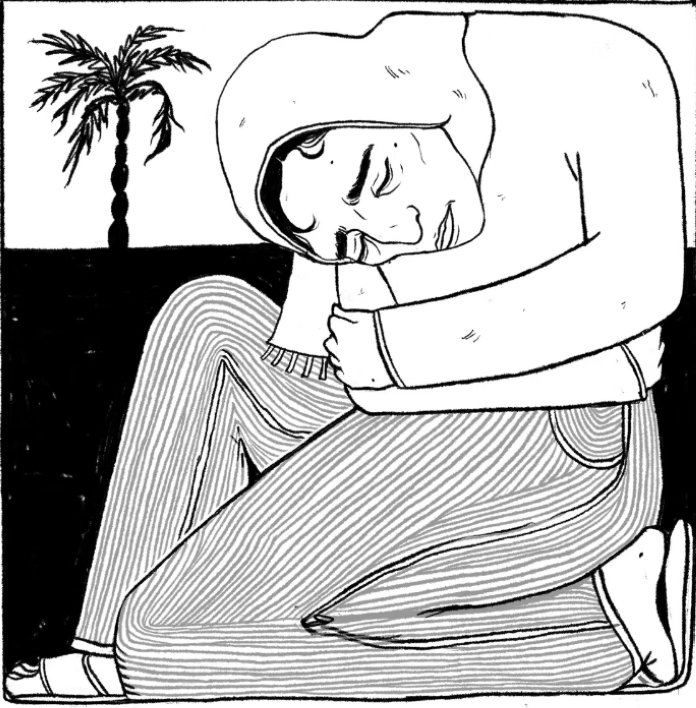
The presence of an artist in the intimate life of a leader reshapes governance in subtle but lasting ways. It expands the leader’s sense of time. Artists understand duration. They think in layers, not cycles. They know that meaning accumulates slowly, often invisibly. This temporal awareness is desperately needed in politics, where short-term victories often undermine long-term trust. Artists also possess a heightened sensitivity to language. They hear what words conceal as much as what they reveal. Living with such sensitivity changes how leaders speak, listen and respond. It reduces the temptation toward dehumanizing rhetoric. It introduces a pause. And in a political environment saturated with noise, pause becomes a form of strength. Duwaji’s work is especially attuned to the experience of displacement, geographical, emotional and psychological. This attunement inevitably informs the worldview of someone governing one of the most diverse cities in the world. It widens the frame through which policy is imagined. It reminds leadership that belonging is not produced by force, but by recognition.
The role of the artist woman extends further still when the possibility of motherhood enters the picture. Motherhood, often framed as a threat to women’s artistic seriousness, can in fact deepen creative intelligence when supported. It introduces radical future-thinking. It forces the artist to imagine continuity, inheritance and consequence. In partnership with a leader, this future-thinking does not remain private. It becomes political. Children raised in households shaped by art and leadership absorb emotional literacy as second nature. They learn that imagination is not escapism, that empathy is not weakness, that strength can be quiet. This influence radiates outward. It shapes institutions indirectly, through the people who carry these values into the world. This is how transformation accelerates, through grand ideological declarations, but through integrated lives.
The Mamdani-Duwaji partnership demonstrates that love, when grounded in mutual respect and shared ethical orientation, is not a distraction from leadership. It is a form of leadership education. It expands the leader’s horizon. It tempers aggression without neutralizing conviction. It replaces domination with responsibility. What we are witnessing is not the feminization of power, but its humanization.
As global politics grows harsher, louder and more polarized, the need for leaders shaped by artistic intelligence becomes urgent. Artists are trained to hold discomfort without rushing to closure. They understand that not all wounds can be resolved, but all can be acknowledged. This acknowledgment alone can change the texture of public life. Duwaji’s art embodies this philosophy. It does not offer solutions; it offers recognition. In doing so, it performs a political act far more enduring than propaganda. It teaches viewers and those who live with her to see again.
The future will not be shaped solely by policies or technologies. It will be shaped by the new model of relationships. By the kinds of partnerships that allow imagination to sit at the table of power. By couples who understand that love is not merely personal fulfillment, but a cultural force. The outdated thesis that women artists should remain alone has collapsed under the weight of reality. What replaces it is not a prescription, but a possibility: that when an artist woman is supported by a conscious, leader-minded partner, her creativity does not diminish. It multiplies. And in multiplying, it reshapes families, institutions and societies. The story unfolding in New York today is not a fairytale. It is a prototype. A prototype of leadership that listens. Of art that lives fully. Of love that does not retreat from the world, but enters it with clarity and courage.
If the coming decades demand more humane forms of power, and they do, then the presence of women artists at the heart of leadership will not be symbolic. It will be structural. And history, when it looks back, may recognize that some of the most meaningful transformations did not begin with laws or speeches, but with an artist quietly widening the inner world of a leader.