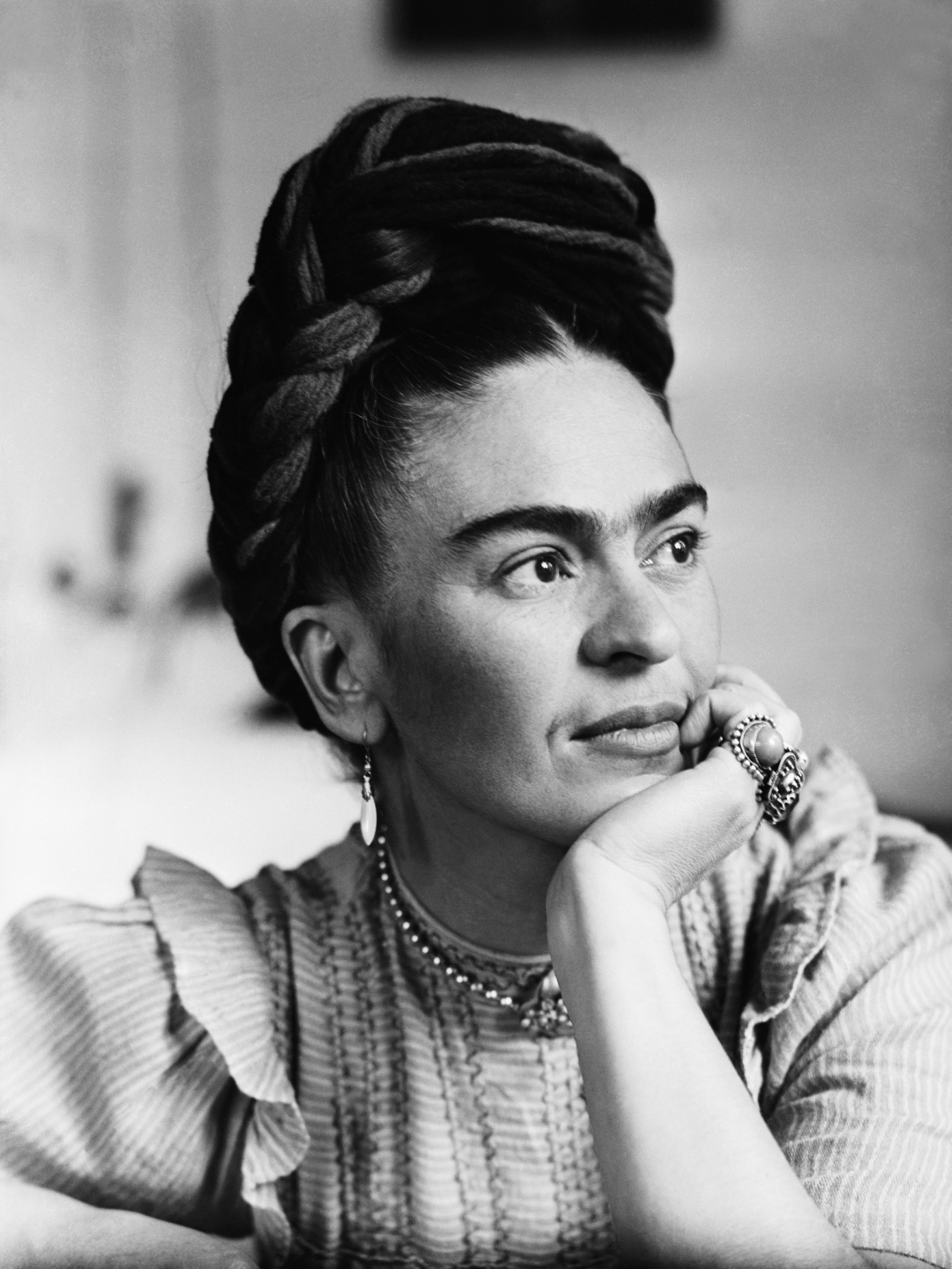
Whenever I leaf through the pages of art history, I encounter names of women who managed to etch themselves into a canon that was never designed to include them. Artemisia Gentileschi, who turned her personal trauma into radical Baroque canvases; Berthe Morisot and Mary Cassatt, who carved out space for women in the impressionist circle; Frida Kahlo, who transformed pain into poetry; Georgia O’Keeffe, who made the desert bloom into modernism; Yayoi Kusama, who stretched polka dots into infinity; Jenny Saville, whose monumental female bodies shattered beauty standards. These names are not confined to the walls of museums; they breathe in the collective imagination of our age.
But when the question turns toward my own country, the silence is deafening. Who is the female painter from Türkiye whose name has crossed borders, who appears in the syllabi of Western academies, whose retrospective is mounted at MoMA, the Tate or the Centre Pompidou? There are, of course, brilliant Turkish women artists – no shortage of them. And yet, none have been canonized, none have been absorbed into the global lexicon of art history in the way that Kahlo or Kusama have.
This silence is not an accident. It is the product of a system. It is the result of education that stifles rather than provokes, a culture that still undervalues women’s creativity, an art market that privileges the West, and the weight of domestic expectation that falls squarely on women’s shoulders. Talent we have in abundance. What we lack is the ecosystem that could have transformed that talent into recognition.
I often think about the foundations of art in this country. During the Ottoman era, women were excluded from the guilds of miniature painters, the professional workshops and the patronage networks. If women painted, they painted at home, in private, for the eyes of their family. With the founding of the republic came a vision of modernity, and with it an art academy – Sanayi-i Nefise, later Mimar Sinan Fine Arts University. But for decades, these institutions were run by male professors teaching male students. Women were admitted late, and even when they entered the studio, their work was often dismissed as decorative, as amateurish, as “secondary.”
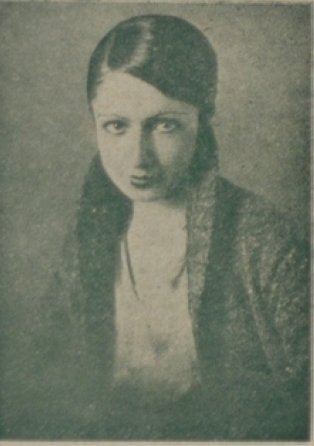
Think of Mihri Müşfik Hanım, one of the very first Turkish women painters. She studied in Paris in the early 20th century, painted portraits of Mustafa Kemal Atatürk, even exhibited abroad. Yet her name remains largely unknown outside a narrow circle. Or Hale Asaf, a bold modernist who lived in Paris and died tragically young – her potential barely realized. Fahrünnisa Zeid perhaps comes closest to international recognition, exhibiting with the avant-garde in Europe and the Middle East. She had the brilliance, the networks, even a Tate retrospective many years after her death. And yet, she has never become the global household name that Kahlo or O’Keeffe is. Why? Because institutions never built the scaffolding around her legacy. Because her gender and her geography conspired to keep her on the margins.
By the time Turkish women gained greater access to art education in the mid-20th century, Paris, New York and London had already written their canon. The story of modern art was being told – and it was being told without them. Turkish women painters became the periphery of the periphery.
I remember vividly the years I spent in London as an art student. The difference was striking. There, students were not merely trained to paint; they were trained to think, to question, to situate themselves within the grand conversations of art and theory. Reading Foucault or bell hooks was as essential as stretching a canvas. Attending a lecture at the Tate, meeting curators, applying for residencies abroad – these were not luxuries, they were expectations. Even the struggling students carried with them the intellectual equipment to enter the global arena.
In Türkiye, the culture of art education still bears the scars of rote learning, hierarchy and risk-aversion. Students are often encouraged to copy rather than to create, to obey rather than to rebel. And women face an extra layer of limitation. Families tolerate art as a pastime, a charming pursuit, but when it comes to building a career, they often whisper: choose something safer, something more respectable, something more secure. Medicine, law, teaching. Art is for leisure. The young women who persist must not only fight against institutional inertia but against the expectations of their own families and society.
And yet, even if a Turkish female painter manages to break through these domestic and educational obstacles, she still faces the towering walls of the global art market. Recognition in art has never been a pure meritocracy. It is mediated by institutions, by curators, by collectors, by museums that remain deeply Western-centric. Western institutions love to consume “the exotic East” but hesitate to canonize its contemporary voices.
Even our most visible male artists – Abidin Dino, Burhan Doğançay – achieved their recognition through exile, through embedding themselves in Western networks. For women, the barriers are doubled: They face the bias against women and the bias against being from the “periphery.” The global art world has a peculiar relationship with women artists: It embraces narratives of suffering, of eccentricity, of madness. Kahlo’s body broken in pain, Kusama’s self-imposed asylum. These narratives sell. But they rarely extend sustained recognition to women outside the West. A Turkish female painter must not only produce extraordinary art but must also fight for geopolitical access.
Then there is culture – the heavy weight of tradition. In Türkiye, women are still the backbone of the family, expected to carry invisible labor, domestic responsibility, child-rearing and marriage obligations. A male painter may live for his art, dedicate himself to the studio without apology. A female painter is expected to live for everyone else first. She is asked to be mother, wife, daughter, caretaker – and then, if there is time left over, perhaps she may paint.
Even when women create, they are too often labeled “women artists” as if their gender diminishes rather than expands their artistry. The qualifier shrinks them, places them in a separate category, a ghetto of creativity. Male genius is celebrated universally. Female creativity is treated as an exception, a curiosity.
What has the world done differently? The answer is clear when you look outward. In the United States, the United Kingdom and Germany, art education is robust, connected to critical theory, criticism and global networks. Museums have begun to redress the imbalance: from the landmark exhibition "Women Artists: 1550-1950" in Los Angeles, to the Tate Modern’s rehanging of its permanent collection to integrate more women. Governments and philanthropies in Scandinavia provide stipends and grants that allow artists – men and women alike – to work without financial precarity. Feminist art movements have been inseparable from artistic recognition: Judy Chicago’s "The Dinner Party," the "Guerrilla Girls’" irreverent critiques. Biennales and residencies circulate women artists globally, carrying them into the canon.
In short, elsewhere the structures have been reformed. Education, funding, institutional inclusion and feminist critique – they have all contributed to cultivating women painters who enter the global imagination.
So what could Türkiye do differently? The answer is not about talent. It is about structure. Imagine if our art academies abandoned rote learning for critical pedagogy, integrating feminist theory, curatorial practice and global art history. Imagine if the Ministry of Culture funded residencies abroad, sending young Turkish women painters to Berlin, New York or London to build their networks. Imagine if our museums made the deliberate choice to feature women not as tokens but as central voices. Imagine if senior artists and curators created mentorship networks, guiding the next generation. Imagine if families and society stopped treating art as a hobby and began to respect it as a vocation demanding total commitment.
None of this is utopian. Other countries have done it. It is a matter of will.
As I reflect on my own experience in London, I realize the gap is not just about art – it is about infrastructure. There, a Turkish female painter could attend an opening at Whitechapel Gallery, submit an application to a Berlin residency and join peers from across the globe in reading feminist theory. In Türkiye, opportunities are narrower, criticism is underdeveloped, and exhibitions are local rather than international. The result is not a lack of talent but a lack of circulation, a lack of amplification. Brilliant women remain invisible because no system is in place to magnify their voices.
The absence of a globally celebrated female painter from Türkiye is not destiny. It is not a reflection of talent but of systemic exclusion. It is the product of patriarchal traditions, educational shortcomings, global inequalities and cultural burdens. But it can be changed.
Türkiye is rich in women artists who have the vision, the creativity and the talent to resonate on the world stage. What they lack is not ability but support. If we reform our education, if we build networks, if we make deliberate institutional choices, then the silence can finally be broken.
I sometimes imagine the next Frida, the next Kusama, the next O’Keeffe – only she is Turkish. She might already be painting in a quiet studio in Istanbul, Ankara or Diyarbakır. She may already be sketching, experimenting and dreaming. What she needs is an ecosystem that does not silence her, that does not force her to choose between her family and her canvas, that does not relegate her to the margins.
The silence we feel now does not have to last forever. But it will endure until Türkiye decides that women’s art is not secondary, not decorative, not incidental – but essential to its cultural voice. The world is waiting. And so am I.