

Daily Sabah logo

Politics
Diplomacy Legislation War On Terror EU Affairs Elections News Analysis
TÜRKİYE
Istanbul Education Investigations Minorities Expat Corner Diaspora
World
Mid-East Europe Americas Asia Pacific Africa Syrian Crisis Islamophobia
Business
Automotive Economy Energy Finance Tourism Tech Defense Transportation News Analysis
Lifestyle
Health Environment Travel Food Fashion Science Religion History Feature Expat Corner
Arts
Cinema Music Events Portrait Reviews Performing Arts
Sports
Football Basketball Motorsports Tennis
Opinion
Columns Op-Ed Reader's Corner Editorial
PHOTO GALLERY
JOBS ABOUT US RSS PRIVACY CONTACT US
© Turkuvaz Haberleşme ve Yayıncılık 2025

Daily Sabah - Latest & Breaking News from Turkey | Istanbul

  • Politics
    • Diplomacy
    • Legislation
    • War On Terror
    • EU Affairs
    • Elections
    • News Analysis
  • TÜRKİYE
    • Istanbul
    • Education
    • Investigations
    • Minorities
    • Expat Corner
    • Diaspora
  • World
    • Mid-East
    • Europe
    • Americas
    • Asia Pacific
    • Africa
    • Syrian Crisis
    • Islamophobia
  • Business
    • Automotive
    • Economy
    • Energy
    • Finance
    • Tourism
    • Tech
    • Defense
    • Transportation
    • News Analysis
  • Lifestyle
    • Health
    • Environment
    • Travel
    • Food
    • Fashion
    • Science
    • Religion
    • History
    • Feature
    • Expat Corner
  • Arts
    • Cinema
    • Music
    • Events
    • Portrait
    • Reviews
    • Performing Arts
  • Sports
    • Football
    • Basketball
    • Motorsports
    • Tennis
  • Gallery
  • Opinion
    • Columns
    • Op-Ed
    • Reader's Corner
    • Editorial
  • TV

Use of facial recognition in Delhi rally sparks privacy fears

by

MUMBAI Dec 30, 2019 - 3:51 pm GMT+3
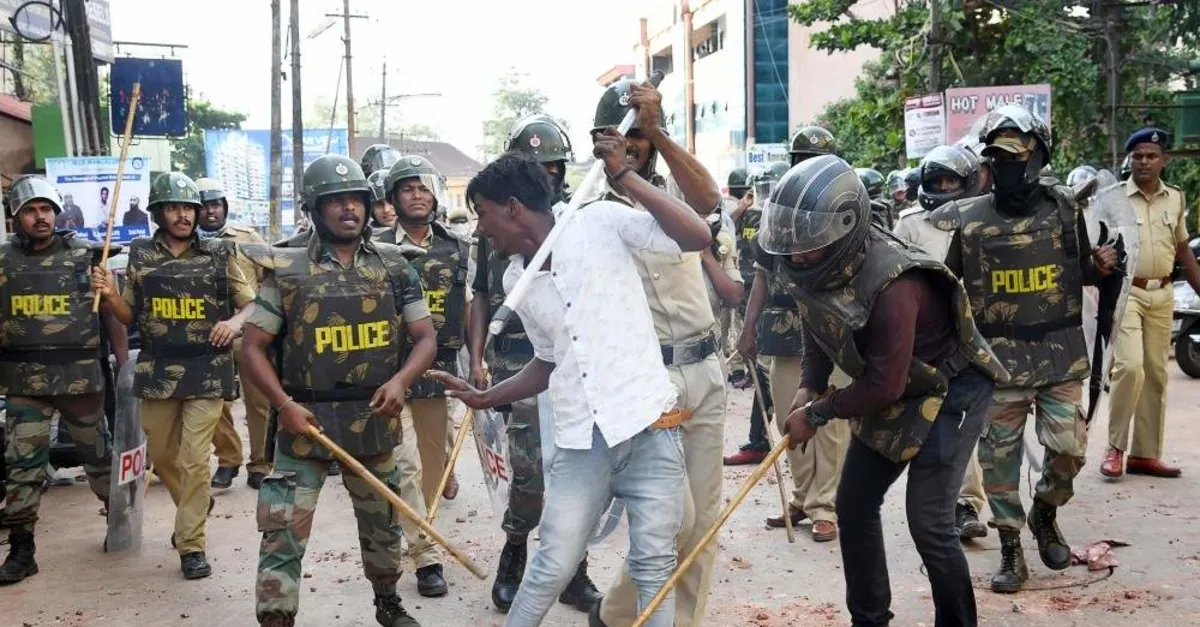
Policemen with sticks locally known as ,lathi, beat a protester during a demonstration against India's new citizenship law, Mangalore, Dec. 19, 2019 (AFP Photo)
by Dec 30, 2019 3:51 pm

Police in Delhi used facial recognition software to screen crowds at a recent political rally, a first for India, raising concerns about privacy and mass surveillance amidst nationwide protests against a new citizenship law.

The Automated Facial Recognition System (AFRS) software that the Delhi Police had installed to identify missing children, was used at Prime Minister Narendra Modi's rally on Dec. 22, a police spokesman said Monday, without giving further details. It was the first time the technology – which is increasingly deployed in airports, offices and cafes in India, was used to screen the crowd at a political rally, according to technology analysts. "The use of the system for profiling and surveillance at public congregations is illegal and unconstitutional. It is an act of mass surveillance," said Apar Gupta, executive director of the digital advocacy group Internet Freedom Foundation. "From building an underlying database of people from public protests to running it on crowds of people attending rallies, this directly impairs the rights of ordinary Indians from assembly, speech and political participation," he said.

Worldwide, the rise of cloud computing and artificial intelligence technologies have popularized the use of facial recognition for a range of applications from tracking criminals to catching truant students.

In India, facial recognition technology was installed in several airports this year, and the government plans to roll out a nationwide system, likely to be the world's biggest, to stop criminals and find missing children. The use of the technology at the political rally comes amidst nationwide protests against a new citizenship law, in which at least 25 people have been killed. There have been growing questions about the stance of the government, led by Modi's Hindu-nationalist party, toward India's 172 million Muslims. The new law grants citizenship to non-Muslims from three neighboring countries in what opponents say is part of Modi's Hindu nationalist master plan. Modi has said Muslims from Pakistan, Bangladesh and Afghanistan are not covered by the citizenship law because they do not need India's protection. Opposition parties say the Citizenship Amendment Act could provide a fast track to naturalization for many of the Hindus left off Assam's citizenship list, while explicitly leaving out Muslims.
About the author
Research Associate at Center for Islam and Global Affairs (CIGA) at Istanbul Sabahattin Zaim University
  • shortlink copied
  • KEYWORDS
    business
    The Daily Sabah Newsletter
    Keep up to date with what’s happening in Turkey, it’s region and the world.
    You can unsubscribe at any time. By signing up you are agreeing to our Terms of Use and Privacy Policy. This site is protected by reCAPTCHA and the Google Privacy Policy and Terms of Service apply.
    No Image
    Celebrations, Ukraine and the mouser: Weekly top photos
    PHOTOGALLERY
    • POLITICS
    • Diplomacy
    • Legislation
    • War On Terror
    • EU Affairs
    • News Analysis
    • TÜRKİYE
    • Istanbul
    • Education
    • Investigations
    • Minorities
    • Diaspora
    • World
    • Mid-East
    • Europe
    • Americas
    • Asia Pacific
    • Africa
    • Syrian Crisis
    • İslamophobia
    • Business
    • Automotive
    • Economy
    • Energy
    • Finance
    • Tourism
    • Tech
    • Defense
    • Transportation
    • News Analysis
    • Lifestyle
    • Health
    • Environment
    • Travel
    • Food
    • Fashion
    • Science
    • Religion
    • History
    • Feature
    • Expat Corner
    • Arts
    • Cinema
    • Music
    • Events
    • Portrait
    • Performing Arts
    • Reviews
    • Sports
    • Football
    • Basketball
    • Motorsports
    • Tennis
    • Opinion
    • Columns
    • Op-Ed
    • Reader's Corner
    • Editorial
    • Photo gallery
    • DS TV
    • Jobs
    • privacy
    • about us
    • contact us
    • RSS
    © Turkuvaz Haberleşme ve Yayıncılık 2021