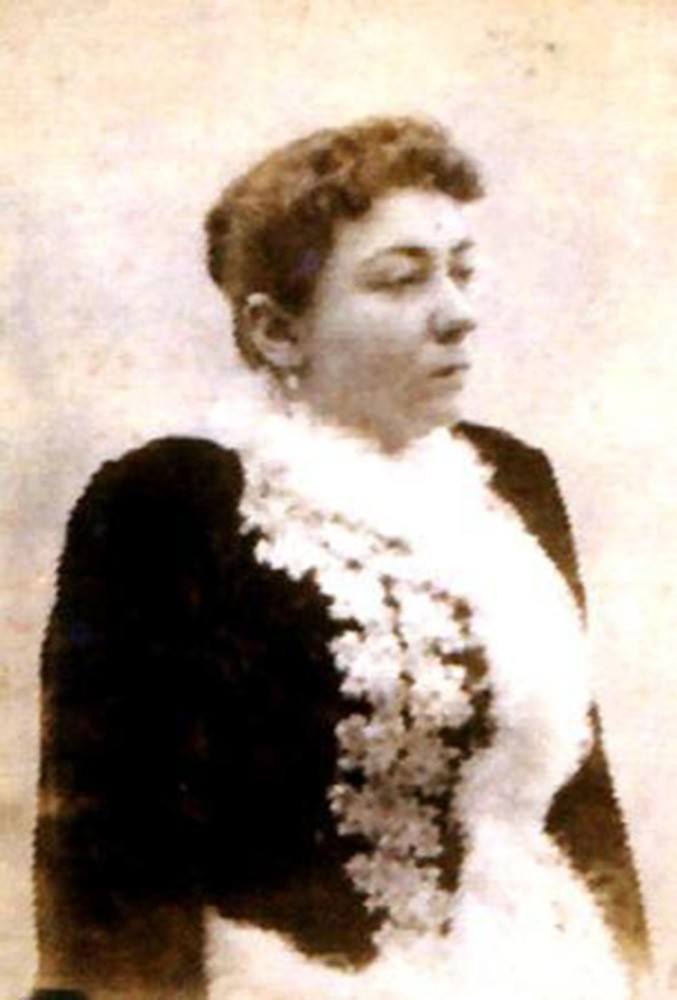
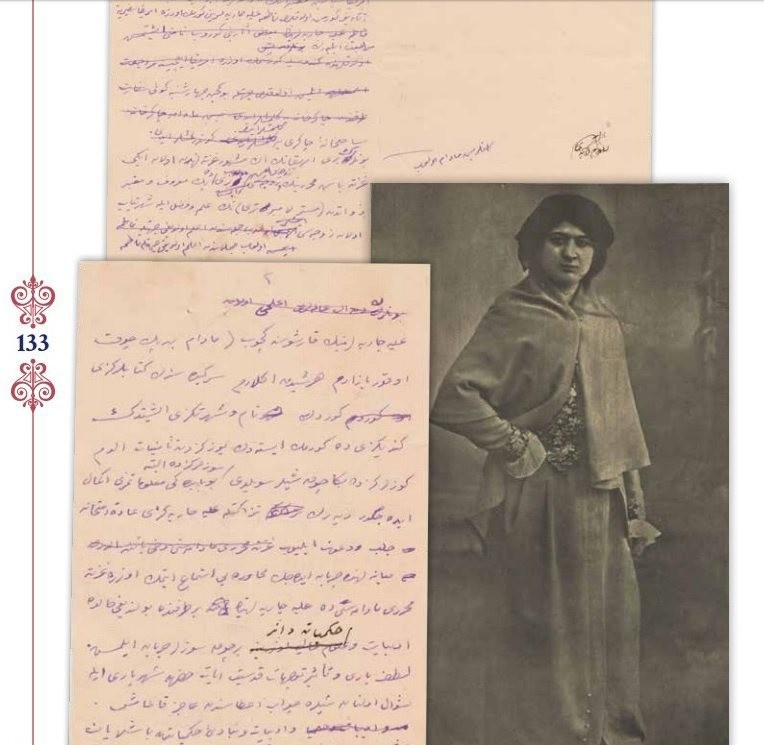
Born and raised in the late 1880s during the last years of the Ottoman Empire, Fatma Aliye bravely paved the way for female writers, as the first female novelist to use her real name in literature
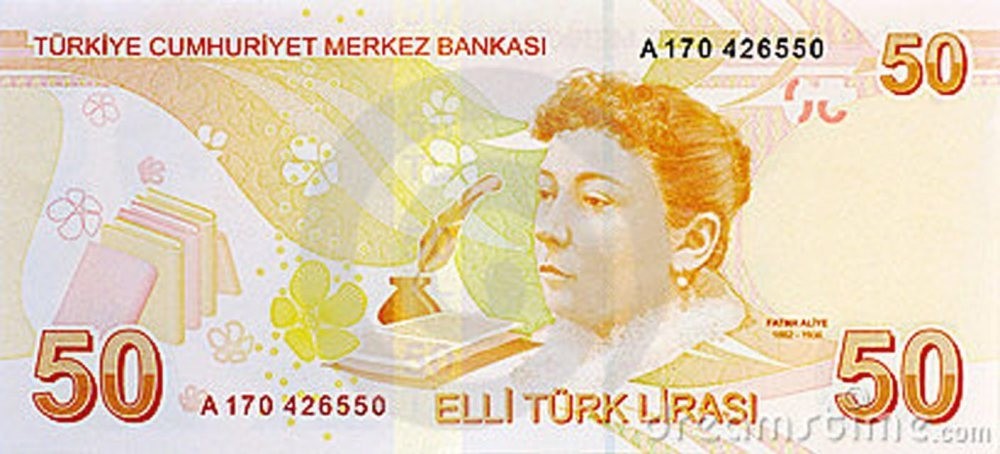
Since 2009, there has been a portrait of a woman on the back of the 50 Turkish lira banknote. She is the first woman to be a novelist in modern Turkey, Fatma Aliye, who was a prominent writer of the late Ottoman era.
Born in 1862, Fatma Aliye was the second child of an esteemed family of Istanbul. Her father was a well-known historian and high-bureaucrat, Ahmed Cevdet Pasha, who played a significant role in the modernization reforms throughout the Tanzimat era between 1839 and 1876. Cevdet Pasha was also the head of the juridical commission that codified traditional Ottoman law for the first time in the history of Islam.
Having opened her eyes to a social class of high cultural capital, Fatma Aliye was curious in books, foreign languages and various arts in her childhood. Her father preferred to provide Fatma a good education at home instead of enrolling her in the education system and she learned French perfectly from her family.
Fatma Aliye translated novels from French to Turkish. She decided to sign her translations as "a woman." As her writings were published, she gained a modest reputation as a woman intellectual.
However, when she was 17, Cevdet Pasha arranged her marriage to a captain-major, Mehmet Faik Bey, since at that time it was common for girls to be married off at an early age. Despite coming from another reputed Ottoman family likewise, Faik Bey had different intellectual tastes. Fatma Aliye had to secretly read books and write during the first years of her marriage.
When her husband's severe attitude toward her reading books softened, Fatma Aliye found a chance to translate of novels from French to Turkish. She then decided to sign her translations as "a woman." As long as her writings were published, she gained a modest reputation as a woman intellectual and drew attention of Ahmet Mithat Efendi, who was a respected authority among Ottoman journalists.
In 1891, she and Ahmet Mithat wrote a novel together, "Hayal ve Hakikat" (Imagination and Reality) when she was only 29. She wrote half of the book that contains the passages of the female character. The book was signed "A woman and Ahmet Mithat." The first novel she published under her own name was "Muhazarat" (Useful Information), which was published in 1892. This was the first book that was written by a woman, and perhaps unsurprisingly, was a love story of a woman.
Fatma Aliye's portrait is depicted on the reverse of the 50 Turkish lira banknote.
The following novels Fatma Aliye published were mostly structured around the similar themes of love, marriage and relationships from a woman's point of view. Fatma Aliye often depicted independent and self-confident female characters, especially in stories of marriage. It is possible to say that her novels reflected her biography and her own experiences. In a sense, she created the modern Ottoman woman she wanted to be with her pen.
After these first novels, Fatma Aliye dedicated herself to create an intellectual bridge not just between Ottoman intellectual circles and Ottoman women, but also between the Western and Ottoman worlds. She defended women rights for the first time in Turkey. She corresponded with several French magazines and published articles in foreign languages. Whereas the heroines in her novels represented radical modern attitudes, her writings engaged with more conservative and traditional values in order to find a legitimate ground for her feminist ideas. In 1892, she published "Nisvan-ı İslam" (Women of Islam), a book that described the condition of women in Muslim countries.
In 1893, Ahmet Mithat Efendi published a book about Fatma Aliye in which he praised her intellectual skills. She earned a name for herself among elite classes and founded the first woman's association for Ottoman history in order to support families of soldiers from the Greco-Turkish War. Her activism was intersected with humanitarianism throughout the war years, between 1913 and 1923.
What is interesting is that her name as an intellectual has been significantly forgotten since the 1920's due to her opposition to the new Republican understanding of the Ottoman history. The 1920s were a tragic time for Fatma Aliye. Her daughter Zübeyde left Turkey and settled in France in order to become a Catholic nun and Fatma Aliye had to travel to France many times in order to see her. She also lost her husband in 1928 and spent her last years with health problems and impoverished. She died on June 13, 1936.
Keep up to date with what’s happening in Turkey,
it’s region and the world.
You can unsubscribe at any time. By signing up you are agreeing to our Terms of Use and Privacy Policy.
This site is protected by reCAPTCHA and the Google Privacy Policy and Terms of Service apply.