Daily Sabah logo

Politics
Diplomacy Legislation War On Terror EU Affairs Elections News Analysis
TÜRKİYE
Istanbul Education Investigations Minorities Expat Corner Diaspora
World
Mid-East Europe Americas Asia Pacific Africa Syrian Crisis Islamophobia
Business
Automotive Economy Energy Finance Tourism Tech Defense Transportation News Analysis
Lifestyle
Health Environment Travel Food Fashion Science Religion History Feature Expat Corner
Arts
Cinema Music Events Portrait Reviews Performing Arts
Sports
Football Basketball Motorsports Tennis
Opinion
Columns Op-Ed Reader's Corner Editorial
PHOTO GALLERY
JOBS ABOUT US RSS PRIVACY CONTACT US
© Turkuvaz Haberleşme ve Yayıncılık 2026

Daily Sabah - Latest & Breaking News from Turkey | Istanbul

  • Politics
    • Diplomacy
    • Legislation
    • War On Terror
    • EU Affairs
    • Elections
    • News Analysis
  • TÜRKİYE
    • Istanbul
    • Education
    • Investigations
    • Minorities
    • Expat Corner
    • Diaspora
  • World
    • Mid-East
    • Europe
    • Americas
    • Asia Pacific
    • Africa
    • Syrian Crisis
    • Islamophobia
  • Business
    • Automotive
    • Economy
    • Energy
    • Finance
    • Tourism
    • Tech
    • Defense
    • Transportation
    • News Analysis
  • Lifestyle
    • Health
    • Environment
    • Travel
    • Food
    • Fashion
    • Science
    • Religion
    • History
    • Feature
    • Expat Corner
  • Arts
    • Cinema
    • Music
    • Events
    • Portrait
    • Reviews
    • Performing Arts
  • Sports
    • Football
    • Basketball
    • Motorsports
    • Tennis
  • Gallery
  • Opinion
    • Columns
    • Op-Ed
    • Reader's Corner
    • Editorial
  • TV

Warning from history: Could Japan-style crash hit China?

by

TOKYO Aug 17, 2017 - 12:00 am GMT+3
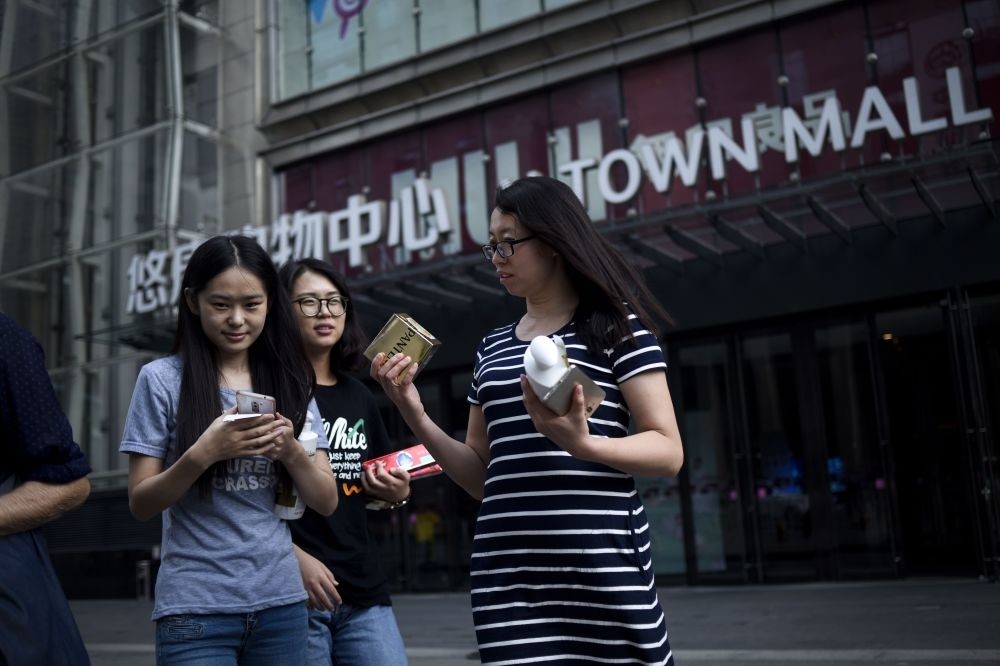
A group of women leave a mall after shopping in Beijing. China's industrial output, a key engine of growth, slowed sharply in July as government efforts to rein in debt weighed on demand and economic activity.
by Aug 17, 2017 12:00 am

With sizzling property prices, a groaning debt load, wealthy tourists and tycoons willing to slap down eye-popping sums for art, China is starting to look like Japan before its economic bubble burst in the early 90s

China President Xi Jinping has commissioned a study to help China avoid Japan's pitfalls, according to Bloomberg, as growth slows and ratings agencies sound the alarm over its debt.

Fears over China's groaning debt load were heightened after the IMF warned Tuesday the world's second largest economy was on a "dangerous" path, urging Beijing to take a more sustainable course and speed up structural reforms. China was also downgraded this summer by Moody's with the credit rating agency citing the country's ballooning debt, sparking an angry response from Beijing. Debt-fueled investment in infrastructure and real estate has underpinned Chinese growth for years since the global financial crisis a decade ago decimated growth in Western markets that booming exporters relied on for growth. Japan was the original Asian tiger, with growth surging at an average 9.0 percent annually between 1955 and 1973 in the long postwar boom, turning it into one of the world's great economic powers.

China has also basked in heady growth - replacing Japan as the world's number two economy in 2010 - and has not seen a single recession in decades. Japan too is groaning under a huge national debt, the legacy of monetary and fiscal policies aimed at boosting growth. Japan's debt load is now more than 200 percent of its Gross Domestic Product. China's debt is around 260 percent of GDP, up from around 140 percent before the 2008 financial crisis. Eighties-era Japan kept interest rates low, creating excessive liquidity in its economy. Frenzied buying saw land prices quadruple in the mid-to-late eighties, and the Nikkei stock index hit almost 40,000 in 1989 - double its current level. But it all came to an end when the central bank abruptly tightened policy. Stock and land prices plunged, businesses stopped investing, consumers stopped spending and bad loans piled up. That ushered in a period of low or no growth known as the "lost decades."

Chinese stock prices remain well off their 2015 highs. But mainland house prices have been soaring, particularly in hubs like Beijing, Shanghai and southern industrial powerhouse Shenzhen. Both countries saw their arrival on the world stage announced by striking acquisition of foreign assets, as Chinese overseas investment hit $170 billion last year, surging 44 percent from 2015. China's Anbang Insurance bought New York's Waldorf Astoria hotel for almost $2 billion in 2014, while tycoon Liu Yiqian purchased Modigliani's "Nu Couche" for a record $170.4 million in 2015. Those big-ticket purchases bear the hallmarks of when Sony scooped up Columbia Pictures for $3.4 billion in 1989 and Mitsubishi Estate paid nearly $850 million for the controlling stake in the operator of New York's Rockefeller Center.

In 1990, Japanese paper tycoon Ryoei Saito bought Vincent Van Gogh's "Portrait of Dr Gachet" for $82.5 million and Pierre-Auguste Renoir's "Bal du Moulin de la Galette" for $78.1 million.

"What's scary is that people in China are thinking, 'China is special, so we are OK.' That's exactly how people felt in Japan during the bubble era," said Kokichiro Mio, senior economist at NLI Research Institute.

Still, China is not a mirror image of Japan 30 years ago. The Chinese economy and its currency are tightly controlled by the state and shielded from foreign influence to a far greater extent than Japan. And Beijing has launched a crackdown on "grey rhinos" - powerful private conglomerates - amid fears they are racking up dangerous debt levels through buying frenzies and threatening financial stability. Lessons from Japan suggest officials should have acted more quickly to bring in stricter banking regulations to keep lenders from overextending themselves and better manage the economic slowdown.


  • shortlink copied
  • KEYWORDS
    business
    The Daily Sabah Newsletter
    Keep up to date with what’s happening in Turkey, it’s region and the world.
    You can unsubscribe at any time. By signing up you are agreeing to our Terms of Use and Privacy Policy. This site is protected by reCAPTCHA and the Google Privacy Policy and Terms of Service apply.
    Pamukkale, Turkey
    20 places that look out of this world
    PHOTOGALLERY
    • POLITICS
    • Diplomacy
    • Legislation
    • War On Terror
    • EU Affairs
    • News Analysis
    • TÜRKİYE
    • Istanbul
    • Education
    • Investigations
    • Minorities
    • Diaspora
    • World
    • Mid-East
    • Europe
    • Americas
    • Asia Pacific
    • Africa
    • Syrian Crisis
    • İslamophobia
    • Business
    • Automotive
    • Economy
    • Energy
    • Finance
    • Tourism
    • Tech
    • Defense
    • Transportation
    • News Analysis
    • Lifestyle
    • Health
    • Environment
    • Travel
    • Food
    • Fashion
    • Science
    • Religion
    • History
    • Feature
    • Expat Corner
    • Arts
    • Cinema
    • Music
    • Events
    • Portrait
    • Performing Arts
    • Reviews
    • Sports
    • Football
    • Basketball
    • Motorsports
    • Tennis
    • Opinion
    • Columns
    • Op-Ed
    • Reader's Corner
    • Editorial
    • Photo gallery
    • DS TV
    • Jobs
    • privacy
    • about us
    • contact us
    • RSS
    © Turkuvaz Haberleşme ve Yayıncılık 2021