Daily Sabah logo

Politics
Diplomacy Legislation War On Terror EU Affairs Elections News Analysis
TÜRKİYE
Istanbul Education Investigations Minorities Expat Corner Diaspora
World
Mid-East Europe Americas Asia Pacific Africa Syrian Crisis Islamophobia
Business
Automotive Economy Energy Finance Tourism Tech Defense Transportation News Analysis
Lifestyle
Health Environment Travel Food Fashion Science Religion History Feature Expat Corner
Arts
Cinema Music Events Portrait Reviews Performing Arts
Sports
Football Basketball Motorsports Tennis
Opinion
Columns Op-Ed Reader's Corner Editorial
PHOTO GALLERY
JOBS ABOUT US RSS PRIVACY CONTACT US
© Turkuvaz Haberleşme ve Yayıncılık 2025

Daily Sabah - Latest & Breaking News from Turkey | Istanbul

  • Politics
    • Diplomacy
    • Legislation
    • War On Terror
    • EU Affairs
    • Elections
    • News Analysis
  • TÜRKİYE
    • Istanbul
    • Education
    • Investigations
    • Minorities
    • Expat Corner
    • Diaspora
  • World
    • Mid-East
    • Europe
    • Americas
    • Asia Pacific
    • Africa
    • Syrian Crisis
    • Islamophobia
  • Business
    • Automotive
    • Economy
    • Energy
    • Finance
    • Tourism
    • Tech
    • Defense
    • Transportation
    • News Analysis
  • Lifestyle
    • Health
    • Environment
    • Travel
    • Food
    • Fashion
    • Science
    • Religion
    • History
    • Feature
    • Expat Corner
  • Arts
    • Cinema
    • Music
    • Events
    • Portrait
    • Reviews
    • Performing Arts
  • Sports
    • Football
    • Basketball
    • Motorsports
    • Tennis
  • Gallery
  • Opinion
    • Columns
    • Op-Ed
    • Reader's Corner
    • Editorial
  • TV

Saudi Arabia, UAE become first Gulf states to introduce VAT

by Compiled from Wire Services

ISTANBUL Jan 01, 2018 - 12:00 am GMT+3
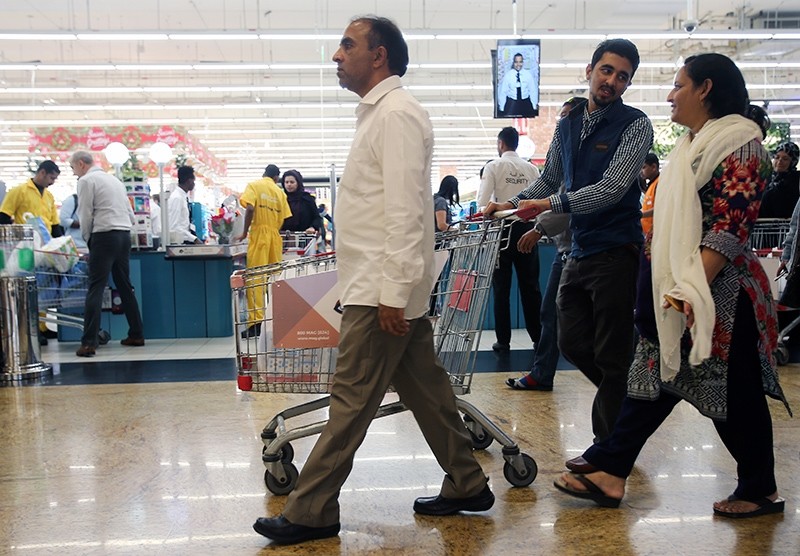
In this Wednesday, Dec. 20, 2017 photo, people leave a hypermarket at a shopping mall in Dubai, United Arab Emirates. (AP Photo)
by Compiled from Wire Services Jan 01, 2018 12:00 am

Saudi Arabia and the United Arab Emirates (UAE) introduced value-added tax from Monday, a first for the Gulf which has long prided itself on its tax-free, cradle-to-grave welfare system.

The five-percent tax will apply to a wide range of items, including: food; clothes; electronics; petrol; phone, water and electricity bills; and hotel reservations.

Saudi Arabia compounded the New Year blow for motorists with an unannounced hike of up to 127 percent in petrol prices with immediate effect from midnight.

They are the latest in series of measures introduced by Gulf oil producers over the past two years to boost revenues and cut spending as a persistent slump in world prices has led to ballooning budget deficits.

Analysts project that the two governments could raise as much as $21 billion in 2018, equivalent to 2.0 percent of GDP.

But it marks a major change for two super-rich countries where the mall is king. Dubai has long held an annual shopping festival to draw bargain hunters from around the world to its glitzy retail palaces.

Saudi Arabia has deposited billions of dollars in special accounts to help needy citizens face the resulting rise in retail prices.

Last year, the two countries said they would implement the VAT as of 2018, in line with an earlier decision by the six-nation Gulf Cooperation Council (GCC).

The other four Gulf states — Bahrain, Kuwait, Oman and Qatar — are also committed to introducing VAT but have decided to delay the move until early in 2019.

The hike in fuel duty in Saudi Arabia was the second in two years.

But it still leaves petrol prices as some of the lowest in the world.

High-grade petrol rose 127 percent from 24 cents a liter ($1.09 a gallon) to 54 ($2.46), while low-grade petrol rose 83 percent from 20 cents a liter (91 cents a gallon) to 36.5 ($1.66).

Duty on diesel and kerosene remained unchanged.

Saudi Arabia has introduced a raft of measures to raise revenue and cut spending as it bids to balance its books.

Last month, it slashed the government subsidy on electricity supply, leading to a sharp rise in bills.

Riyadh posted budget deficits totaling $260 billion over the past four fiscal years and does not expect to balance its books before 2023.

To finance its mounting public debt, the kingdom has withdrawn around $250 billion from its reserves over the past four years, reducing them to $490 billion.

It has also borrowed around $100 billion from the international and domestic markets.

  • shortlink copied
  • Last Update: Jan 01, 2018 1:16 pm
    KEYWORDS
    business
    The Daily Sabah Newsletter
    Keep up to date with what’s happening in Turkey, it’s region and the world.
    You can unsubscribe at any time. By signing up you are agreeing to our Terms of Use and Privacy Policy. This site is protected by reCAPTCHA and the Google Privacy Policy and Terms of Service apply.
    "Chicago"
    Best picture Oscar winners of past 20 years
    PHOTOGALLERY
    • POLITICS
    • Diplomacy
    • Legislation
    • War On Terror
    • EU Affairs
    • News Analysis
    • TÜRKİYE
    • Istanbul
    • Education
    • Investigations
    • Minorities
    • Diaspora
    • World
    • Mid-East
    • Europe
    • Americas
    • Asia Pacific
    • Africa
    • Syrian Crisis
    • İslamophobia
    • Business
    • Automotive
    • Economy
    • Energy
    • Finance
    • Tourism
    • Tech
    • Defense
    • Transportation
    • News Analysis
    • Lifestyle
    • Health
    • Environment
    • Travel
    • Food
    • Fashion
    • Science
    • Religion
    • History
    • Feature
    • Expat Corner
    • Arts
    • Cinema
    • Music
    • Events
    • Portrait
    • Performing Arts
    • Reviews
    • Sports
    • Football
    • Basketball
    • Motorsports
    • Tennis
    • Opinion
    • Columns
    • Op-Ed
    • Reader's Corner
    • Editorial
    • Photo gallery
    • DS TV
    • Jobs
    • privacy
    • about us
    • contact us
    • RSS
    © Turkuvaz Haberleşme ve Yayıncılık 2021