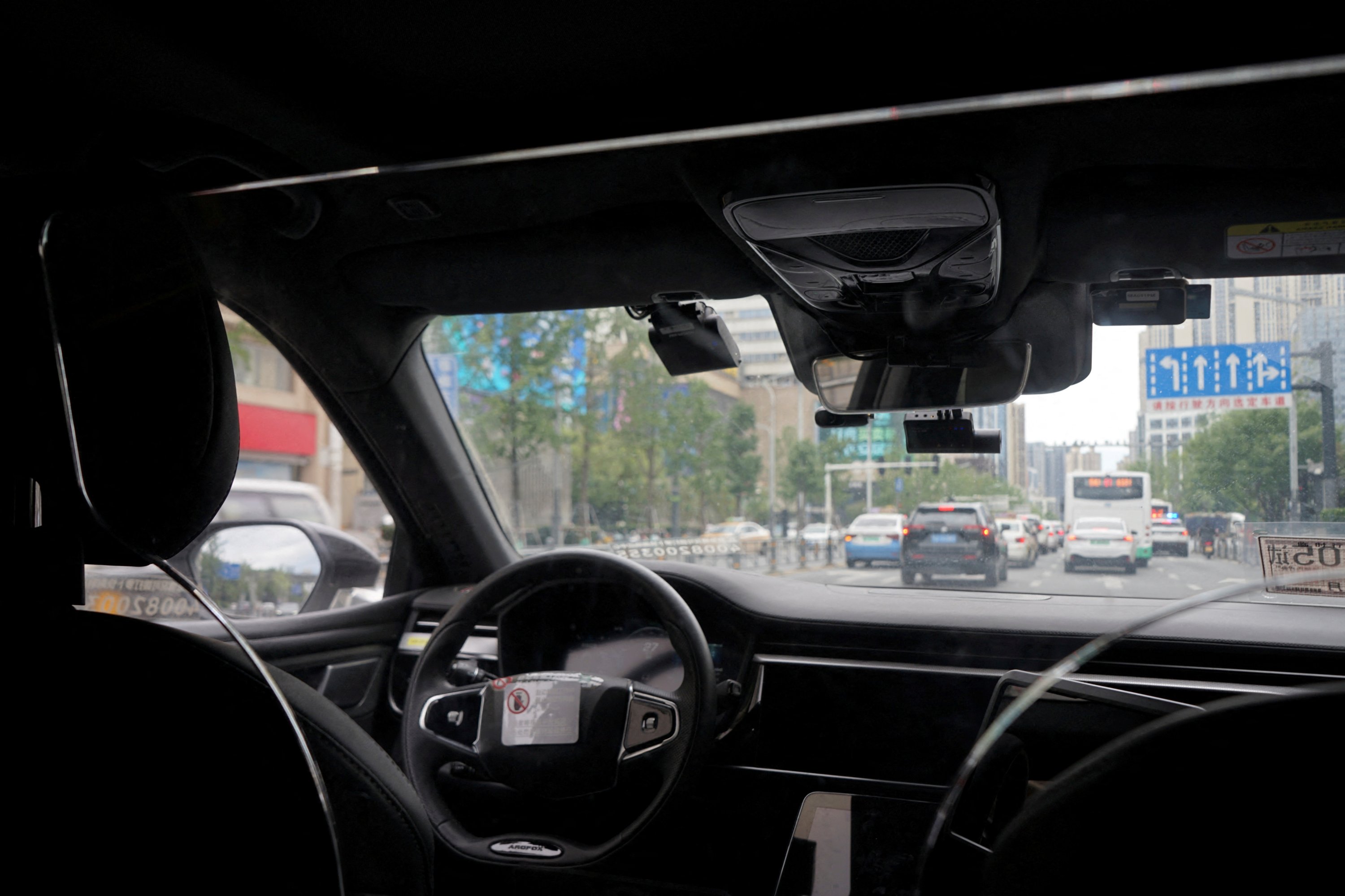
Chinese tech giant Baidu plans to roll out its driverless cars on ride-hailing app Uber in Asia and the Middle East this year, the two companies announced on Tuesday.
The multiyear partnership will see "thousands of Baidu's Apollo Go autonomous vehicles on the Uber platform across multiple global markets," the companies said in a joint statement.
The first driverless cars are expected on the roads this year, the statement said, adding the robotaxis would launch "outside the United States" but without specifying in which countries.
Uber users in these locations may have the option to ride in a fully driverless Apollo Go car after requesting a trip.
China's tech companies and automakers have invested billions of dollars in self-driving technology in recent years, with intelligent driving emerging as the new battleground in the country's fiercely competitive domestic car market.
Driverless taxis are already on the roads in China, with limited capacity, most notably in the central city of Wuhan, where a fleet of over 500 can be hailed by app in designated areas.
In March, Baidu announced it had signed an agreement to launch autonomous driving tests and services in Dubai, Apollo Go's first international fleet deployment.
The company also plans to start testing self-driving taxis in Europe by the end of this year, a source with knowledge of the matter confirmed to Agence France-Presse (AFP) in May.
The company will also start testing in Türkiye, they said.
Meanwhile, San Francisco-based Uber will launch self-driving taxis in London next year when England trials new driverless services, the firm and the U.K. government said in June.
Under the Uber pilot scheme, services will initially have a human in the driver's seat who can control the vehicle in an emergency, but the trials will eventually transition to being fully driverless.