Sales of passenger cars and light commercial vehicles in Türkiye rose by almost 15% in July, industry data showed on Monday, driven by robust demand ahead of a long-anticipated special consumption tax (ÖTV) adjustment at the end of the month.
Sales jumped by 14.6% year-over-year last month to 107,718 units, according to data by the Automotive Distributors and Mobility Association (ODMD). That marked a 55.9% increase compared to the average July sales over the past 10 years.
Passenger car sales jumped 14.7% in July to 84,195 units, while light commercial vehicle sales rose 14% to 23,523 units, the data showed.
Electric vehicle (EV) sales doubled compared to July last year, reaching 17,225 units, capturing a 20.5% share of the passenger car market. Hybrid sales also rose sharply, increasing 48.3% year-over-year to 21,656 units.
Despite a slight monthly decline of about 5 percentage points, the combined market share of hybrids and fully electric vehicles stood at 46.2% in July. On a 12-month rolling basis, that share surpassed the 40% threshold for the first time, reaching 40.8%.
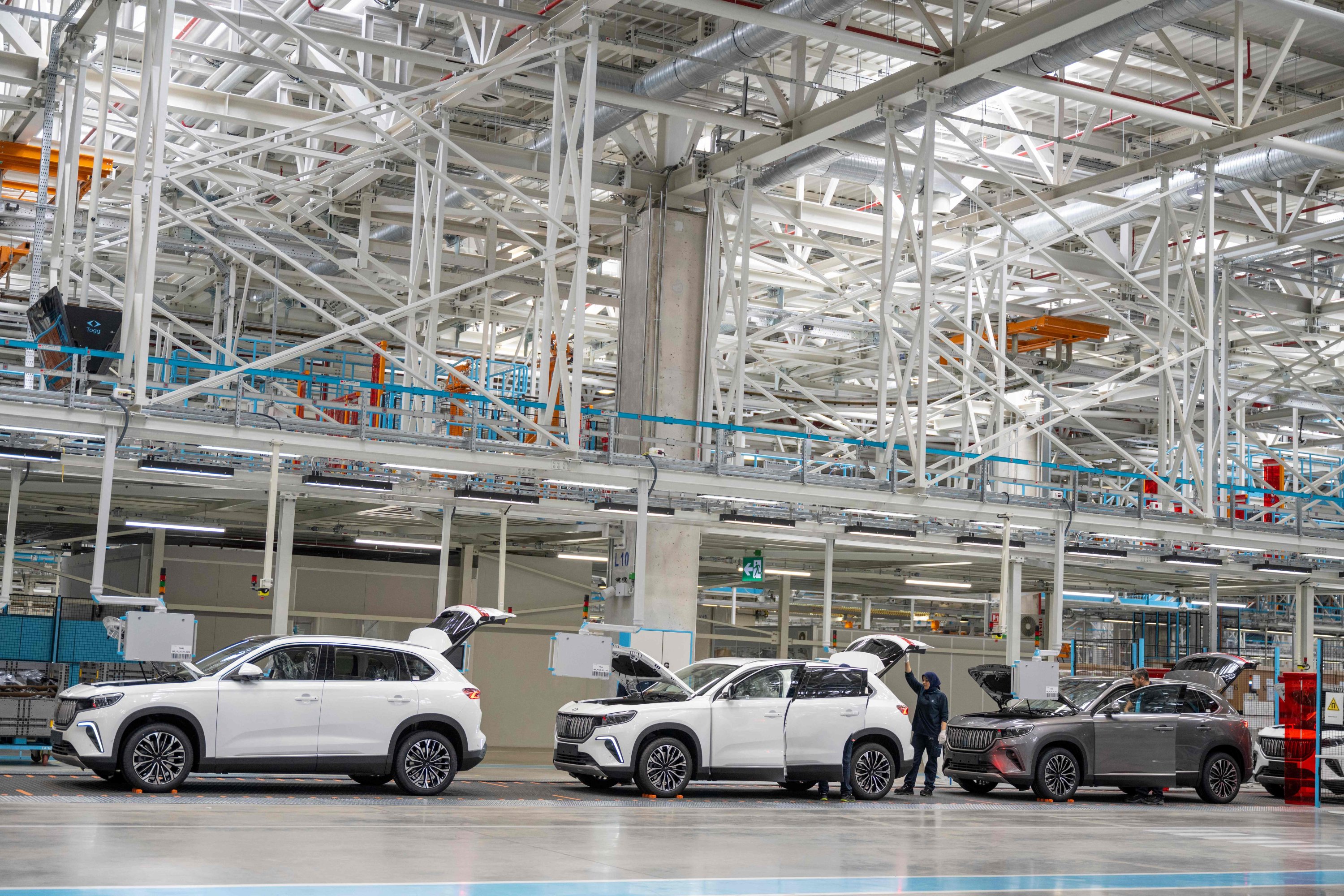
Tesla topped the EV list in July with sales of 4,706 units of its Model Y, which held a share of 27.32%. It was followed by the homegrown Togg brand, which sold 2,720 units of its C-SUV T10X model, accounting for almost 15.8% of the EV market.
More than a week ago, Türkiye revised the special consumption tax on some cars in a move the government said was primarily aimed at helping reduce the current account deficit.
The change, made under a law on protecting the value of the Turkish currency, revised tax base thresholds and rates for certain fossil fuel-powered passenger cars and some hybrid vehicles that both use fossil fuels and have electric engines.
Special consumption tax rates were reduced by 5-10 percentage points for some vehicles, while for some other models, rates were increased by 10 to 20 points.
Türkiye has a large auto manufacturing sector, but it also has significant car imports.
The Treasury and Finance Ministry said the overall inflationary impact of the changes would be minimal, estimating a net annual effect of just 0.0019 percentage points. It gave no details on the forecast impact on the current account deficit.
The rates will vary between 70% and 220% depending on engine size for combustion engine cars, while the minimum rate will be 25% for electric vehicles and 45% for hybrid cars.
From January through July, sales of passenger cars and light commercial vehicles jumped by 6.5% year-over-year to 715,695 units, the ODMD said.
Passenger car sales rose by nearly 6.7% to 572,198 units, while light commercial vehicle sales increased by 5.8% to 143,497 units.
Gasoline-powered vehicles maintained their lead with 46.5% share (266,095 units), while hybrid cars gained significant momentum with a 26.8% share (153,363 units).
Electric car sales reached 103,310 units with an 18.1% share. Diesel vehicles accounted for 8%, and LPG-powered models were reported at 0.7%.
Togg's T10X was the bestselling EV model in the first seven months with 19,821 units and a market share of 19.4%. It was followed by Tesla's Model Y at 17,026 units and a share of 16.7%.