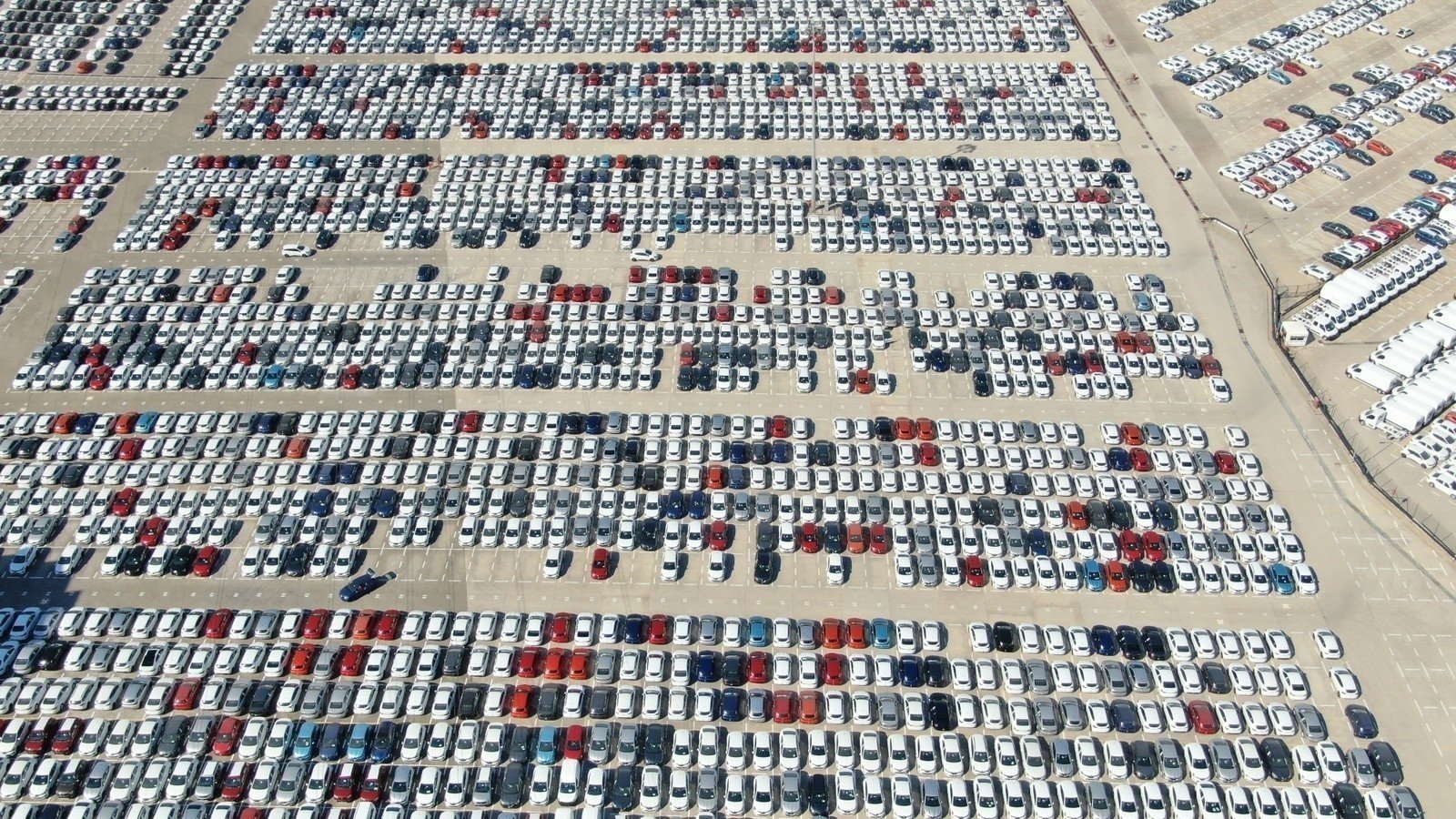
The automotive sector passed the year 2021 under the shadow of the chip crisis, logistics bottlenecks and record increases in raw material costs, while sector representatives in Turkey say the main agenda of local automotive manufacturers this year will be supply chain management, again.
Automotive Industry Association (OSD) head Haydar Yenigün, evaluating the course of the sector, said that supply chain management will continue to be the No. 1 item in the 2022 agenda of the sector.
“The chip crisis will continue in 2022. We now hold procurement meetings once a day, which were previously held once a month. We have a supply chain meeting every evening. Every day a new picture emerges,” he said.
Yenigün stated that on the one hand, new chip factory investments are being evaluated for the near future with the hope that life can return to normal by the end of the first quarter of 2023.
Stating that the chip is not the only problem in the supply chain, Yenigün said there is also a problem in the transportation of the supply as well.
According to the World Container Index, container freight on the east-west route, which was at the level of $5,000 (TL 67,480) at the beginning of 2021, increased to $9,000 at the end of 2021.
“An increase in freight is expected this year as well,” Yenigün said, as the prices are expected to be about two to seven times higher in 2022. “With the entry of new ships into the market, it is foreseen that the relaxation in freight and reservations will occur in 2023 at the earliest.”
Expressing that the increase in input costs will also continue, Yenigün said: “There have been price increases between 100% and 300% in raw materials such as sheet metal, aluminum and rubber in the last year. In particular, there has been an increase of 274% in the last year in Turkish lira terms in the domestic sheet metal market. All this is reflected in the vehicle prices,” along with the rising electricity costs in Turkey.
“There was an increase of 400% in natural gas and 273% in electricity between January 2021 and January 2022 on a Turkish lira basis. This process is no longer a manageable process for users, producers and investors,” he said.
According to the data of the OSD, total vehicle production in 2021 decreased by 2% compared to the previous year to 1.28 million units, while automobile production decreased by 8% to 782,835 units. With the tractor production, the total production reached 1.331 million units. The reason why the biggest loss on the production side was on the automobile is that this segment was most affected by the global chip crisis.
Yenigün stated some 10.3 million vehicles worldwide were produced incompletely due to a semiconductor shortage.
“That is a very serious number. At the beginning of the year, we predicted a loss of 5 million-6 million units. But with each passing month, things have progressed a little more haphazardly,” he said.
Yet, Yenigün also stated that there were pleasing developments on the export side.
Automotive exports increased by 2% on a unit basis compared to 2020 and amounted to 937 units. Automobile exports, on the other hand, decreased by 5% to 565,361 units.
The automotive industry, which made exports worth $29.9 billion last year, took a 13% share of the total exports.
“There is a slight increase in exports on the basis of units. There is also a very serious increase in the number of exports. The value of exports per kilogram is $10.62. It reached its highest level ever. But it's not enough, we're working to make it $20,” the sector official said.
Industry and Technology Minister Mustafa Varank also shared a statement via his Twitter account regarding the country’s automotive sector exports.
“Last year, 772,000 new and commercial vehicles were sold in Turkey,” he said, adding: “The Turkish automotive industry closed the year 2021 with $29.8 billion exports revenue.”
The sector, which sold to nearly 200 countries, autonomous and free zones last year, sold the most vehicles to the European Union with a share of 64.6%.
Foreign sales to the "Other European countries" group, which the United Kingdom has been included in since leaving the EU, increased by 32%.
Meanwhile, the best scenario for 2022 project production is to increase by 15% and boost exports by 17%.
Yenigün stated that they expect a sale higher than last year in the domestic market as well.