Italian defense firm Leonardo and Turkish aviation firm Baykar successfully concluded the first phase of live testing for the K-SWARM program, marking a milestone in crewed and unmanned aircraft teaming capabilities, according to a joint press release on Monday.
The joint flight test campaign validated collaborative and coordinated operations using next-generation algorithms that allowed piloted aircraft to assume full control of autonomous unmanned platforms, a statement from Leonardo read.
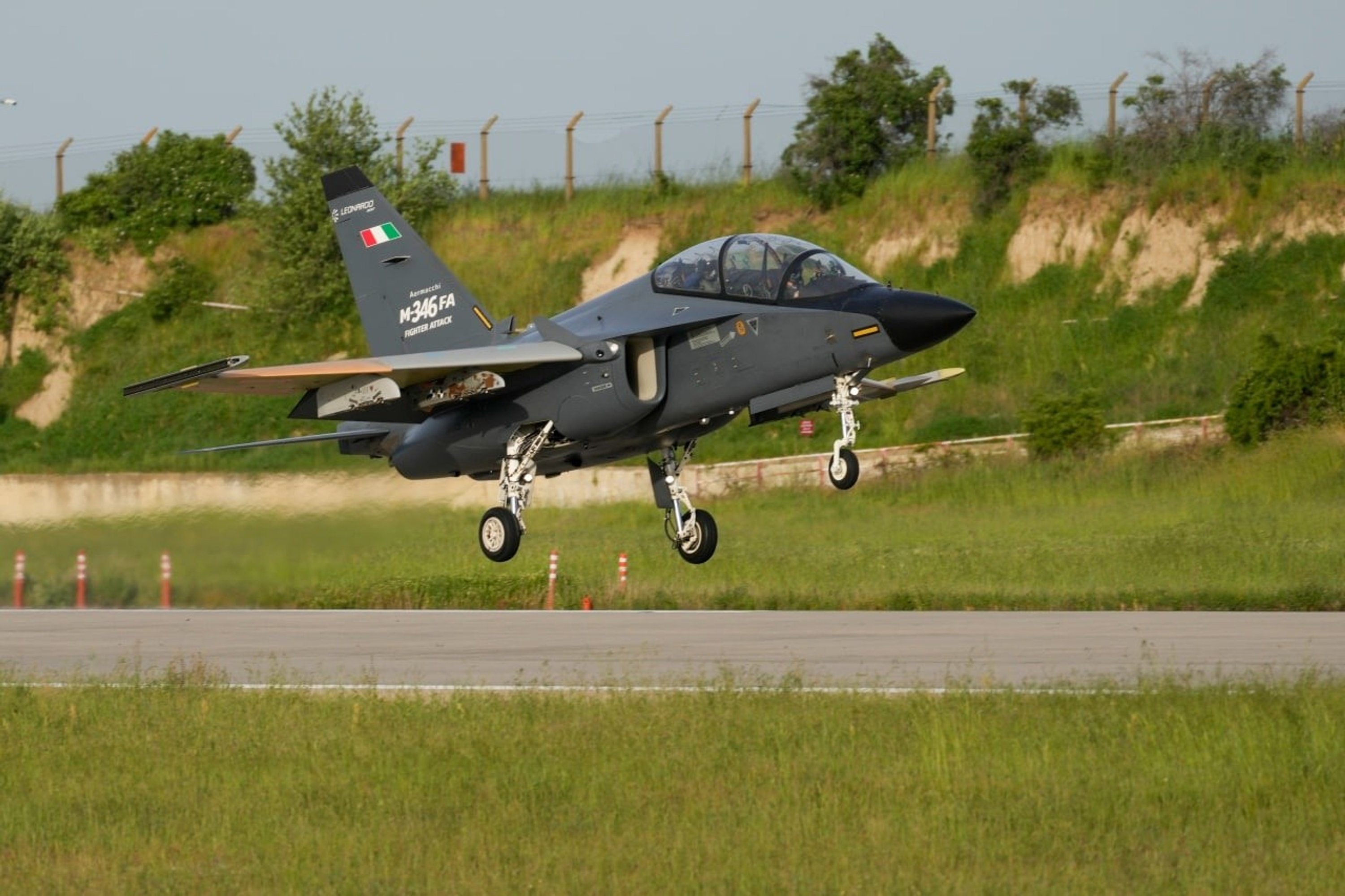
The live testing took place at a flight and test center of Baykar in Çorlu, Türkiye, and the flight operations involved two Leonardo M-346 airplanes and the Bayraktar Kızılelma unmanned fighter aircraft.
The Leonardo aircraft included a company-owned M-346 Fighter Attack variant, with a T-346A aircraft of the Italian Air Force acting as a chase plane.
During the flights, Kızılelma autonomously rejoined the M-346 formation following an autonomous taxi and take-off sequence.
The pilots of the M-346 used a newly developed onboard avionic suite and a dedicated computing system to command different formations, position changes, separations, and rejoins.
The unmanned fighter accurately executed all maneuvers through advanced smart fleet autonomy algorithms developed by the hardware-in-the-loop laboratory of Baykar.
A proprietary cyber defense platform of Leonardo, called GCC Tactical Platform, protected and monitored the synchronized real-time data exchange between the participating aircraft.
The technical teams of both companies carried out extensive preparation work over several months to ensure safe and effective technical integration before transitioning from simulations to live flight trials.
The gathered data will guide the next stages of the K-SWARM program, which aims to reduce pilot workload and boost mission efficiency through advanced artificial intelligence technology.
Both defense companies plan to conduct new tests with increased operational complexity and additional functions in the coming months.