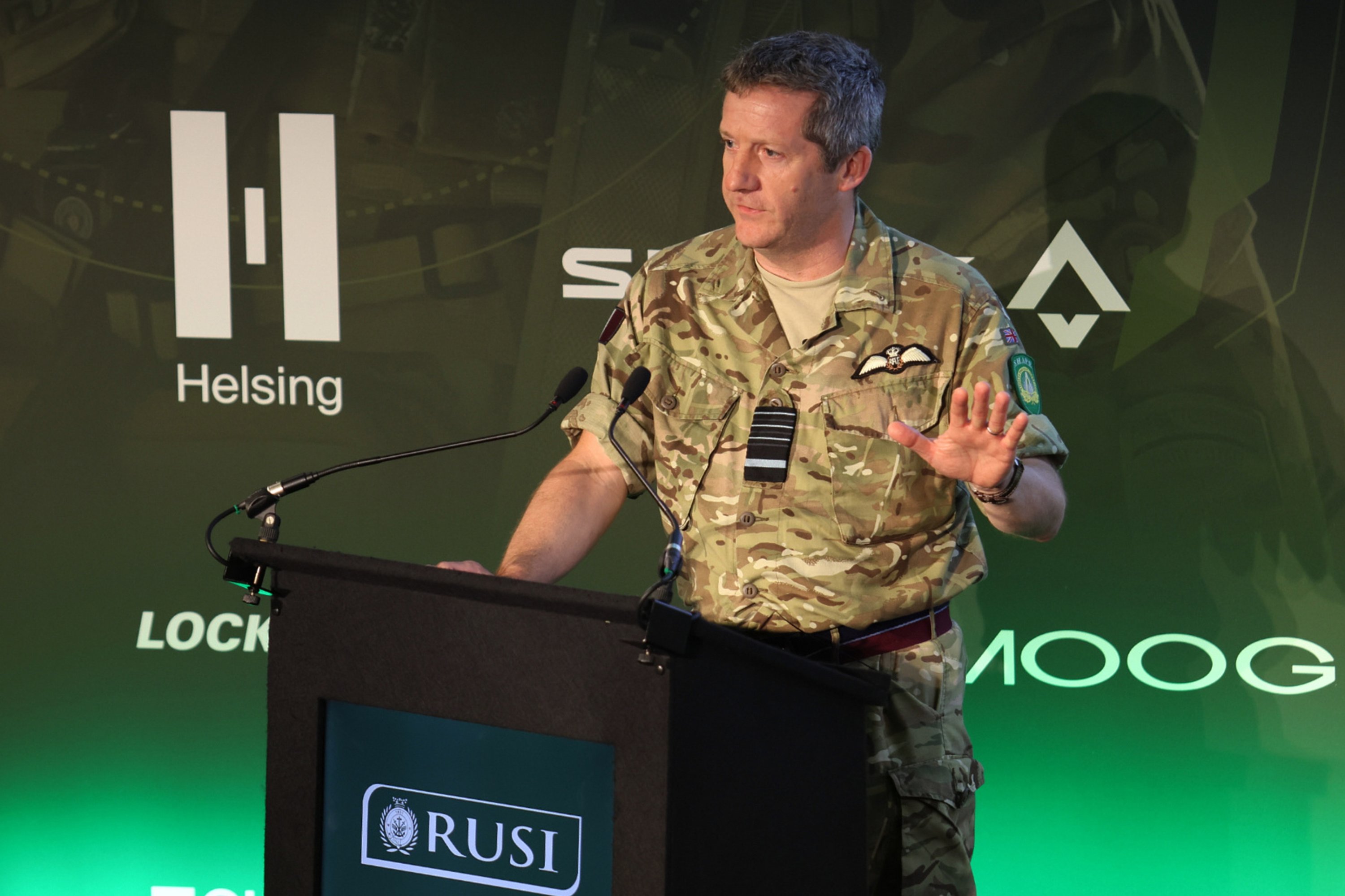
NATO's Deputy Supreme Allied Commander Europe has highlighted Türkiye's Bayraktar drones as a model for the alliance's shift toward open, interoperable military software architectures, saying the future of defense lies in adaptable rather than closed systems.
Speaking to Anadolu Agency (AA) ahead of the upcoming NATO summit in the Turkish capital Ankara, Air Chief Marshal John Stringer, NATO deputy supreme allied commander in Europe, highlighted Türkiye’s pivotal role in Western security and stressed the need for a radical overhaul of how the alliance integrates military technology.
Against a backdrop of shifting transatlantic burdens and regional volatility, Stringer mapped out a blueprint for a modernized alliance. At its core is a transition away from closed software and multibillion-dollar defense monopolies toward more flexible, open systems developed across the alliance.
He pointed to Bayraktar as a leading example of this approach, highlighting its relevance to NATO’s evolving air and land operations, and the broader transformation of how the alliance integrates emerging technologies.
"Bayraktar are a great example of those almost insurgent European firms, many of whom did not even exist five years ago ... who are resetting a bunch of long-established principles,” he said.
Bayraktar drone systems are widely regarded as game-changers in modern warfare because of their low cost, long endurance and precision munitions, making them a critical component of asymmetric power for NATO.
Stringer argued that NATO should accelerate its move to open and flexible defense architectures, enabling new technologies from different allies and manufacturers to be integrated quickly, rather than remaining dependent on proprietary software controlled by individual contractors.
"No matter what route people eventually go down, the most important thing ... is that the architectures we use are genuinely open,” Stringer explained, urging member states to support "real vibrancy” in their tech sector.
At the July 7-8 summit in Ankara, he noted that the meeting will focus on alliance unity, higher defense spending, and continued support for Ukraine, stressing that political declarations must be matched by real military capabilities.
During a recent White House meeting with NATO Secretary General Mark Rutte, US President Donald Trump heavily criticized European allies, expressing disappointment over their lack of support during the war with Iran and demanding absolute loyalty from the alliance.
Trump openly stated that he would have skipped the summit in Ankara altogether if it were not for his respect for Turkish President Recep Tayyip Erdogan.
Stringer also underlined Ankara’s broader importance within NATO’s structure and daily operations: "Türkiye is massively important to the alliance (and) always has been since joining.”
He emphasized that Türkiye is "vital for the alliance” both geopolitically and geographically.
"And every day, Turkish soldiers, sailors and airmen are supporting the security of all in NATO,” he underlined.