The Turkish defense industry encompasses hundreds of companies – bigger and smaller – which, often in synchronization, produce some of the most advanced products found on the market nowadays.
Whether older companies that form the core of the Turkish defense ecosystem or newer ones, such as Skydagger, which is developing next-generation unmanned aerial vehicle (UAV) solutions, the list goes on.
However, to better understand the companies, the stories behind them and the top products they are working on, we could divide them into several groups based on the area/surrounding they operate in: aerial, naval, ground and electronics/software.
This explainer guides you through the most important names.
Starting with the firms that manufacture air-based products, let's begin with Turkish Aerospace Industries (TAI) – the developer of the country's fifth-generation fighter jet Kaan, and the maker of a wide array of products, from aircraft, drones and helicopters to engines via its TEI subsidiary.
TAI was incorporated under the Ministry of Industry and Technology on June 28, 1973, to reduce Türkiye's foreign dependence in the defense industry.
Today, it is among the top hundred global players in the sector. It is one of 5 Turkish defense companies that made the Defense News Top 100 list in 2025.
TAI, which had a single program, the co-production of the F-16 Fighting Falcon at its establishment phase, is now working on dozens of projects, including some of the most notable projects the domestic industry is undertaking.
TAI manages several major national aerospace and defense projects, headlined by the Kaan fifth-generation stealth fighter jet, the Hürjet advanced jet trainer, and the Anka-3 stealth flying-wing unmanned combat aerial vehicle (UCAV).
The Kaan, or formerly the National Combat Aircraft (MMU), and initially TF-X, is its flagship project designed to replace the Turkish Air Force’s aging F-16 fleet. The Kaan is also intended for export to international markets.
The twin-engine, all-weather air superiority fighter jet made its historic first flight on Feb. 21, 2024.
Last month, it successfully conducted a pre-flight taxi test with its new P1 prototype.
In 2025, Indonesia signed a contract to buy 48 Kaan fighter jets from Türkiye, which makes the Southeast Asian nation the first buyer of Türkiye’s homegrown aircraft.
Meanwhile, TAI has also agreed multi-billion deal to provide Spain forces with Hürjet trainer, making a historic agreement with EU and NATO ally.
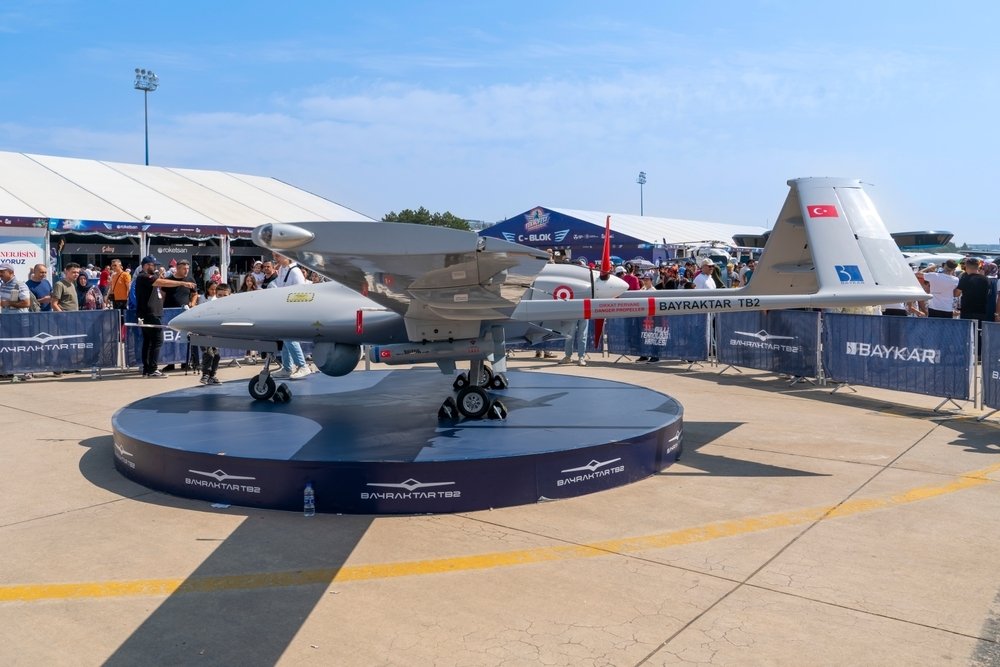
Istanbul-based Baykar, another aerial-domain manufacturer, emerged as a pioneer and synonym of Turkish drone power and a company that now stands among the top 10 exporters in the country.
Founded by the late Özdemir Bayraktar and headed by his sons Selçuk and Haluk Bayraktar, Baykar is the leading private Turkish defense company, specialized in UAVs, autonomous technologies, and artificial intelligence.
The company employs more than 8,500 people through its domestic and international subsidiaries, with 90% of its revenue coming from exports.
Baykar, which has been the leading exporter in Türkiye’s defense and aerospace sector for the past five years, has signed supply agreements with 39 countries in total, 36 countries for the Bayraktar TB2 drones and 16 countries for its Bayraktar Akıncı UCAV.
In 2025, it announced it acquired Italy's historic aerospace company Piaggio Aerospace, while it also partnered with Leonardo, forming a joint venture named LBA Systems.
The new company focuses on the design, development, production, and maintenance of next-generation unmanned aerial systems (UAS).
While thus expanding its European reach, the company still works on the development of the unmanned fighter jet, Kızılelma, which builds upon the groundbreaking success of Bayraktar drones and integrates next-generation cutting-edge technologies.
The aircraft is described as having exceptional air-to-air capabilities, being equipped with AESA radar and different payloads, including laser-guided munitions, standoff weapons, cruise missiles and mini cruise missiles.
However, the product that stands out when mentioning Baykar is definitely its Bayraktar TB2 drone, which has proven its warfare capabilities, including in conflicts in Ukraine and Karabakh.
Seen as a complementary force to some of the aforementioned platforms, missile-maker Roketsan is a leading Turkish defense contractor and weapons manufacturer based in Ankara.
Founded in 1988 to establish a national missile and rocket industrial base, it designs, develops, and produces advanced rockets, missiles, smart munitions, and space launch systems.
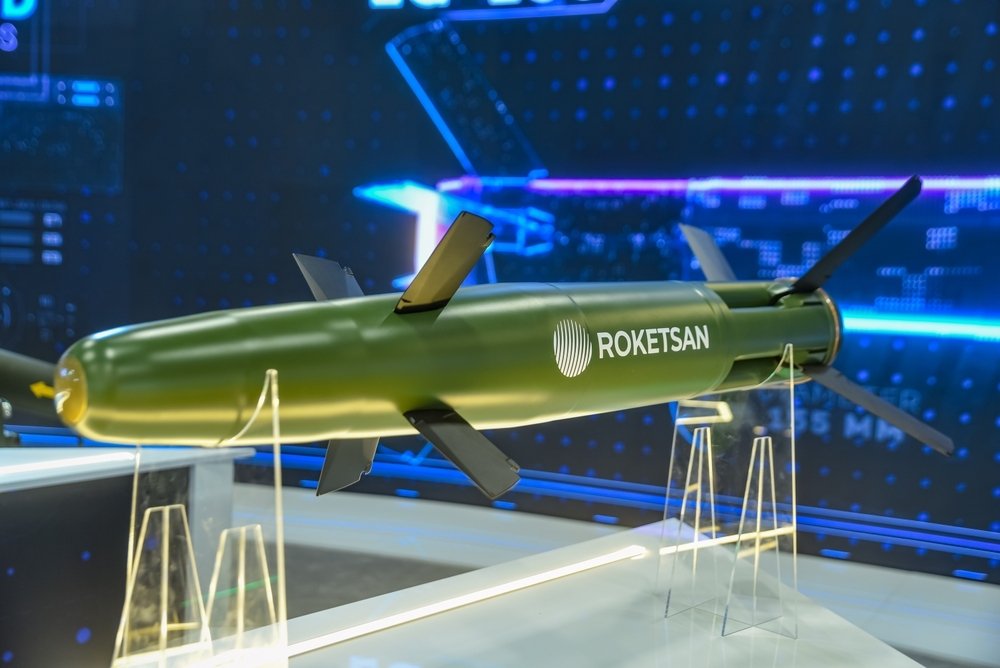
The company produces a diverse spectrum of solutions, from air defense to land and naval systems and rocket launchers.
Türkiye's naval production is categorized by several prominent contractors and a number of shipyards, which, with companies that develop electronics and software solutions, stand behind national frigates and vessels.
STM, established in 1991, is supplying security forces, particularly the Turkish Naval Forces, with indigenous systems and solutions.
Also Ankara-based, STM is the main prime contractor for engineering and design across major programs like the MILGEM I-class frigates, the National Fast Attack Craft (FAC), and the STM500 submarine.
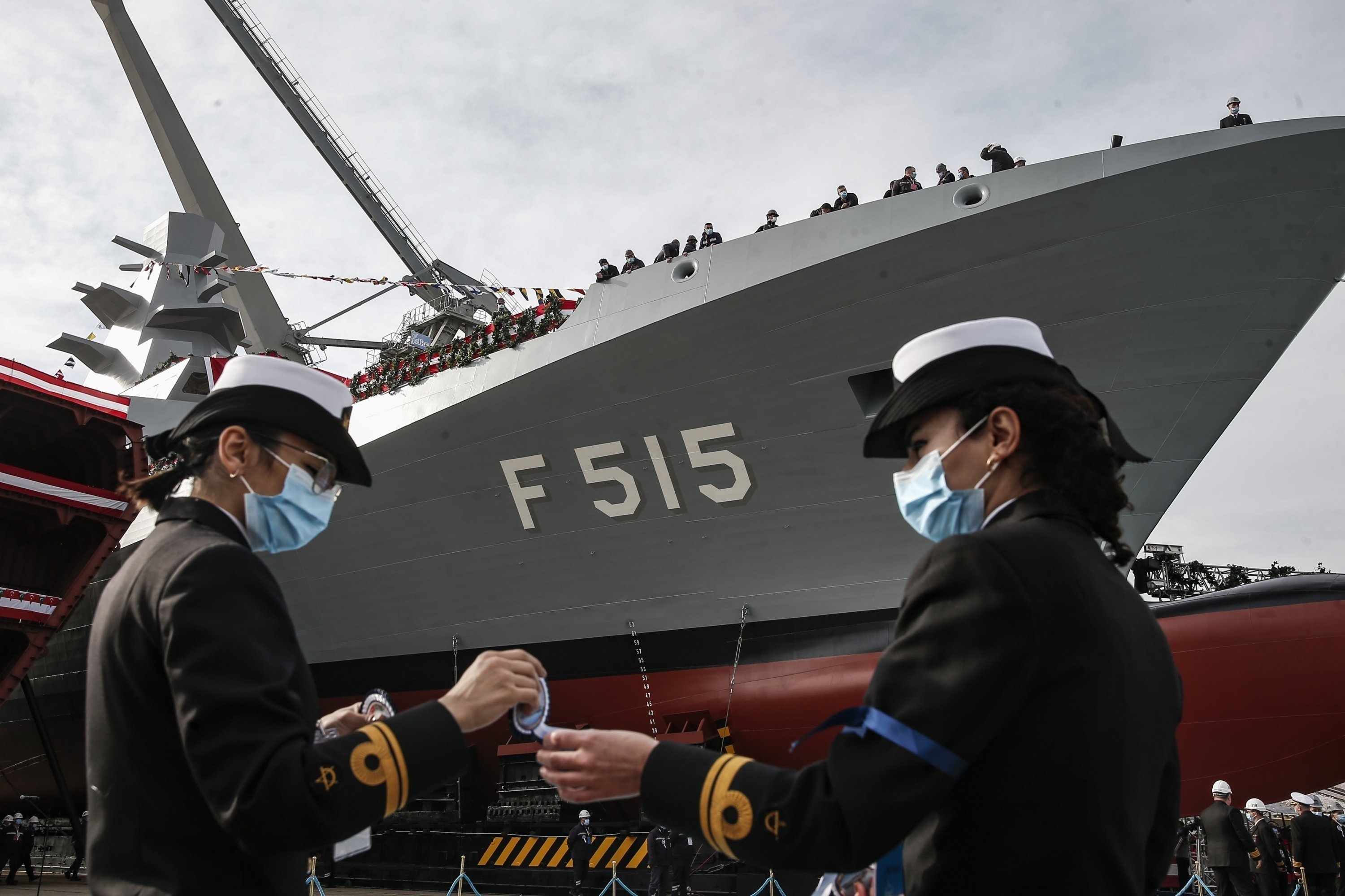
ASFAT, another leading state-owned contractor, acts as a massive defense export bridge, building corvettes and Hisar-class Offshore Patrol Vessels (OPV).
The company recently finalized an export of an offshore patrol vessel to Romania's Navy, marking a first such export to an EU and NATO member.
Naval production also features shipyards such as Sedef, Anadolu, and Sefine.
The Turkish land defense vehicles sector is another export powerhouse that supplies armored fleets globally.
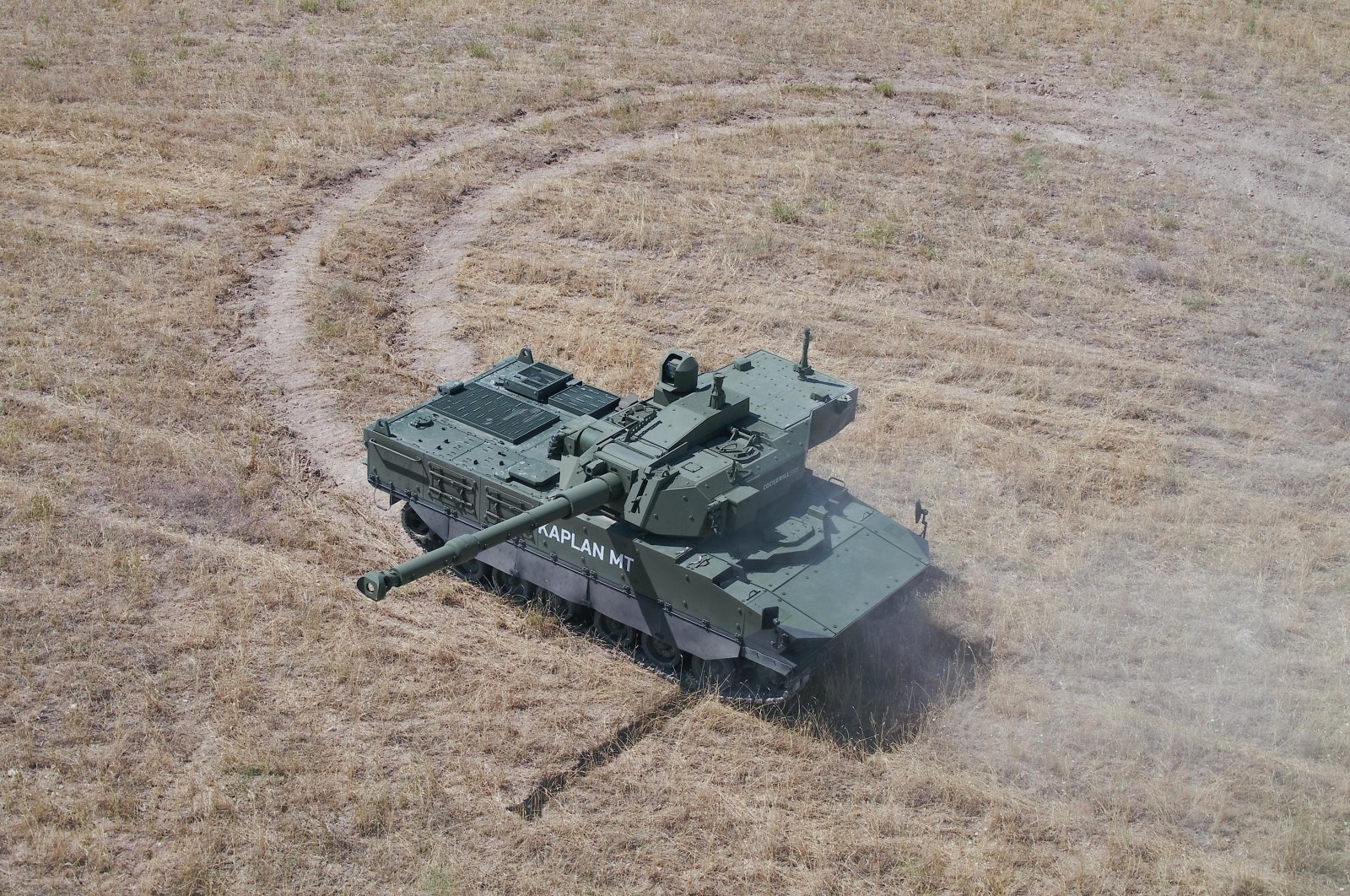
BMC is the prime manufacturer responsible for the serial production of the Altay Main Battle Tank, while FNSS and Otokar lead the market in tracked armored fighting vehicles and wheeled tactical platforms.
Starting its journey in Ankara in 1975, Aselsan was established to meet the communication tool requirements of the Turkish Armed Forces (TSK).
Over the years, it has become one of the leading domestic and global companies in the field of electro-optics, radars, communication and control systems.
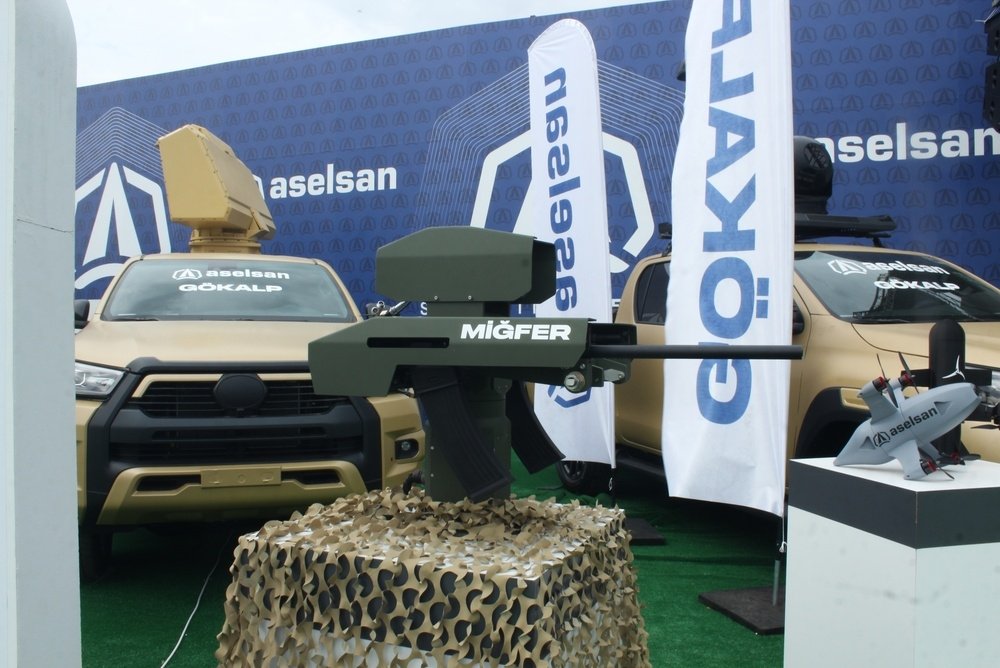
Apart from its base in Ankara, it significantly expanded its global reach, having subsidiaries in regions from the Middle East to Latin America and Southeast Asia.
It is also the largest Turkish company with a market capitalization of about $37 billion.
Moreover, it is known for its role in Türkiye’s multilayered defense system dubbed "Steel Dome," being one of the main contractors.
Last August, the foundations were laid for its Oğulbey Technology Base, with new investment worth $1.5 billion, marking one of the largest industrial investments in Türkiye in recent years.
Havelsan, established in 1982, is another critical link of the supply chain and one of Türkiye's leading defense and advanced technology companies.
As a subsidiary of the Turkish Armed Forces Foundation (TSKGV), Havelsan develops innovative, national, and smart solutions tailored to the needs of defense, public, and private sectors.
With deep expertise in mission-critical systems, the company continues to deliver cutting-edge technologies that contribute to Türkiye’s technological independence and global competitiveness.
Moreover, with its “AI for Defense” approach, Havelsan increasingly integrates artificial intelligence into every layer of its products and services. It is also recognized for naval systems such as Barkan, Baha, Bozbey, and Sancar armed unmanned surface vehicle (AUSV), all designed to respond to next-generation operational challenges.
Beyond its major contractors, the Turkish defense industry is deeply integrated with suppliers producing critical subsystems, ranging from munitions to battery and advanced technologies.