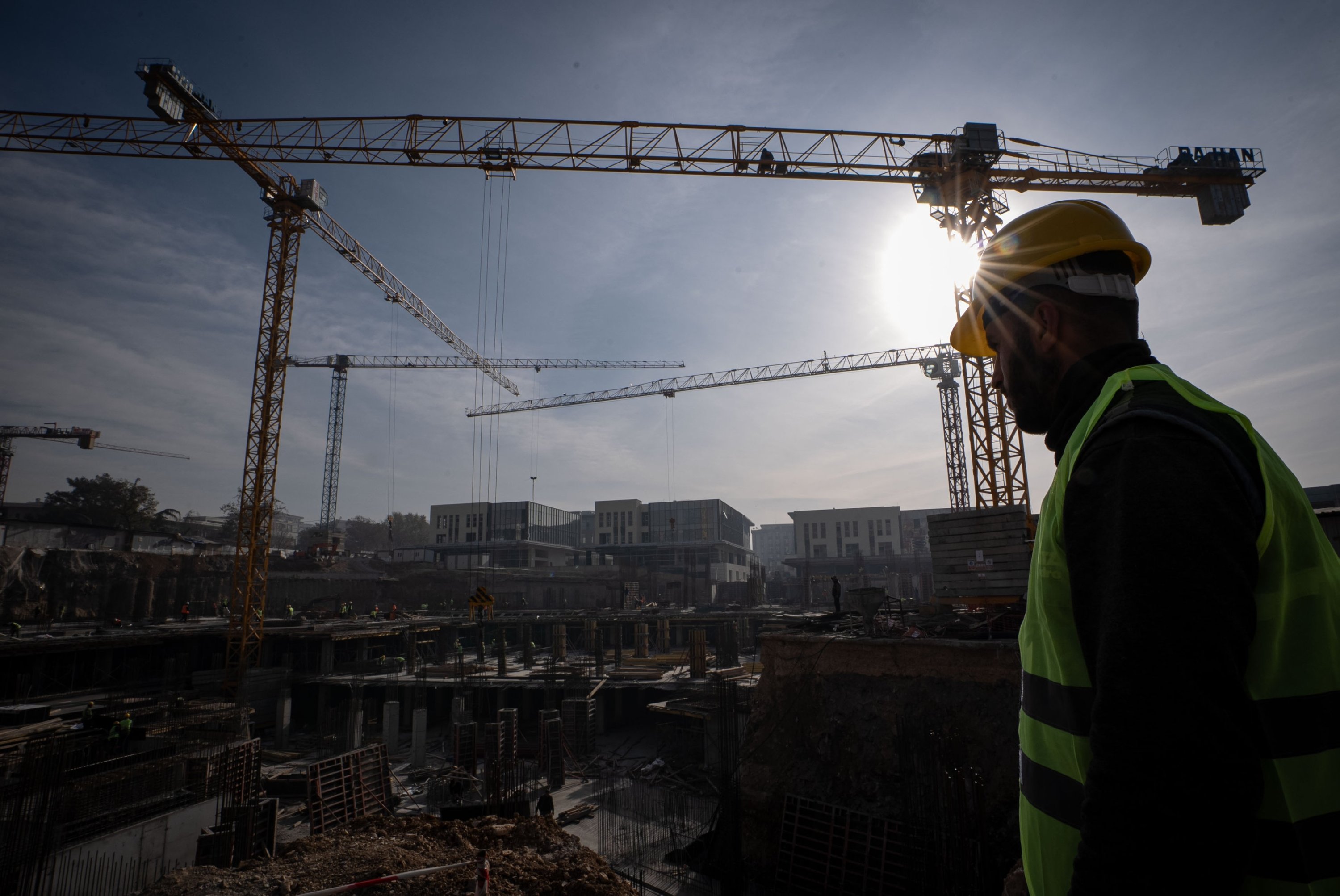
Türkiye has mobilized close to $8.7 billion in external financing to fund rebuilding efforts and economic revitalization in its southeastern region following the devastating earthquakes almost three years ago.
The disaster early on Feb. 6, 2023, claimed more than 50,000 lives, impacted 11 southeastern provinces, razed hundreds of thousands of buildings and severely impacted the infrastructure.
Ever since, Turkish authorities have sought to channel funding to address what has been estimated to be an economic loss of $150 billion and to support long-term redevelopment across the affected provinces.
The Treasury and Finance Ministry has been working with international financial institutions, government lenders and commercial banks to secure long-term, low-cost financing for reconstruction efforts.
The funds are being directed toward the rebuilding and strengthening of schools, hospitals, housing, industrial facilities and urban infrastructure, while also supporting the real sector to preserve employment and ensure access to financing for businesses operating in the region.
Authorities said the financing aimed to prevent disruptions in credit access, support investment and meet liquidity needs, particularly for small and medium-sized enterprises and exporters.
External funding has been secured across multiple sectors, including health care, agriculture, infrastructure and industry.
In 2023, the World Bank provided $990.8 million for projects implemented by the Health Ministry, the Environment, Urbanization and Climate Change Ministry, and the state lender Ilbank.
The lender also extended $450 million to the Small and Medium Enterprises Development and Support Administration (KOSGEB) to support the recovery and business continuity of SMEs.
The European Investment Bank approved $428.4 million in financing for Ilbank in the same year.
In 2024, the World Bank provided an additional $600 million for projects under the Industry and Technology Ministry and $241.4 million for Agriculture and Forestry Ministry projects.
The Japan International Cooperation Agency (JICA) also extended $387.3 million in financing to support health care and urban reconstruction projects.
Total external financing secured in 2023-2024 exceeded $5 billion.
Financing efforts continued in 2025 as Türkiye accelerated reconstruction and development initiatives.
The World Bank and the French Development Agency jointly provided 400 million euros ($472.28 million) in co-financing for rural housing renewal and reconstruction projects.
The funds were transferred to the Environment, Urbanization and Climate Change Ministry to support the renewal or reconstruction of approximately 2,800 rural homes in the affected areas.
As part of what the government dubbed "the largest reconstruction mobilization of the century," more than 455,000 housing units and workplaces have been handed over to survivors in the region as of last month.
Under the Registered Employment Creation Project, the World Bank also provided $500 million to be channeled through the Development and Investment Bank of Türkiye (TKYB).
In addition, the Islamic Development Bank extended 200 million euros in long-term, low-cost financing in 2025 to support reconstruction and urban transportation projects in the quake zone.
Türkiye also launched the Disaster Reconstruction Fund in 2025 to accelerate rebuilding efforts. The fund secured 485 million euros in financing, led by Abu Dhabi Commercial Bank with support from Doğan Investment Bank.
Officials said external financing will continue to play a central role in restoring economic activity, rebuilding infrastructure and supporting sustainable growth in the earthquake-affected region.