Türkiye is turning its focus to modernizing its customs union with the European Union after securing recognition within the bloc’s emerging "Made in Europe" industrial framework, according to a senior official on Monday.
The EU unveiled last week its intensely debated Industrial Accelerator Act (IAA) that will set low-carbon and "Made in EU" requirements for public procurement of, or subsidies for, making aluminum, cement and steel, and technologies including wind turbines, electrolysers or electric vehicles.
Türkiye and the business world long advocated for Türkiye’s inclusion into the framework.
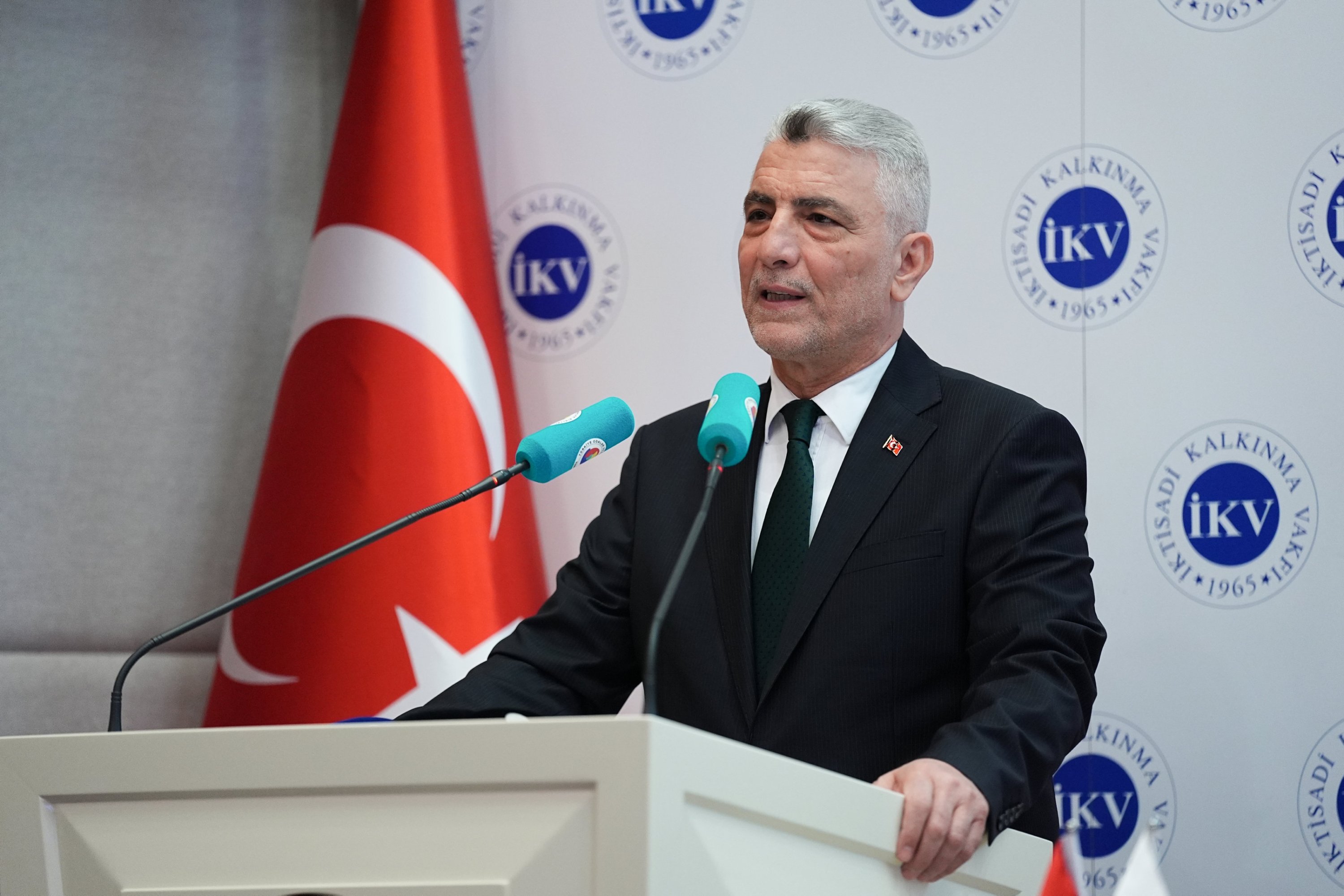
Trade Minister Ömer Bolat on Monday said recent developments in the EU’s industrial policy reflect the impact of Türkiye’s diplomatic and business outreach.
He said Ankara was pleased to see that the draft industry support framework adopted by the European Commission includes references to the customs union, which he says helps safeguard trade flows and investments between Türkiye and the European Union.
"Including the customs union within this framework means securing both our mutual trade and the investments that European companies have made in Türkiye," Bolat said.
He spoke at an event titled "Customs Union in its 30th Year and Türkiye-European Union Relations" organized by the Economic Development Foundation.
Moreover, he emphasized that Türkiye remains an indispensable part of the European industry and supply chain, noting that the country now ranks as the 16th largest economy in the world with a national income of $1.6 trillion.
The minister highlighted that the "Made in Europe" initiative became a primary concern in early December, leading to a period of intense trade diplomacy and stress regarding potential steel quotas and scrap export restrictions.
Bolat stressed that the most critical turning point in these negotiations was the comprehensive letters sent by President Recep Tayyip Erdoğan to EU leaders in mid-December to voice deep concerns and expectations for a positive outcome.
He also suggested that during the 30-year period of the customs union, the EU became the largest trading partner for Türkiye, while Türkiye evolved into a vital partner for the bloc.
He pointed out that total bilateral trade volume surged from $26.6 billion in 1995 to $233 billion in 2025, representing a ninefold increase that reflects the deepening economic integration between the two sides.
According to the minister, Türkiye conducts 43% of its total exports to the EU, while 32% of its imports originate from the union, with exports rising from $11 billion to $117 billion over three decades.
Bolat added that the relationship extends far beyond mere trade, as 70% of the $287 billion in direct international investment that entered Türkiye between 2003 and 2025 came from firms based in the European Union.