Daily Sabah logo

Politics
Diplomacy Legislation War On Terror EU Affairs Elections News Analysis
TÜRKİYE
Istanbul Education Investigations Minorities Expat Corner Diaspora
World
Mid-East Europe Americas Asia Pacific Africa Syrian Crisis Islamophobia
Business
Automotive Economy Energy Finance Tourism Tech Defense Transportation News Analysis
Lifestyle
Health Environment Travel Food Fashion Science Religion History Feature Expat Corner
Arts
Cinema Music Events Portrait Reviews Performing Arts
Sports
Football Basketball Motorsports Tennis
Opinion
Columns Op-Ed Reader's Corner Editorial
PHOTO GALLERY
JOBS ABOUT US RSS PRIVACY CONTACT US
© Turkuvaz Haberleşme ve Yayıncılık 2026

Daily Sabah - Latest & Breaking News from Turkey | Istanbul

  • Politics
    • Diplomacy
    • Legislation
    • War On Terror
    • EU Affairs
    • Elections
    • News Analysis
  • TÜRKİYE
    • Istanbul
    • Education
    • Investigations
    • Minorities
    • Expat Corner
    • Diaspora
  • World
    • Mid-East
    • Europe
    • Americas
    • Asia Pacific
    • Africa
    • Syrian Crisis
    • Islamophobia
  • Business
    • Automotive
    • Economy
    • Energy
    • Finance
    • Tourism
    • Tech
    • Defense
    • Transportation
    • News Analysis
  • Lifestyle
    • Health
    • Environment
    • Travel
    • Food
    • Fashion
    • Science
    • Religion
    • History
    • Feature
    • Expat Corner
  • Arts
    • Cinema
    • Music
    • Events
    • Portrait
    • Reviews
    • Performing Arts
  • Sports
    • Football
    • Basketball
    • Motorsports
    • Tennis
  • Gallery
  • Opinion
    • Columns
    • Op-Ed
    • Reader's Corner
    • Editorial
  • TV
  • Business
  • Automotive
  • Economy
  • Energy
  • Finance
  • Tourism
  • Tech
  • Defense
  • Transportation
  • News Analysis

Argentina faces crunch IMF talks to defuse looming debt bomb

by Reuters

BUENOS AIRES - NEW YORK Jun 18, 2023 - 1:04 pm GMT+3
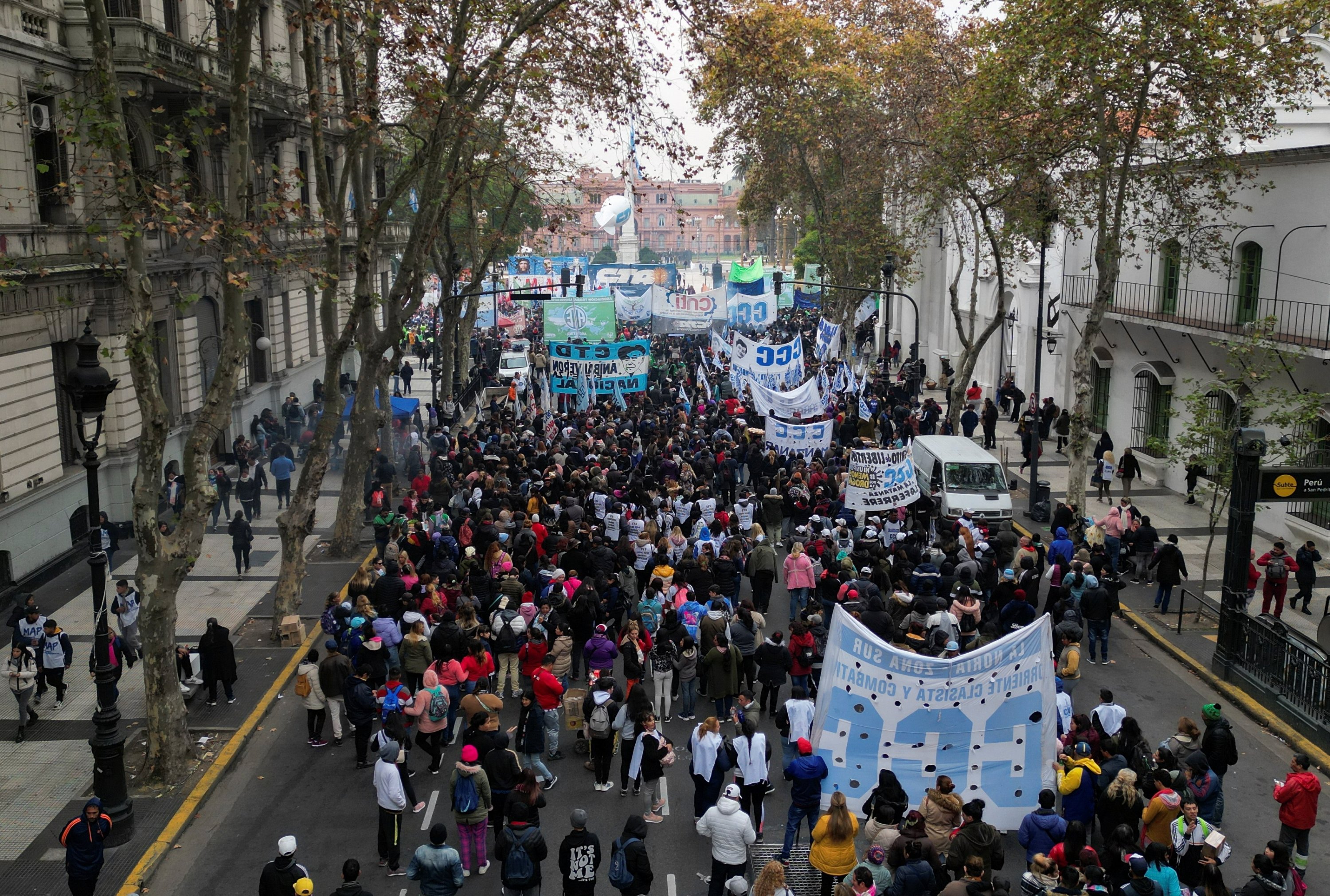
People gather near the presidential palace during a protest as inflation is hitting 114%, hurting salaries and spending power, with many blaming tighter policies they say are due to the deal with the IMF, Buenos Aires, Argentina, June 16, 2023. (Reuters Photo)
by Reuters Jun 18, 2023 1:04 pm

Faced with a $44 billion dilemma, Argentina and the International Monetary Fund (IMF) are set to meet for crunch talks to revamp the country's huge, wobbling debt deal, the key to avoiding default on billions in looming debt payments.

The South American country, a serial defaulter that has struggled for years with inflation and currency crises, struck a $57 billion loan deal with the IMF in 2018, which failed and was replaced last year with a new $44 billion program.

But with net foreign currency reserves estimated to be in negative territory, hit by a major drought that sunk the key soy and corn harvests, Argentina is at risk again of missing debt repayments, with $2.7 billion due to the fund this month alone.

Economy Minister Sergio Massa is expected in Washington as early as this week to try to unlock talks to accelerate IMF disbursements and ease economic targets attached to the deal, with investors and traders watching closely.

"The fund knows that Argentina is a problem, it is its main debtor, but it seems to me that the negotiation has stagnated. One does not see significant progress," said Ricardo Delgado of Argentine financial services firm Analytica.

In a sign of potential holds-ups, an economy ministry source said on Friday that Massa's trip, previously briefed to happen in the next few days, could be delayed depending on how virtual talks progressed.

"Until everything is sealed, no one travels. When everything is ready, they'll travel to put things on paper. And when everything is written, Massa will travel," the source said.

On the streets of Buenos Aires, pressure is rising. Inflation has hit 114%, hurting salaries and spending power; reserves have tumbled and one-in-four people are in poverty, with many blaming – not for the first time – austerity linked to the IMF.

"We must change these economic policies; we must break with the dependence on the IMF," said Hugo Godoy, a union leader marching on Friday in Buenos Aires as part of protests against the government's handling of the economy and austerity.

"Some 43% of Argentines live below the poverty line and 4.5 million, 10% of the population, suffer from hunger," he said.

'Damage control'

The government is hoping to bring forward over $10 billion in IMF disbursements scheduled for this year, though it is reluctant to agree to tough austerity measures with an eye on October general elections where it faces likely defeat.

"Investors are paying real attention to signs from the IMF negotiations," said economist Gustavo Ber.

"Receiving fresh funds - or at least rescheduling disbursements and payments - would be crucial to reduce exchange and financial tensions at this stage."

Meanwhile, Argentina has been rolling over local debt to push back peso-denominated repayments, has extended a currency swap line with China, and faces a wall of obligations with private foreign creditors next year.

The local debt exchanges and hopes of progress with the IMF have nudged Argentina's dollar-denominated bonds from high-20 cents on the dollar in May to mid-30 cents now, though they remain mired in the distressed territory.

And many worry that even sped-up IMF payouts won't solve Argentina's problems for long.

"Frontloading disbursements could be a 'damage control' solution until the end of the current government's term in December," the Institute of International Finance, a Washington-based banking trade group, said in a report.

Argentina got a hint of good news this week, with monthly inflation cooling in May for the first time in half a year and coming in below analyst expectations, though it was still an eye-watering 7.8% for the month.

"Inflation continues to be very high and affects the entire economic scenario, but the fact that it has eased somewhat with respect to April helps to remove some pressure," an Argentine banker said, asking not to be named.

"It is like the sick patient with a fever that has decreased slightly. But the patient is still sick and still has a fever."


  • shortlink copied
  • KEYWORDS
    argentinian economy economy debt international monetary fund imf
    The Daily Sabah Newsletter
    Keep up to date with what’s happening in Turkey, it’s region and the world.
    You can unsubscribe at any time. By signing up you are agreeing to our Terms of Use and Privacy Policy. This site is protected by reCAPTCHA and the Google Privacy Policy and Terms of Service apply.
    No Image
    Hurricane, Trump and Milky Way: Photos of the week
    PHOTOGALLERY
    • POLITICS
    • Diplomacy
    • Legislation
    • War On Terror
    • EU Affairs
    • News Analysis
    • TÜRKİYE
    • Istanbul
    • Education
    • Investigations
    • Minorities
    • Diaspora
    • World
    • Mid-East
    • Europe
    • Americas
    • Asia Pacific
    • Africa
    • Syrian Crisis
    • İslamophobia
    • Business
    • Automotive
    • Economy
    • Energy
    • Finance
    • Tourism
    • Tech
    • Defense
    • Transportation
    • News Analysis
    • Lifestyle
    • Health
    • Environment
    • Travel
    • Food
    • Fashion
    • Science
    • Religion
    • History
    • Feature
    • Expat Corner
    • Arts
    • Cinema
    • Music
    • Events
    • Portrait
    • Performing Arts
    • Reviews
    • Sports
    • Football
    • Basketball
    • Motorsports
    • Tennis
    • Opinion
    • Columns
    • Op-Ed
    • Reader's Corner
    • Editorial
    • Photo gallery
    • DS TV
    • Jobs
    • privacy
    • about us
    • contact us
    • RSS
    © Turkuvaz Haberleşme ve Yayıncılık 2021