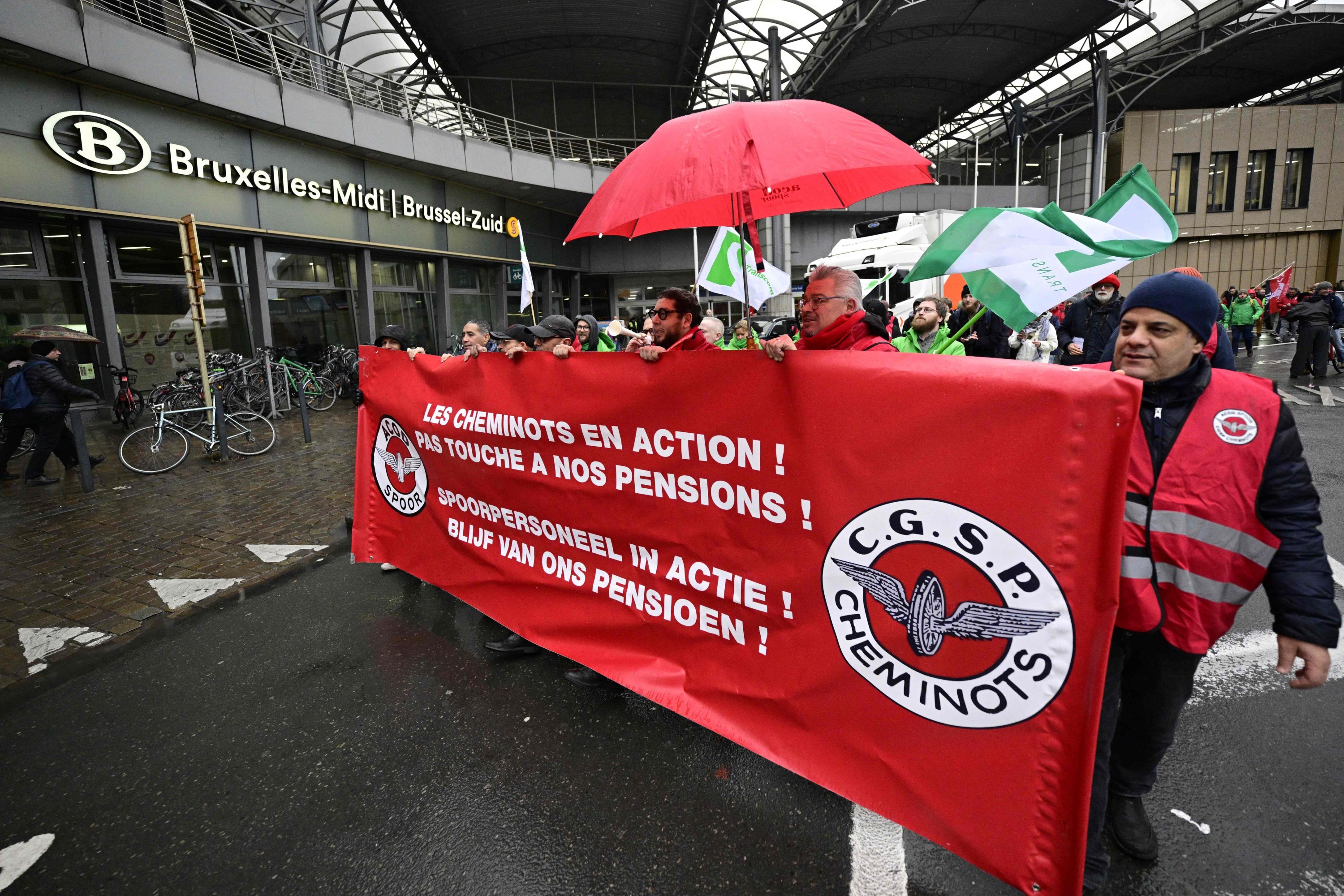
Belgium braced for closed schools and disrupted train and air travel services as three days of strikes kicked off Monday in protest at government austerity plans aimed at shrinking the national debt.
The movement is planned in three waves: trains and other public transport went on strike on Monday, with the national railroad company SNCB expecting to run one or two out of three trains. Several Eurostars linking Brussels to Paris were canceled.
On Tuesday, public services such as schools, creches, and hospitals join the strike, and for Wednesday, unions have called for a full general strike covering all categories.
No flights are expected on Wednesday at the country's two main airports, Bruxelles-Zaventem and Charleroi.
The strike was called by the main Belgian unions, who are in a standoff with Prime Minister Bart De Wever over his efforts to shrink the country's debt, one of the highest in Europe, along with Greece, Italy and France.
Hours before the strike kicked off, De Wever's five-party coalition broke weeks of deadlock by striking an overnight deal on a multiyear budget plan for the country.

The deal foresees a ramping up of government savings and several new revenue streams, including hikes to some value-added taxes (VAT) and investment taxes.
"Work today, and reap the fruits tomorrow," De Wever posted on X as he welcomed the accord, which is intended in part to cover an increase in the country's military budget.
"We had a big mountain to climb," he told RTBF radio, conceding that "everyone is going to feel some of the impact of what we are asking for."
In power since February, the Flemish conservative is trying to impose a major austerity effort through a series of unprecedented structural reforms concerning labor market liberalization, unemployment benefits, and pensions.
But only a small number of the measures proposed by De Wever have been implemented so far, largely because of divisions within his fractious governing coalition.
The strike is intended to put pressure on the parties as they negotiate between themselves.
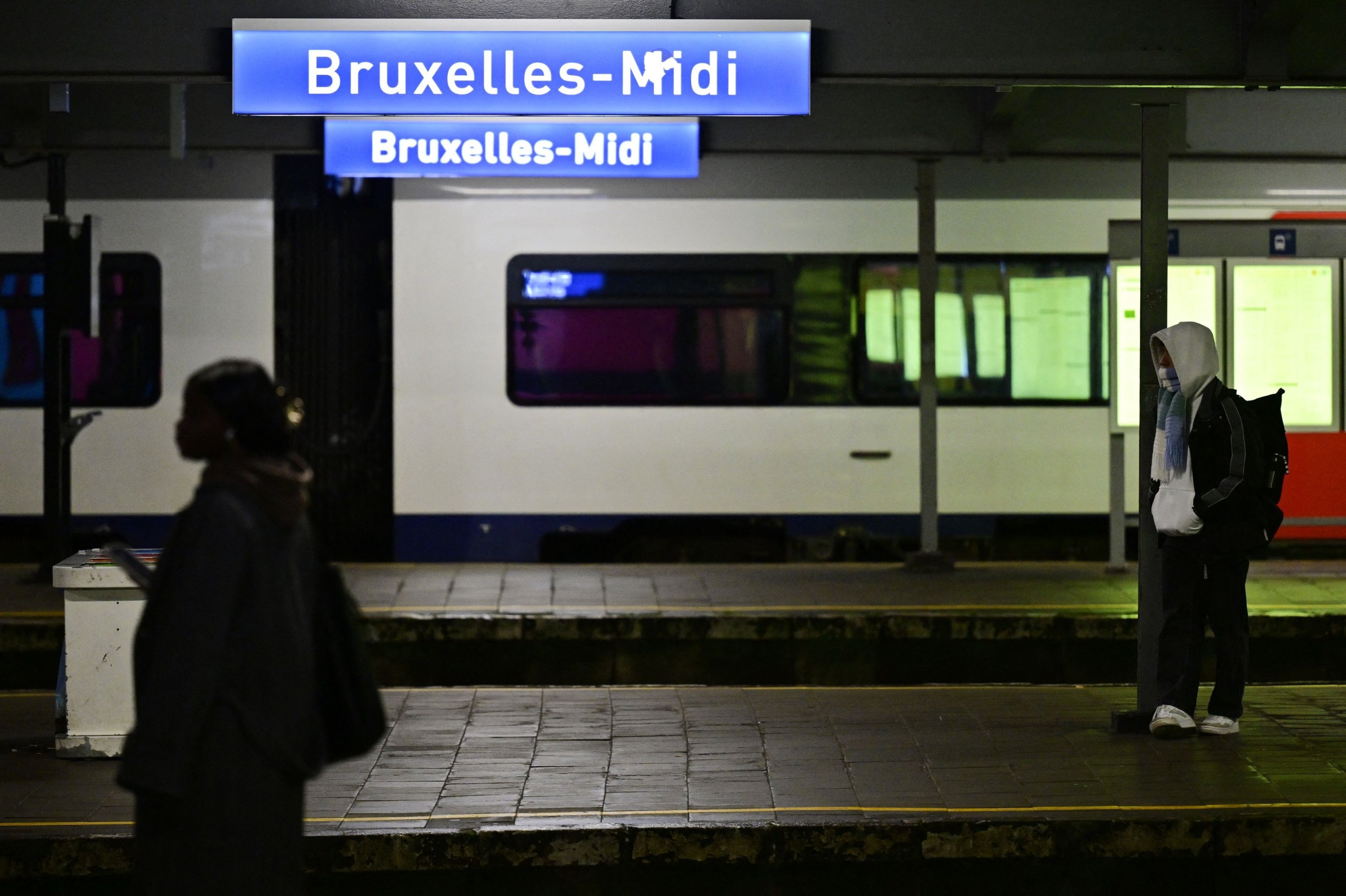
This is "an appeal to Prime Minister De Wever and the entire government to put an end to the dismantling of social programs," the unions stated in a press release.
The socialist union FGTB accused the prime minister of showing "contempt" and "disrespect" toward this social movement.
Earlier union efforts have had mixed results. Tens of thousands of protesters marched through the streets of Brussels in mid-October to protest what they called "brutal" budget cuts.