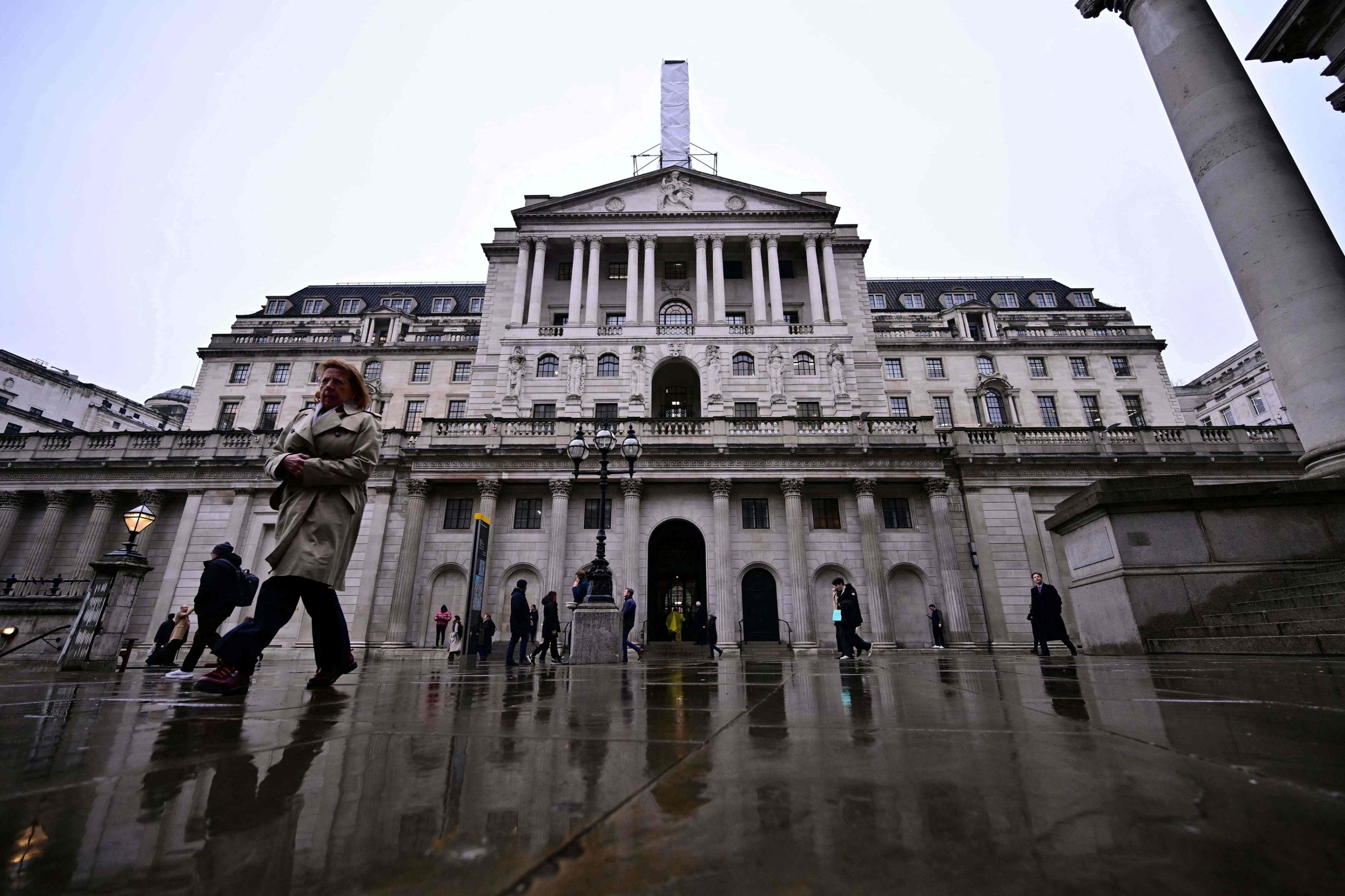
The Bank of England (BoE) left the benchmark interest rate unchanged at 3.75% in a meeting on Thursday, even though inflation in the Britian has risen to a five-month high as the fallout from the Iran war continues to ratchet up fuel prices.
The decision was widely anticipated, with six members of the Monetary Policy Committee (MPC) voting to keep rates unchanged, while three backed a quarter-point increase to 4%.
Though borrowing rates were kept on hold, financial markets think it's more likely than not that the bank will back an increase at one of the next two policy meetings, either in November or December.
"So far, higher global energy costs have had a limited effect on price and wage setting in the U.K.," said BoE Governor Andrew Bailey.
"But the longer this volatility persists, the bigger the impact it will have on inflation, and the more likely it is we will need to raise bank rate to ensure that inflation falls back to our 2% target."
Like other central banks, the inflation outlook will be key. Some have already decided to start raising borrowing costs again, including the U.S. Federal Reserve (Fed) on Wednesday.
The minutes accompanying the Bank of England's decision showed that inflation is now expected to rise to around 4% in the first quarter of next year from the current 3.1% as households face another increase in their domestic energy bills. That would take inflation further above the bank's target rate of 2%.
Interest rates in the U.K. had been trending downward from a 15-year high of 5.25% until the U.S. and Israel attacked Iran in late February. The Iran war led to sharp increases in oil and gas prices, partly because the crucial Strait of Hormuz has been largely closed to traffic ever since.
As well as impacting the cost of personal loans and mortgages, the uptick in interest rate expectations is a growing problem for the British government, as the servicing of its debt accounts for a higher proportion of its spending.