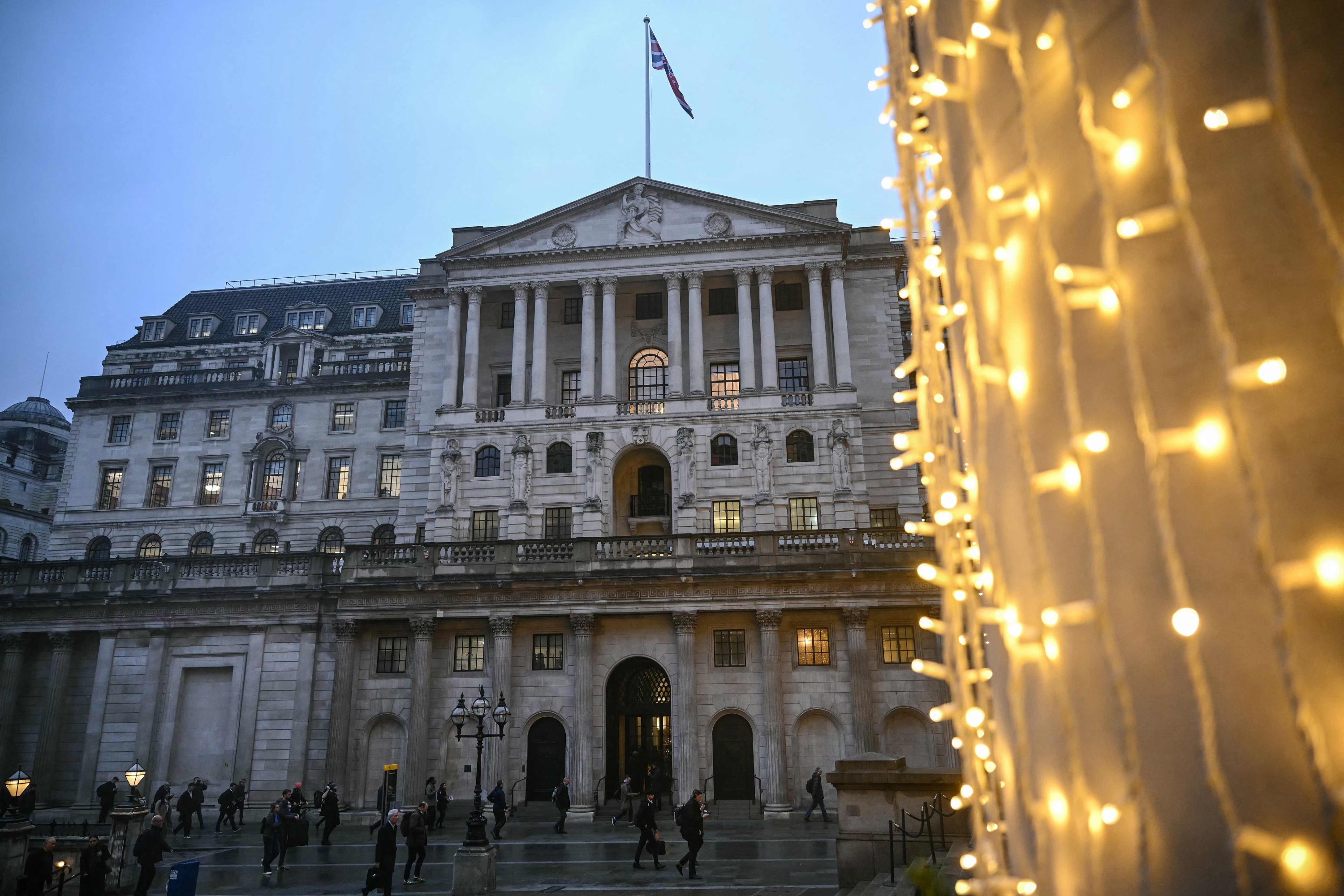
The Bank of England (BoE) cut its key interest rate to 3.75% on Thursday after U.K. inflation eased more than expected, while the European Central Bank (ECB) held interest rates steady at 2% for its fourth meeting in a row.
"We've passed the recent peak in inflation, and it has continued to fall, so we have cut interest rates," BoE Governor Andrew Bailey said.
The widely expected quarter-point reduction followed a regular policy meeting and came slightly ahead of the ECB's rate decision.
Expectations for the reduction were cemented by official data on Wednesday showing Britain's annual inflation rate had slowed more than expected to 3.2% in November.
Analysts forecast the BoE to cut borrowing costs further next year with U.K. inflation set to move closer to the central bank's 2%. target.
Thursday's decision marks the sixth reduction since the BoE began a trimming cycle in August 2024, one month after Britain's Labour Party won a general election.
In a close result, policymakers, including Bailey, voted 5-4 for a cut on Thursday. Four members of the Monetary Policy Committee (MPC) voted to hold borrowing costs at 4.0%.
"We still think rates are on a gradual path downward," Bailey said.
"But with every cut we make, how much further we go becomes a closer call."
The central bank last cut its key interest rate in August amid concerns over the impact of U.S. tariffs on the U.K. economy.
A cut to interest rates eases pressure on Prime Minister Keir Starmer, who has struggled to revive Britain's sluggish economy since Labour came to power in July 2024.
"Inflation is coming down and looks to be supportive to future rate cuts," said Lindsay James, investment strategist at Quilter.
"With economic growth also in the doldrums, and showing no sign of improvement in 2026, there will be a huge amount of pressure on the Bank of England to help stimulate some sort of economic activity," she added.
Treasury chief Rachel Reeves welcomed the rate cut but acknowledged in a statement that "there's more to do to help families with the cost of living."
Elsewhere, the European Central Bank, which oversees the economy in the eurozone, held interest rates steady for the fourth straight meeting while it also raised growth forecasts for this year and next.
Following a year-long series of cuts, the central bank for the 20 countries that use the euro has now kept its key deposit rate on hold at 2% since July, in contrast to the U.S. Federal Reserve (Fed) and Bank of England who have recently cut in response to signs of cooling economies.
Eurozone inflation has settled around the central bank's 2% target in recent months and Europe has weathered U.S. President Donald Trump's tariff onslaught better than initially feared, meaning there was little pressure for rates to move imminently.
"There won't be a big surprise under the ECB Christmas tree," Berenberg bank economist Felix Schmidt had told Agence France-Presse (AFP) ahead of the meeting.
"Inflation is under control, growth is okay."
With the hold confirmed, investors will be paying close attention to ECB President Christine Lagarde's press conference for any hints on the path forward after Governing Council members gave conflicting signals.
Isabel Schnabel – widely considered a hawk who is particularly wary of inflation – fuelled expectations of possible rate-rises down the line earlier this month after telling Bloomberg she was "rather comfortable" to see traders pencil in hikes.
But others, including Finland's Olli Rehn and France's Francois Villeroy de Galhau, emphasized just how uncertain the inflation outlook was.
"The name of the game for our future meetings remains full optionality," Villeroy said at a Bank of France speech earlier this month. "We don't exclude any policy action."
Lagarde herself told the European Parliament in December that she saw "two-sided" risks when it came to inflation, adding that uncertainty "was higher than usual owing to volatile global trade policies."
While a stronger euro, cheaper energy and slowing wage growth would all be expected to hold inflation down, a resilient eurozone economy combined with the German government's spending bonanza coming online could see growth and inflation pick up pace.
The ECB bumped up its eurozone growth forecasts for this year and next in new projections released alongside the rate decision, but said that it expected inflation to settle around its target in the medium-term.
Ahead of the meeting, Capital Economics analyst Andrew Kenningham told AFP that investors would be "looking for any further hints that policymakers are getting more optimistic about the outlook," though he added that he thought the economy remained fundamentally weak.
"We think the ECB is more likely to cut rates than to hike next year," he said.