Daily Sabah logo

Politics
Diplomacy Legislation War On Terror EU Affairs Elections News Analysis
TÜRKİYE
Istanbul Education Investigations Minorities Expat Corner Diaspora
World
Mid-East Europe Americas Asia Pacific Africa Syrian Crisis Islamophobia
Business
Automotive Economy Energy Finance Tourism Tech Defense Transportation News Analysis
Lifestyle
Health Environment Travel Food Fashion Science Religion History Feature Expat Corner
Arts
Cinema Music Events Portrait Reviews Performing Arts
Sports
Football Basketball Motorsports Tennis
Opinion
Columns Op-Ed Reader's Corner Editorial
PHOTO GALLERY
JOBS ABOUT US RSS PRIVACY CONTACT US
© Turkuvaz Haberleşme ve Yayıncılık 2025

Daily Sabah - Latest & Breaking News from Turkey | Istanbul

  • Politics
    • Diplomacy
    • Legislation
    • War On Terror
    • EU Affairs
    • Elections
    • News Analysis
  • TÜRKİYE
    • Istanbul
    • Education
    • Investigations
    • Minorities
    • Expat Corner
    • Diaspora
  • World
    • Mid-East
    • Europe
    • Americas
    • Asia Pacific
    • Africa
    • Syrian Crisis
    • Islamophobia
  • Business
    • Automotive
    • Economy
    • Energy
    • Finance
    • Tourism
    • Tech
    • Defense
    • Transportation
    • News Analysis
  • Lifestyle
    • Health
    • Environment
    • Travel
    • Food
    • Fashion
    • Science
    • Religion
    • History
    • Feature
    • Expat Corner
  • Arts
    • Cinema
    • Music
    • Events
    • Portrait
    • Reviews
    • Performing Arts
  • Sports
    • Football
    • Basketball
    • Motorsports
    • Tennis
  • Gallery
  • Opinion
    • Columns
    • Op-Ed
    • Reader's Corner
    • Editorial
  • TV
  • Business
  • Automotive
  • Economy
  • Energy
  • Finance
  • Tourism
  • Tech
  • Defense
  • Transportation
  • News Analysis

China, Germany pledge to boost commercial ties, end trade tensions

by Reuters

BEIJING, China Nov 17, 2025 - 3:44 pm GMT+3
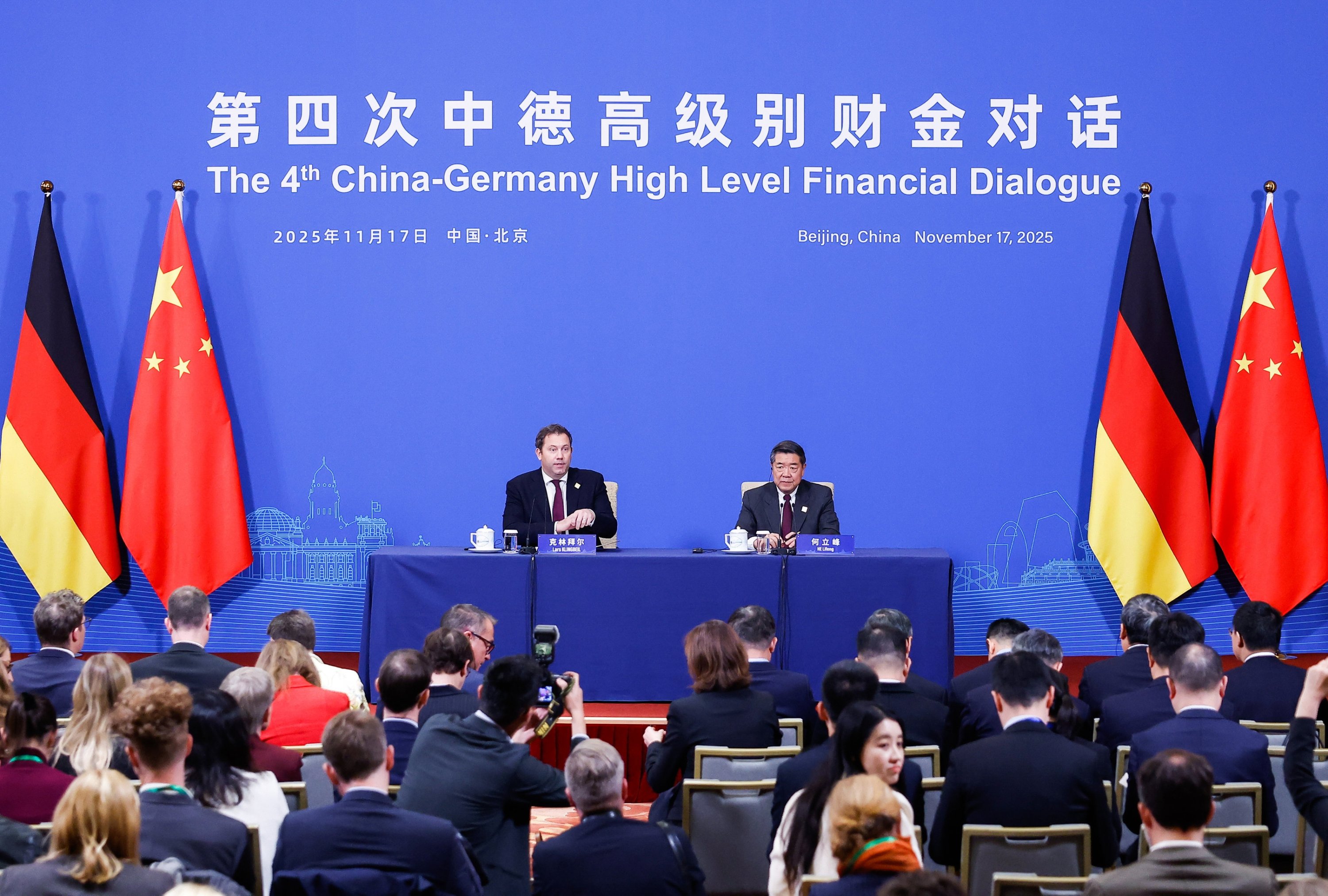
German Vice Chancellor and Finance Minister Lars Klingbeil (L) and China’s Vice Premier He Lifeng (R) deliver their statements after a Fourth China-Germany High-Level Financial Dialogue at Diaoyutai State Guesthouse in Beijing, China, Nov. 17, 2025. (EPA Photo)
by Reuters Nov 17, 2025 3:44 pm

China's Vice Premier He Lifeng and German Finance Minister Lars Klingbeil agreed on Monday that the two nations should bolster commercial ties and bring an end to months of trade frictions between the world's second- and third-largest economies.

Klingbeil was in Beijing on the first visit to China by a minister from Chancellor Friedrich Merz's government.

Ties between the two industrial powerhouses have been strained over Chinese export curbs on chips and rare earths in particular, causing major disruptions for German firms.

Klingbeil said Germany addressed the topic of Chinese overcapacity in key sectors such as steel, solar and electric mobility during talks at the China-Germany Financial Dialogue, an event held every two years for German and Chinese officials and corporate executives to exchange views.

"From the German perspective, we see fair competition at risk and also see industrial jobs under threat," Klingbeil said.

Both countries agreed it should be a shared task to address reducing such overcapacities and ensuring stable competitive conditions, he said.

European concerns about export restrictions on rare earths and critical raw materials were also addressed and "must be taken seriously," Klingbeil said.

"We want to find joint solutions to ensure reliable access and dependable supply chains," he said in the closing remarks at the event.

Chinese Vice Premier He said Beijing was committed to working with Germany to expand joint cooperation and "foster a fair, equitable and non-discriminatory business environment."

"We should take practical and pragmatic actions and not be influenced by various factors that interfere with the security and stability of the global industrial chain and supply chain," He said without referring to any specific company.

Mutual market access

Klingbeil arrived in Beijing less than a week after Germany's parliament appointed an expert commission to rethink trade policy toward China.

Beijing's support for Russia has been a source of friction, as have Berlin's criticisms of China's human rights record and state-subsidised industrial policy, but the two countries remain bound by an advantageous commercial relationship.

Klingbeil said China's economic rise in recent decades was "a historic achievement," which shows that openness, cooperation and trade are not risks but the foundation for prosperity.

"This is an experience that China and Germany share and that connects us in a globalised world rather than dividing us," Klingbeil said.

Their economic ties have become even more crucial as U.S. President Donald Trump's tariffs squeeze global markets.

Chinese companies are now serious competitors for German firms in many sectors.

"Our companies have long embraced this competition, but I want to emphasize that it must take place under fair conditions," Klingbeil said. "That is why, in our conversation, it is important to work toward mutual market access – including financial markets – and reliable framework conditions."

China bought $95 billion worth of German goods last year, around 12% of which were cars, Chinese data shows. Germany purchased $107 billion of Chinese goods, mostly chips and other electronic components.

China is responsible for almost a third of German automakers' sales and German chemicals and pharmaceuticals firms also have a large presence in the country, although they are facing increasing pressure from domestic competitors.

Tough stance on China

Klingbeil's trip to China follows a cancelled trip by German Foreign Minister Johann Wadephul last month after China rejected all but one of his requested meetings.

Wadephul has struck an increasingly tough stance on China since he took office in May, going even further than his predecessor Annalena Baerbock, who labelled Chinese President Xi Jinping "a dictator."

"It's a good sign that Klingbeil's trip is now going ahead as planned without similar requests or tensions," said Bernhard Bartsch of the Berlin-based Mercator Institute for China Studies, in reference to Wadephul's cancelled trip.


  • shortlink copied
  • Last Update: Nov 17, 2025 4:57 pm
    KEYWORDS
    germany-china ties trade relations china germany trade tensions supply chains cooperation
    The Daily Sabah Newsletter
    Keep up to date with what’s happening in Turkey, it’s region and the world.
    You can unsubscribe at any time. By signing up you are agreeing to our Terms of Use and Privacy Policy. This site is protected by reCAPTCHA and the Google Privacy Policy and Terms of Service apply.
    No Image
    Civilians helpless, cities attacked as Russia invades Ukraine
    PHOTOGALLERY
    • POLITICS
    • Diplomacy
    • Legislation
    • War On Terror
    • EU Affairs
    • News Analysis
    • TÜRKİYE
    • Istanbul
    • Education
    • Investigations
    • Minorities
    • Diaspora
    • World
    • Mid-East
    • Europe
    • Americas
    • Asia Pacific
    • Africa
    • Syrian Crisis
    • İslamophobia
    • Business
    • Automotive
    • Economy
    • Energy
    • Finance
    • Tourism
    • Tech
    • Defense
    • Transportation
    • News Analysis
    • Lifestyle
    • Health
    • Environment
    • Travel
    • Food
    • Fashion
    • Science
    • Religion
    • History
    • Feature
    • Expat Corner
    • Arts
    • Cinema
    • Music
    • Events
    • Portrait
    • Performing Arts
    • Reviews
    • Sports
    • Football
    • Basketball
    • Motorsports
    • Tennis
    • Opinion
    • Columns
    • Op-Ed
    • Reader's Corner
    • Editorial
    • Photo gallery
    • DS TV
    • Jobs
    • privacy
    • about us
    • contact us
    • RSS
    © Turkuvaz Haberleşme ve Yayıncılık 2021