Many countries are bouncing back from the COVID-19 pandemic, but the poorest are not and a significant number are seeing conditions deteriorating, a report from the U.N. Development Programme (UNDP) said Wednesday.
Achim Steiner, head of the agency, said that after two decades during which rich and poor countries were coming closer in terms of development, the finding is "a very strong warning signal” that nations are now drifting apart.
The Human Development Index that the agency has produced since 1990 is projected to reach record highs in 2023 after steep declines during the pandemic years of 2020 and 2021.
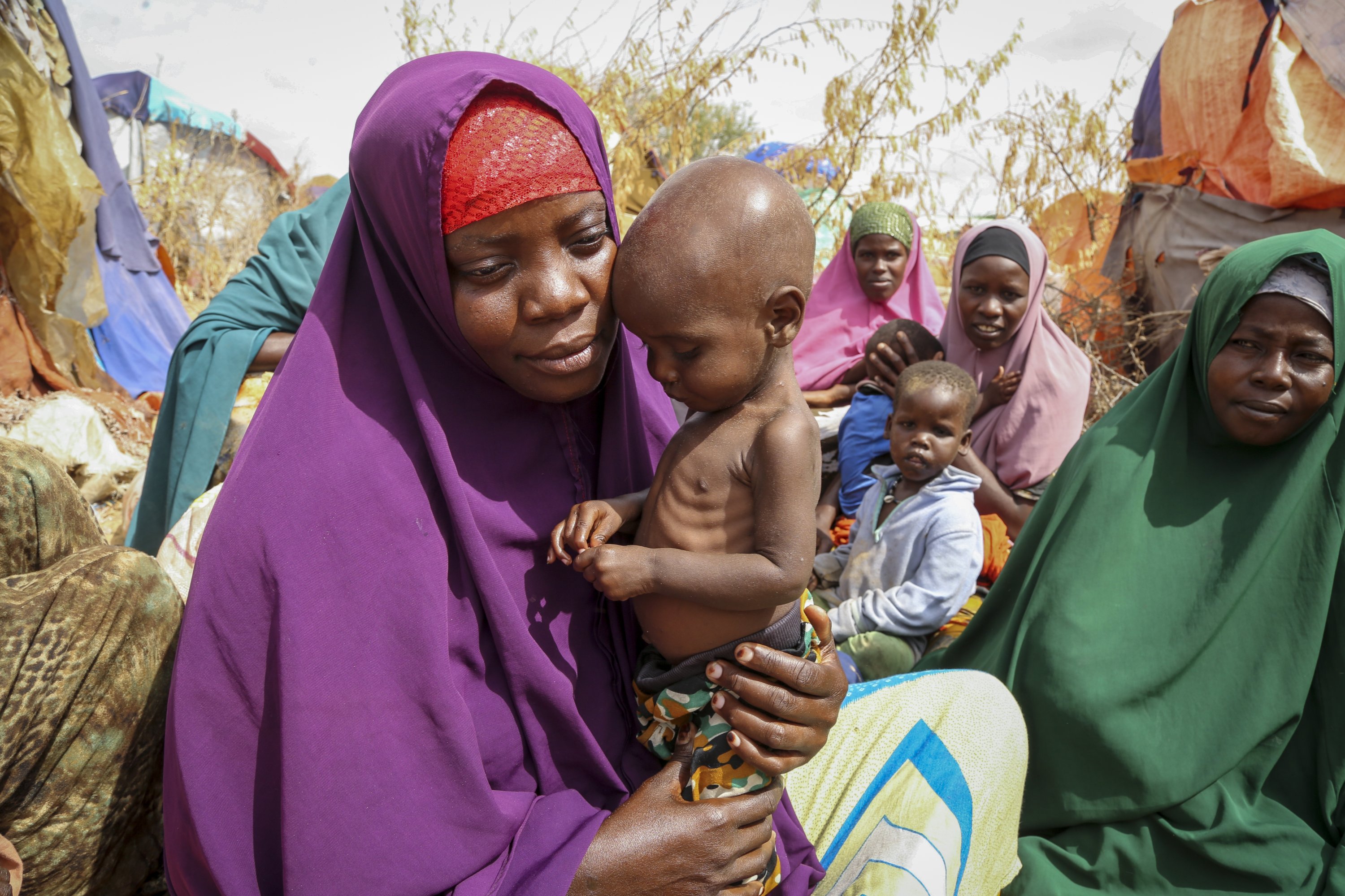
But development in half of the world’s poorest countries remains below 2019 pre-pandemic levels, the report said.
"It’s a rich person’s versus a poor person’s world in which we are seeing development unfolding in very unequal, partially incomplete ways,” Steiner said at a news conference. "Why does this matter? Not only because it creates more vulnerability, it creates also more misery and protracted poverty, growing inequality.”
The growing inequalities are compounded by the concentration of economic wealth, the report said.
It pointed to almost 40% of global trade in goods concentrated in three or fewer countries. And it said the stock market value of the three largest tech companies in 2021 – Amazon, Apple and Microsoft – surpassed the gross domestic product of more than 90% of the 193 U.N. member nations that year.
Steiner said the world’s nations should be joining forces to focus on major threats in the 21st century, especially climate change, the next pandemic and the emergence of a digital economy and artificial intelligence. But instead, he warned, there is increasing division and growing frustration and polarization.
He said a significant response has been the emergence of populism, which is anti-elite and hostile to international cooperation. He said that "is increasingly dividing societies, radicalizing the political discourse and essentially turning more and more people against each other.”
The report says advancing global collective action to tackle the world’s major challenges is hindered by an emerging "democracy paradox” – 90% of people worldwide endorse democracy but for the first time over half the respondents in a global survey expressed support for leaders that risk undermining the foundations of democracy.
Territorial conflicts will continue to crop up, but the threats to human security in the 21st century will more often require being able to collaborate, Steiner said.
"We are driving ourselves deeper and deeper into a condition where our ability to solve problems is actually being compromised,” he said. "You will not stop climate change with missiles. You will not stop the next pandemic at your border with a tank, and you’re certainly not going to stop cybercrime with missiles.”
Steiner said it is important to dial down the temperature, misperceptions and misinformation "because they’re actually being weaponized in turning people against each other.”
He said there also has to be a very careful look "at where inequality has become so extreme that it actually erodes the political willingness to cooperate.”
The report calls for more spending on global public goods that benefit all people, including stabilizing climate and the planet, harnessing new technologies to improve human development and improving the global financial system to benefit low-income countries.
The agency's Human Development Index measures key issues for a long and healthy life, for gaining knowledge and for achieving a decent standard of living.
Based on the latest figures from 2022, the 10 states with the highest human development scores are Switzerland, Norway, Iceland, Hong Kong, Denmark, Sweden, Germany and Ireland tied for seventh, Singapore and Australia and the Netherlands tied for 10th place. The United States tied with Luxembourg for 20th place.
The 10 countries with the lowest human development were Sierra Leone, Burkina Faso, Yemen, Burundi, Mali, Chad, Niger, Central African Republic, South Sudan and Somalia. All but Yemen are in Africa.