European Commission President Ursula von der Leyen has told EU leaders at a summit in Brussels that the signing of a contentious free trade deal with South American bloc Mercosur would be postponed to January, reports said on Thursday.
The European Commission wanted to have the pact to create the world's biggest free-trade area sealed this week, but the plan was thrown into disarray after Italy joined fellow heavyweight France in demanding a delay seeking further protection for the farming sector.
The agreement between the EU and Brazil, Argentina, Uruguay and Paraguay, which has been in the making for over 25 years and was concluded a year ago, was scheduled to be signed at a summit in Brazil on Saturday.
The controversial deal is intended to boost trade between the economic blocs, but has been viewed critically by some major EU countries, including France, Poland and Italy.
Earlier on Thursday, Italian Prime Minister Giorgia Meloni asked Brazilian President Luiz Inacio Lula da Silva for more time to back the deal.
Italy's support is required to reach the necessary majority of at least 15 of the EU's 27 states, representing 65% of the bloc's population, backing the deal and to pave the way for its signing.
Lula told a press conference he had called Meloni to discuss the deal earlier in the day, and that she did not oppose the agreement but needed up to a month to win over farmers.
Lula, who warned on Wednesday he would not sign off on the deal if it was not concluded this month, said he would consult Mercosur partners at their summit on Saturday on next steps.
Meloni said in a statement that Italy was ready to support the agreement once agricultural concerns were resolved, which she said could happen quickly.
The trade pact would be the EU's largest in terms of tariff cuts. Germany, Spain and Nordic countries say it will boost exports hit by U.S. tariffs and reduce reliance on China by securing access to minerals.
But critics fear an influx of cheap commodities that could hurt European farmers.
German Chancellor Friedrich Merz and Spanish Prime Minister Pedro Sanchez urged EU leaders on Thursday to back the pact.
"This trade agreement is the first of many that must come so that Europe gains geo-economic and geopolitical weight at a time when it is being questioned by clear adversaries, such as (Russian President Vladimir) Putin, or even by traditional allies," Sanchez told reporters before the summit.
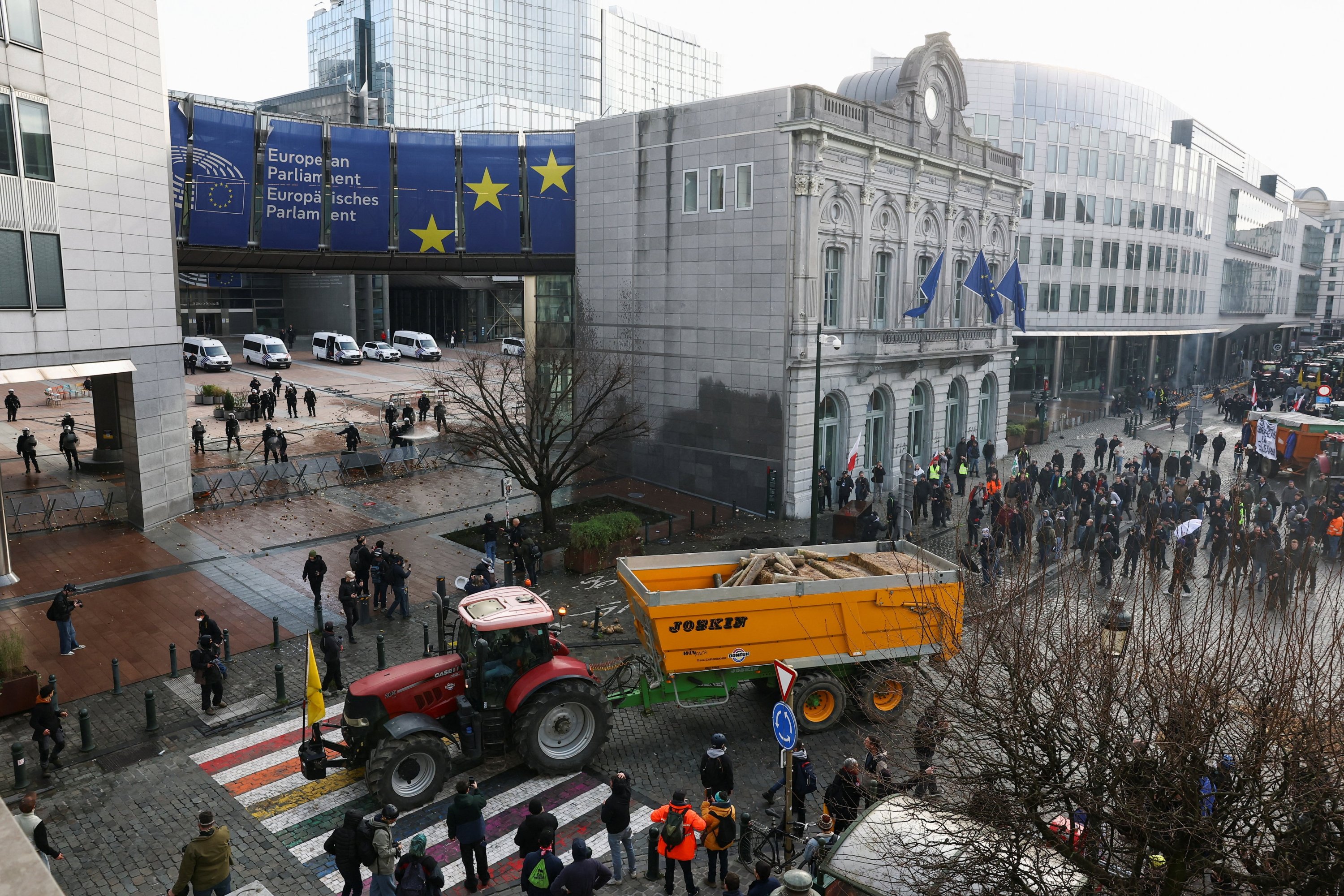
The summit sparked an anti-deal protest by about 7,000 people, mostly farmers, which turned violent. Belgian police fired tear gas and water cannon after protesters hurled potatoes and rocks and smashed windows.
Poland and Hungary oppose the pact, while France and Italy remain nervous about increased imports of beef, sugar, poultry and other goods.
French President Emmanuel Macron, whose country is the EU's largest agricultural producer, said the agreement was not ready.
"As we speak, we are not ready; the numbers do not add up to sign this agreement," he said, adding France had been working with Poland, Belgium, Austria and Ireland to push for a delay.
In France, anger over the government's handling of lumpy skin disease, a virus affecting cattle, has deepened farmer discontent over issues including the Mercosur pact. Farmers in the southwest have blocked highways for days.
Wary of nationwide protests like those two years ago, Paris is rushing to vaccinate cattle while maintaining its opposition to the deal.
EU lawmakers and governments reached a provisional agreement on Wednesday on safeguards to cap imports of sensitive farm products such as beef and sugar and soften resistance.
The European Commission is also preparing a declaration pledging aligned production standards. Macron said reciprocity was essential so the EU did not open its markets to cheap imports produced under looser rules, such as pesticide use.
Some tractors that jammed Brussels streets carried banners echoing Macron's scepticism: "Why import sugar from the other side of the world when we produce the best right here? Stop Mercosur," read one sign.