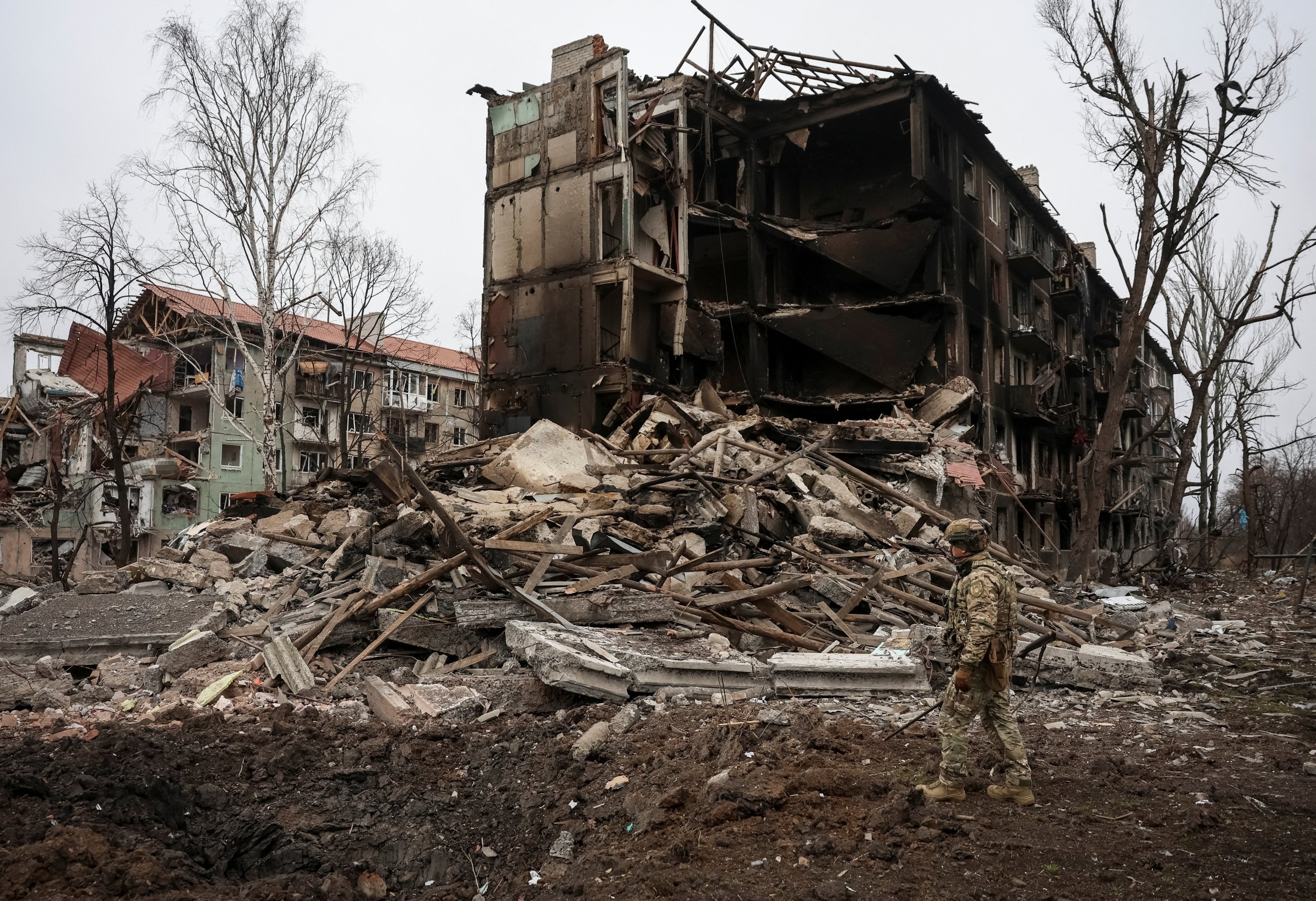
Ukrainian President Volodymyr Zelenskyy joined European leaders in The Hague on Tuesday for the launch of an International Claims Commission seeking to ensure Kyiv is compensated for hundreds of billions of dollars in damage from Russian attacks and alleged war crimes.
The gathering of dozens of leaders, co-hosted by the Netherlands and the 46-nation Council of Europe, the continent's largest rights group, coincided with a U.S.-orchestrated diplomatic push to end the war in Ukraine that was triggered by Russia's full-scale invasion in February 2022.
"Every Russian war crime must have consequences for those who committed them," Zelenskyy said, before 34 European leaders signed a convention to formally launch the commission.
"That's exactly where the real path to peace begins," he added. "It's not enough to force Russia into a deal. It's not enough to make it stop killing. We must make Russia accept that there are rules in the world."
EU foreign policy chief Kaja Kallas said the commission sends a message to future aggressors, stressing that Russia cannot escape paying the bill for its war in Ukraine.
"If you start a war, you will be held to account," Kallas noted.
The establishment of the claims commission does not mean Ukrainians can expect swift reparations for damages.
Details on how any damages awarded by the commission, to be based in the Netherlands, would be paid still need to be worked out. Early discussions have touched on using Russian assets frozen by the EU, supplemented by member contributions.
"The goal is to have validated claims that will ultimately be paid by Russia. It will really have to be paid by Russia; this commission offers no guarantee for the damages," Dutch Foreign Minister David van Weel said.
The two-year-old Register of Damage, which will become part of the claims commission, has already received over 86,000 claims submitted by individuals, organizations and public bodies in Ukraine under a wide range of categories.
The Kremlin denies accusations of war crimes by Russian forces in Ukraine. It has also described the EU's proposal to use immobilized Russian assets to finance Ukraine's defense and budget needs as illegal and threatened retaliation.
Plans to compensate victims of abuses in Ukraine, ranging from sexual violence and child deportations to the destruction of religious sites, could be complicated by the inclusion of an amnesty for wartime atrocities in any peace deal, earlier proposed by U.S. President Donald Trump's administration.
More than 50 states and the EU drafted the Council of Europe convention to establish the commission, which is to take force after ratification by at least 25 signatories, as long as sufficient funds have been secured to finance its operation.
The commission – the second part of an international compensation mechanism for Ukraine – will review, assess and decide on claims submitted to the Register of Damage for Ukraine, which was created by the Council of Europe in 2023, and determine compensation awards on a case-by-case basis.
Claims can be filed for damage, loss, or injury caused by Russian acts committed in or against Ukraine upon or after the February 24, 2022, invasion. The claims, which cover violations of international law, can be brought by affected individuals, companies, or the Ukrainian state, a draft of the proposal said.
The World Bank has estimated the cost of reconstruction in the coming decade at $524 billion, or nearly three times Ukraine's economic output in 2024.
But that figure is through December 2024 only and does not include damage caused this year, when Russian drone and missile strikes escalated in a campaign targeting utilities, transport and civilian infrastructure.
The Council of Europe was founded in 1949, four years after the end of World War II, to promote democracy, human rights and the rule of law across the continent.