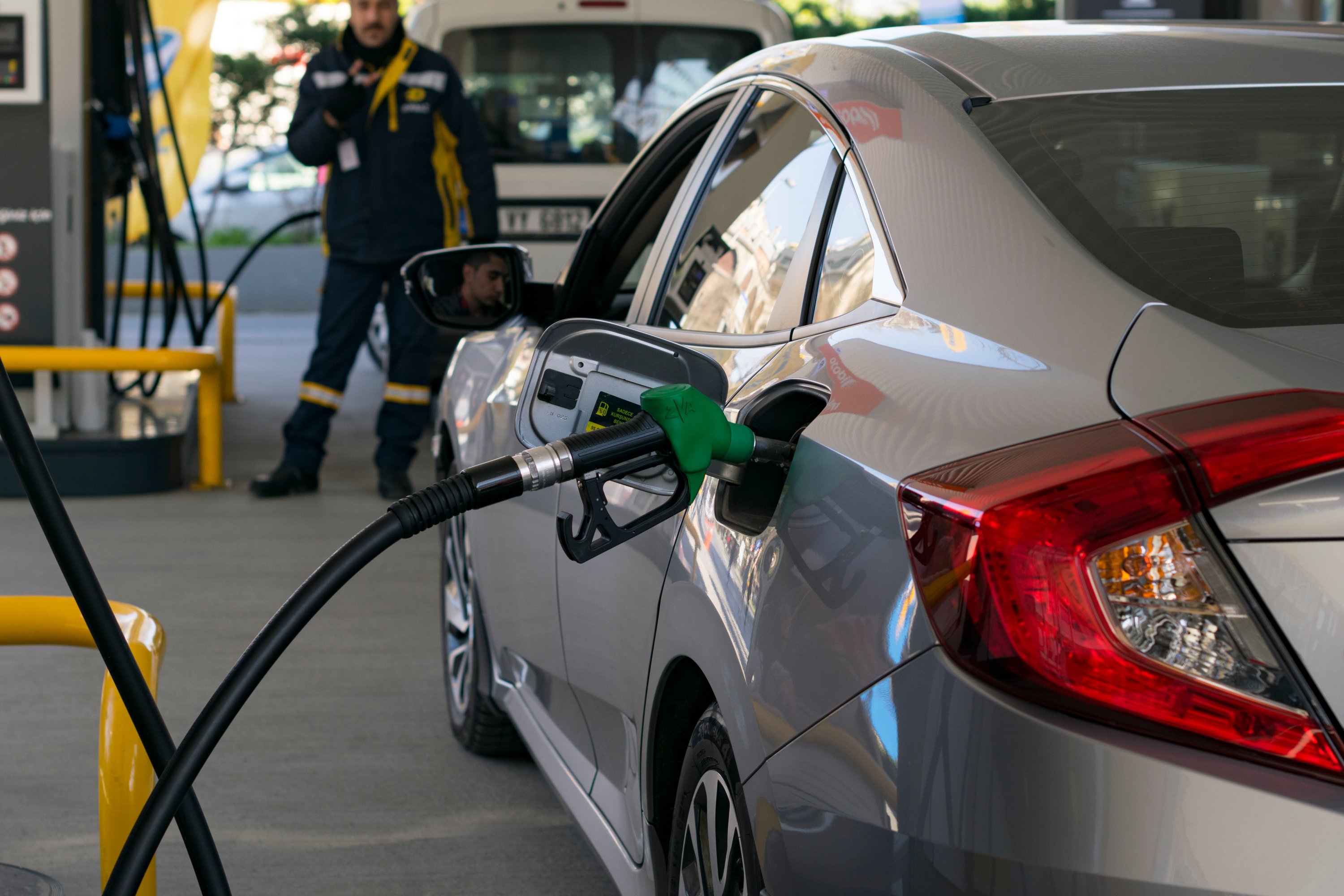
The fuel tax relief mechanism Türkiye introduced to cushion households and businesses from an energy shock triggered by the Middle East conflict has cost the government around $2 billion in its first two months of implementation, a senior official said on Tuesday.
Energy prices spiraled following U.S.-Israeli attacks on Iran, which prompted a near-total closure of the Strait of Hormuz, where 20% of the world's oil normally flows. Stalled shipments through the waterway have sent prices skyrocketing far beyond the region and raised the cost of food and a wide array of other products.
To mitigate the impact, Turkish authorities implemented a "sliding scale" system, which adjusts the special consumption tax (OTV) on fuel products according to changes in oil prices to prevent excessive price rises.
Treasury and Finance Minister Mehmet Şimşek said the mechanism had limited the pass-through from higher crude oil prices to domestic fuel prices and helped contain inflation.
"The cost to us in the first two months was TL 90 billion. This is a significant figure, around $2 billion," Şimşek told the public broadcaster TRT Haber.
"If similar conditions persist throughout the year, the impact would be around TL 600 billion, corresponding to roughly $13 billion-$14 billion at current prices," he said.
Without the measure, however, Şimşek said inflation would have risen much more sharply.
"Had we not activated the sliding scale mechanism, the increase in inflation would have been far more dramatic. The current reflection is not even at one-third. Therefore, we have also limited the rise in inflation," he said.
The pricing pressures from the fallout of the war still impacted Türkiye's inflation, which rose to 32.37% in April, the highest measure since October 2025. Şimşek said the rise would be temporary.
Had it not been for the sliding scale system, diesel prices in Türkiye could have reached as high as TL 90 per liter, compared with below TL 73 now, while gasoline prices would have been around TL 79 lira instead of roughly TL 65, the minister noted.
"A significant portion of the shock has not been passed on to our citizens, companies, industrialists or small businesses," Şimşek said.
Türkiye is a major energy importer that neighbors Iran and is among the most exposed emerging market economies to the global energy price surge. But officials have touted Türkiye's "manageable" 10% dependence on Middle East oil and the country's protective diversification steps.
Şimşek said Türkiye was facing the effects of the supply shock, though he stressed the country was not facing an energy supply disruption.
"The increase in fuel prices will cause an additional deficit in the external balance. It has an inflationary effect. All of these are facts. We are not on a separate planet," he noted.
"There is a very large supply shock in the world, and this will affect Türkiye."
Every 10% increase in oil prices directly adds around 1.1 percentage points to inflation and lifts the current account deficit by $3 billion-$4 billion, while a similar rise in natural gas prices could add another $5 billion, said Şimşek.
"If oil rises to $95 from $65, that would create an additional deficit of around $15 billion," he said. "This doesn't include tourism, but let me say this clearly: the effects will be manageable."
Şimşek said the government's improved fiscal position had enabled it to absorb part of the shock.
"Had we not restored fiscal discipline, implemented savings measures and controlled spending, we would not have had the ability to do this," he said.
He reiterated that the government's top priority remained disinflation and tackling the cost of living.
"We want to preserve the disinflation process at all costs," Simsek said. "There is no hesitation on this matter."
He said Türkiye had initially expected inflation to fall to around or below 20% this year, but the latest energy shock could keep it somewhat higher.
He said the budget deficit could rise from 3.5% to 4% of gross domestic product, while a 1-2 percentage point increase in the current account deficit-to-GDP ratio would remain manageable.
Simsek said Türkiye had entered the regional crisis from a stronger position, citing a significant buildup in foreign exchange reserves since mid-2023.
"We have accumulated very substantial reserves, which also helped us get through this shock without really feeling its impact," he noted.
"This year, we are aiming to focus strongly and bring inflation back down to the 20s."