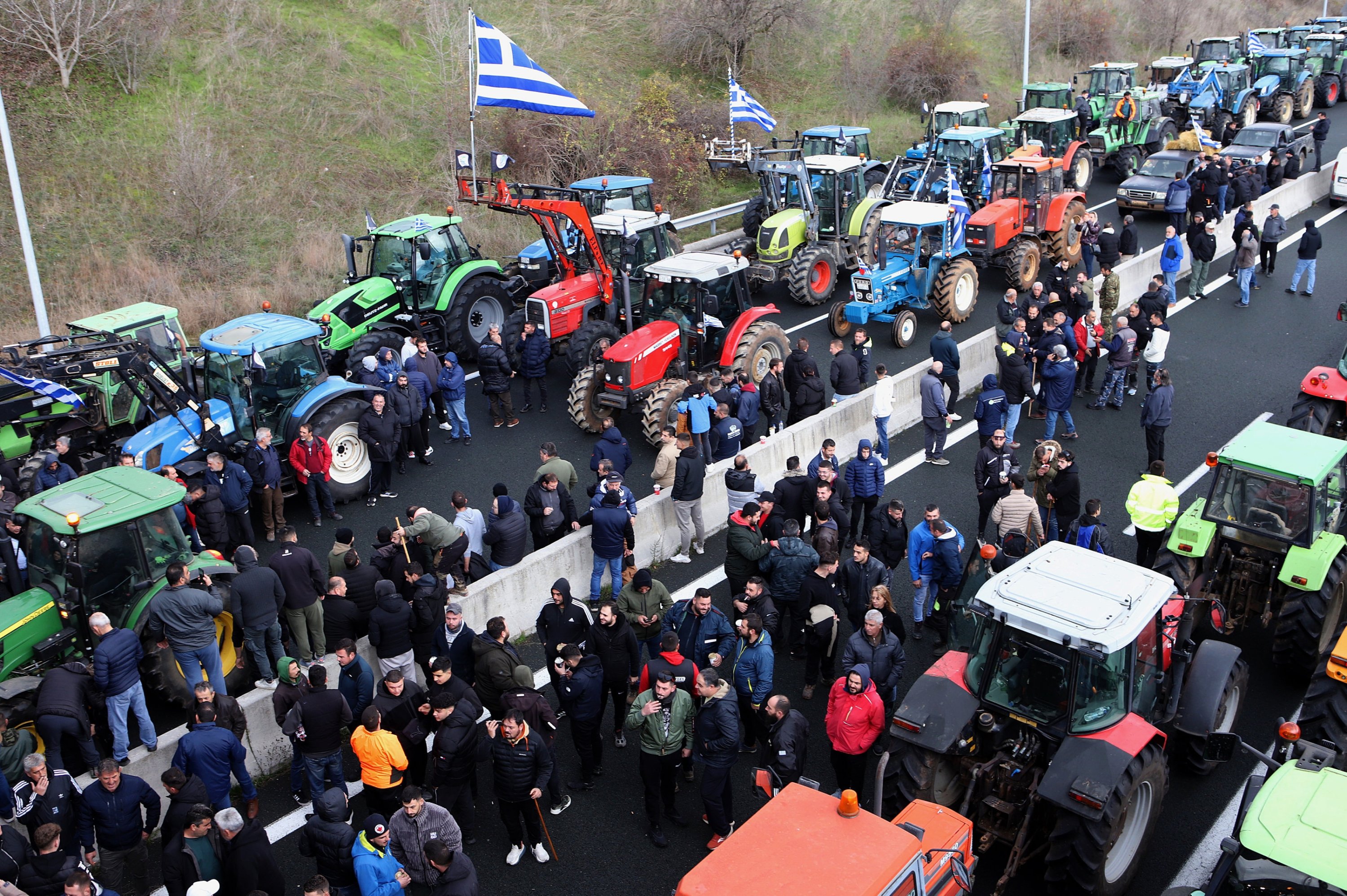
Ongoing protests by Greek farmers continued to negatively impact truck traffic on the Türkiye-Greece border, Anadolu Agency (AA) reported, while the action and clashes with police escalated on the island of Crete on Monday.
As part of the protests, many farmers have physically narrowed the road by moving their tractors near the Bahçeköy (Kipi) Border Gate between Greece and Türkiye.
For this reason, only trucks carrying perishable foods and urgent cargo such as medicine can pass through the Ipsala Border Crossing, which opens to Greece, the AA report said.
Vehicles carrying other types of cargo are not allowed to pass. Due to this practice, truck drivers are turning to the Kapıkule and Hamzabeyli border crossings as alternative routes.
Thousands of Greek farmers have since late November blocked highways, mainly in the center and north of the country, to demand swifter access to EU subsidies delayed by an ongoing probe into multi-million dollar fraud.
In May, EU prosecutors alleged that thousands of suspects made claims for land they did not own, and exaggerated the numbers of livestock on farms.
Greek officials say fraudsters made more than 30 million euros ($35 million) worth of false claims for Common Agricultural Policy subsidies.
The government has insisted that no legitimate farmers will lose money once the investigation is completed.
However, protests continue and farmers on Crete on Monday clashed with riot police near the island's international airports.
State TV ERT showed dozens of farmers armed with stones and clubs smashing police vehicles stationed to block the protesters from reaching Chania airport.
The police fired tear gas before retreating from the scene, enabling the farmers to overturn a police vehicle.
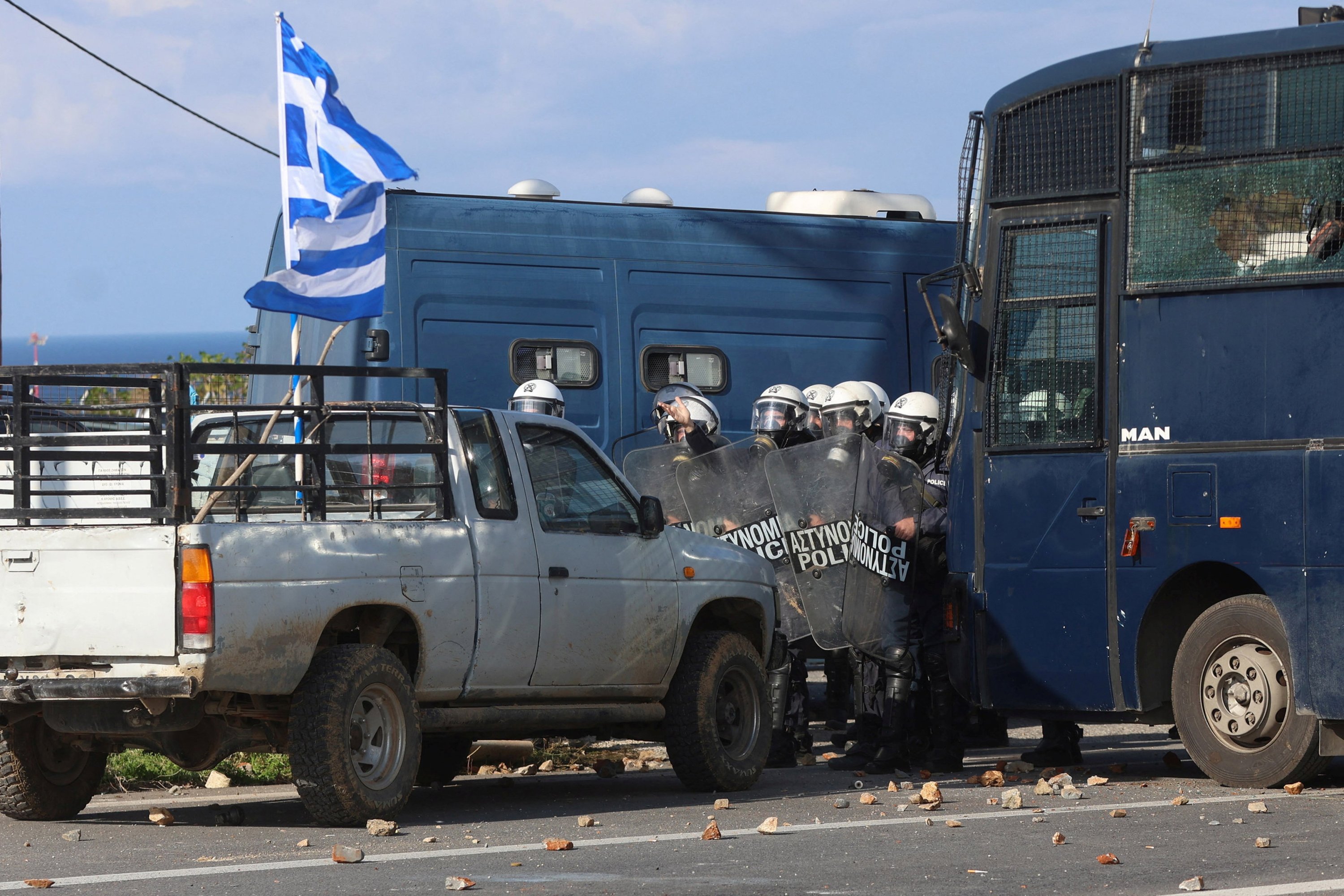
There were also skirmishes near the island's Heraklion airport after farmers tried to bypass a police roadblock.
Greek Prime Minister Kyriakos Mitsotakis insisted on Monday that the government was open to dialogue with farmers' representatives but warned against "blind" protests.
"Sometimes, the most extreme mobilizations might turn large segments of society against the farmers, who may have legitimate demands," said the Greek leader, whose home island of Crete is strongly implicated in the scandal.
"We are not going to repeat the mistake we made in other times, promising and giving farmers money that we could not later justify, and for which (the European Union) would ask us to return, with interest," Mitsotakis said.
Livestock farmers are also demanding compensation following the loss of over 400,000 sheep and goats to a sheep pox outbreak, all of which were slaughtered to stop the spread of the disease.
The authorities have resisted calls from farmers to be allowed to vaccinate their flocks, arguing there is no proof the measure actually works.