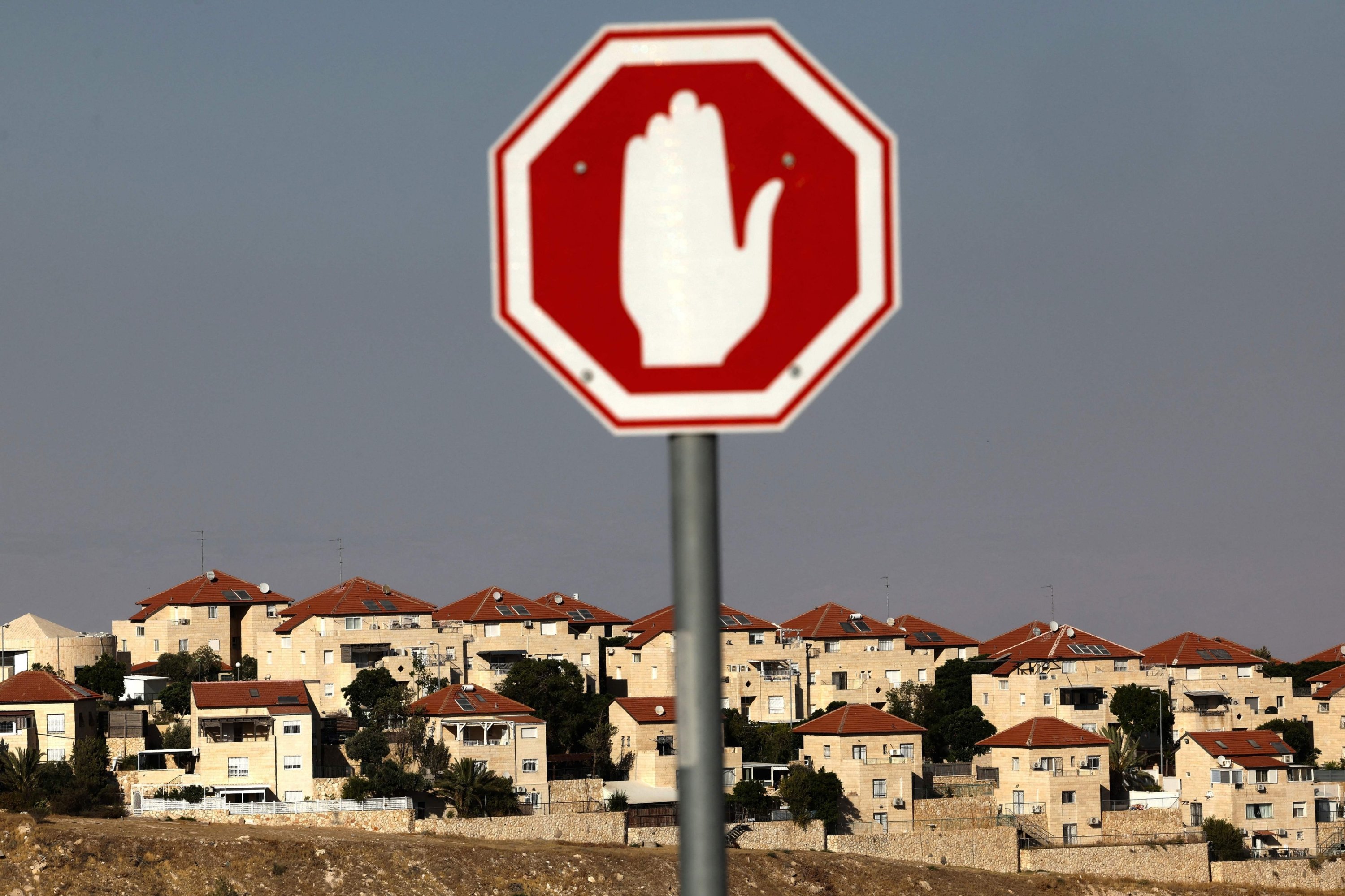
Goods tied to illegal Israeli settlements in the occupied Palestinian territories are still reaching European markets, prompting questions about how they are exported, labeled and distributed, and whether current European rules are doing enough to stop settlement-linked trade.
A June 2026 report by the Global Echo Litigation Center, Importing Occupation, has drawn fresh attention to these supply chains.
It says that goods made in Israeli illegal settlements have entered European markets through systems that hide their actual place of origin.
Here is how the system works.
The report focuses on agricultural exports, including dates, citrus fruits, herbs, fruit and vegetables, which have been recorded as among the most common settlement products reaching Europe by previous research.
To illustrate how the trade operates, Global Echo examined the supply chains of three major Israeli exporters: Hadiklaim, Mehadrin Ltd. and Yonatan Packing and Marketing.
It traced products from illegal settlement farms through packing facilities and Israeli ports before they entered European markets.
The actual scale of these trades has been unknown, as neither Israel nor the European Union releases comprehensive data on settlement exports.
The report says it analyzed more than 30,000 export documents covering more than 6,800 agricultural shipments between October 2017 and February 2026. Of the 5,900 shipments bound for Europe, 17.2% contained settlement products. For the EU specifically, the figure was 19.2%
The report says that farm products from Israeli settlements are not unusual or occasional, but are regularly part of Israel’s agricultural exports to Europe.
According to the report, exporters use what it calls a "supply chain of obfuscation," a system designed to hide the fact that products come from Israeli settlements and make their actual origin harder to identify.
The report describes three main methods.
The first is what it calls "hiding in plain sight." In this method, exporters may include the actual settlement location, including its postal code, but still list Israel as the country of origin, excluding the fact that the goods were produced in a settlement.
The report says the responsibility falls on the European customs authorities, rather than Israeli exporters, for checking whether a postal code belongs to a settlement. It argues that this allows loopholes that allow settlement produce to enter European markets without being identified as such.

The second method involves what the report calls "sham addresses." Exporters use addresses inside Israel instead of the actual production site, making settlement produce appear to have originated in Israel.
The third method is "mingling."
Illegal settlement produce is mixed with goods grown inside Israel at shared packing or storage facilities before export. Once combined, the shipment carries Israeli origin documents, making it difficult for importers and customs officials to identify which products came from settlements.
European countries have taken multiple approaches toward products originating from Israeli settlements, ranging from national import bans to calls for stronger EU-wide restrictions.
At the European Union level, there is still no bloc-wide ban on imports from Israeli settlements. But the issue has moved closer to EU-level action. In July, the European Commission presented member states with options including a full or partial import ban, prohibitive tariffs and an import-licensing system. EU foreign ministers discussed the proposals on July 13, with a full ban receiving the most support, but no agreement was reached and further work was ordered.
The Netherlands has adopted a national ban on the import, purchase and sale of goods from Israeli settlements in the occupied Palestinian territories. The measure also prohibits circumvention and is due to take effect on Sept. 22, 2026.
Ireland has also advanced legislation to prohibit imports of goods originating in Israeli settlements. The government approved the Israeli Settlements (Prohibition of Importation of Goods) Bill 2026 in May, and the bill subsequently passed through the Irish parliament in July. Once enacted and commenced, importing settlement goods will be an offence.
Spain has already banned the import of products originating in Israeli settlements in the occupied Palestinian territory. Belgium has also approved a ban on imports from Israeli settlements, while supporting stronger EU-wide action.
France and Sweden have pushed for a common European approach rather than separate national measures. In an April 2026 letter to the European Commission, France and Sweden called for additional measures targeting settlement products, including tariffs and restrictions through export-licensing schemes.
Global Echo argues that responsibility is divided between Israeli exporters and European authorities.
Researchers say they identified hundreds of origin certificates that appeared to relate to settlement products while claiming preferential treatment available under the EU-Israel Association Agreement.
The report also questions the validity of plant health certificates and organic certifications issued for products originating in occupied territory, arguing they may not comply with EU legal requirements.
According to the report, the current system places the burden of identifying settlement postal codes on European authorities rather than Israeli exporters, creating opportunities for settlement products to go undetected.