The International Monetary Fund (IMF) on Tuesday revised upward its growth forecasts for Türkiye and the global economy for this year, flagging a milder-than-expected economic hit from U.S. President Donald Trump's tariff policies while warning of risks ahead.
In its flagship World Economic Outlook (WEO) report – compiled before the most recent U.S.-China tariff spat – the IMF hiked its 2025 global growth estimate to 3.2%, up from 3% in July, while leaving its prediction for 2026 unchanged at 3.1%.
For Türkiye, the fund cited resilient domestic demand as it raised its growth forecast for this year to 3.5%, compared to its earlier estimate of 3%. The 2026 gross domestic product (GDP) growth forecast was also increased from 3.3% to 3.7%.
"The tariff shock itself is smaller than initially feared," IMF chief economist Pierre-Olivier Gourinchas told reporters in Washington on Tuesday, adding that the private sector had also supported growth by responding to Trump's tariffs in an agile way.
Other factors, including the AI boom and fiscal policies in Europe and China had also helped to prop up the global economy, he said.
But, he warned, "the tariff shock is here, and it is further dimming already weak growth prospects."
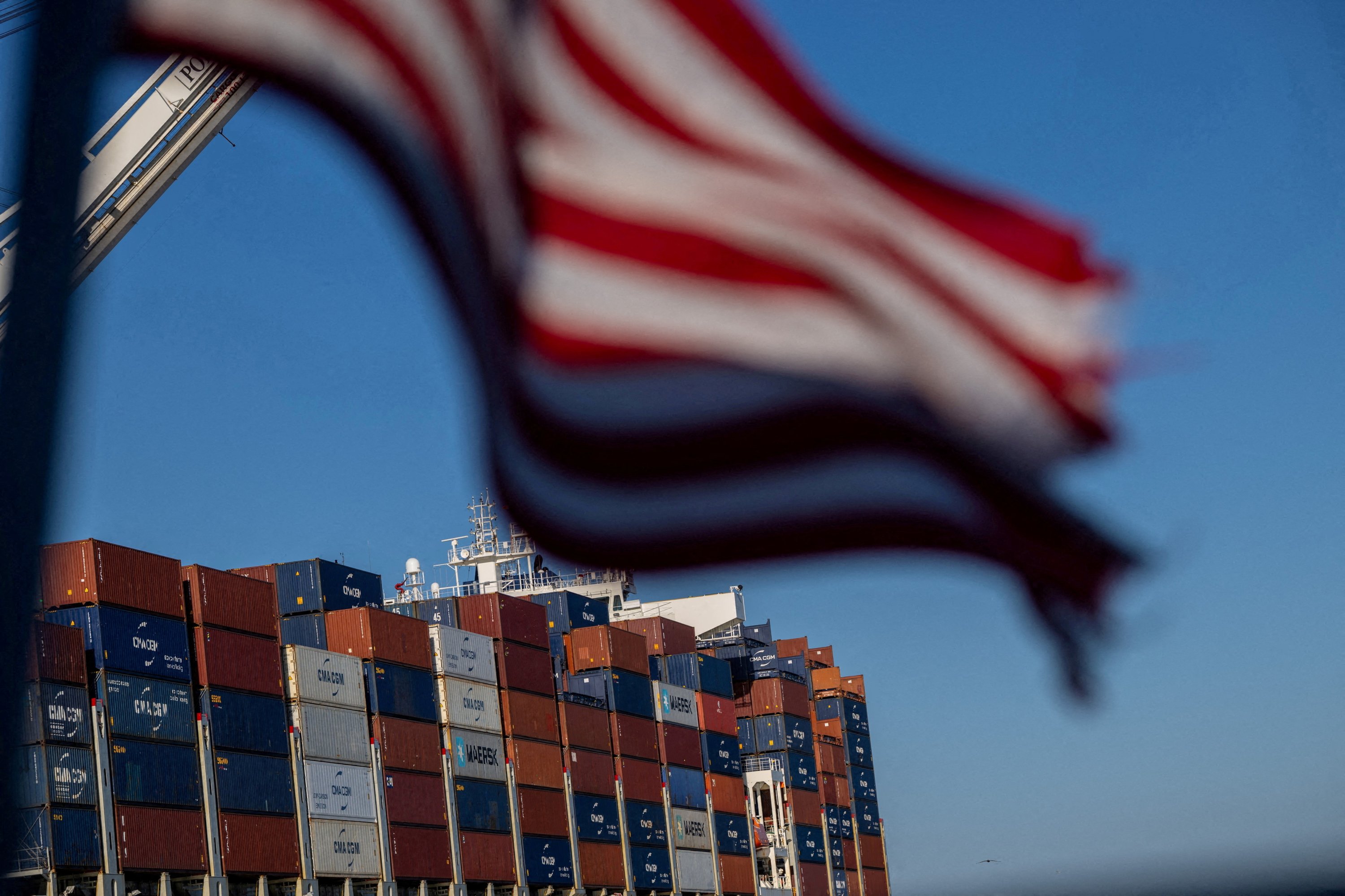
Since returning to the office, Trump has imposed sweeping tariffs on top trading partners, including China and the European Union, in a bid to reshape U.S. trading relationships and boost domestic manufacturing.
Over the weekend, the U.S. president threatened fresh tariffs of 100% on China, on top of current steep levies, criticizing Beijing's recent decision to tighten export controls on the rare earth minerals crucial to the defense and high-tech sectors.
Treasury Secretary Scott Bessent said on Monday that talks were underway to defuse a major U.S.-China trade war escalation.
"Obviously, if this were to materialize, this would be a very significant risk for the global economy," Gourinchas told Reuters, adding escalation could cut growth forecasts significantly and add to uncertainty that is chilling investment and spending.
"Everything is very fluid," he told Agence France-Presse (AFP). "But I think it's a very useful reminder that we live in a world in which this kind of increase in trade tensions, increase in policy uncertainty, can flare up at any time."
The IMF said it expects the global inflation rate to remain elevated at 4.2% this year and 3.7% in 2026, underpinned by elevated inflation in several countries, including the United States.
In Türkiye, the fund estimates annual inflation will decline to 34.9% in 2025 and further to 24.7% in 2026. The inflation lastly jumped to 33.29% in September, from 32.95% in August.
The IMF raised its prospects for economic growth for the U.S., the world's largest economy, by 0.1% this year and next, to 2% in 2025, and to 2.1% in 2026.
However, this still represents a marked slowdown from 2024, when U.S. growth hit 2.8%.
Despite the trade tensions between the world's two biggest economies, the IMF still expects China's economy to slow to 4.8% this year from 5% in 2024, before cooling sharply to just 4.2% in 2026, in line with previous estimates.
China's slowdown has been driven by a reduction in net exports, which have been at least partly offset by growing domestic demand fueled by "policy stimulus," the fund said.
Elsewhere in Asia, the IMF raised India's 2025 growth forecast to 6.6% from 6.4% in the last outlook update in July, and hiked its prediction for growth in Japan to 1.1%, up 0.4 percentage points.
The outlook for Europe has improved slightly from July, with the eurozone now expected to grow by 1.2% this year and by 1.1% in 2026.
While this reflects a slight increase from last year, it remains well below the strong growth seen in the United States, underscoring the enduring challenges faced by some of Europe's largest economies.
Germany's economy is expected to bounce back from recession to register growth of 0.2% this year, up 0.1 percentage point, before picking up to 0.9% next year.
And France, which is in the midst of a prolonged political crisis, is expected to see growth cool to 0.7% this year, before rising slightly to 0.9% in 2026.
The one market exception in the eurozone is Spain, which saw an upgrade and is now expected to see growth remain resilient at 2.9% this year and 2% in 2026.
Growth in the United Kingdom is now expected to hit 1.3% this year and next.
As the war in Ukraine continues, the Russian economy is likely to see a marked slowdown in growth this year to just 0.6% this year from 4.3% in 2024, the IMF said, cutting its outlook by 0.4 percentage point.