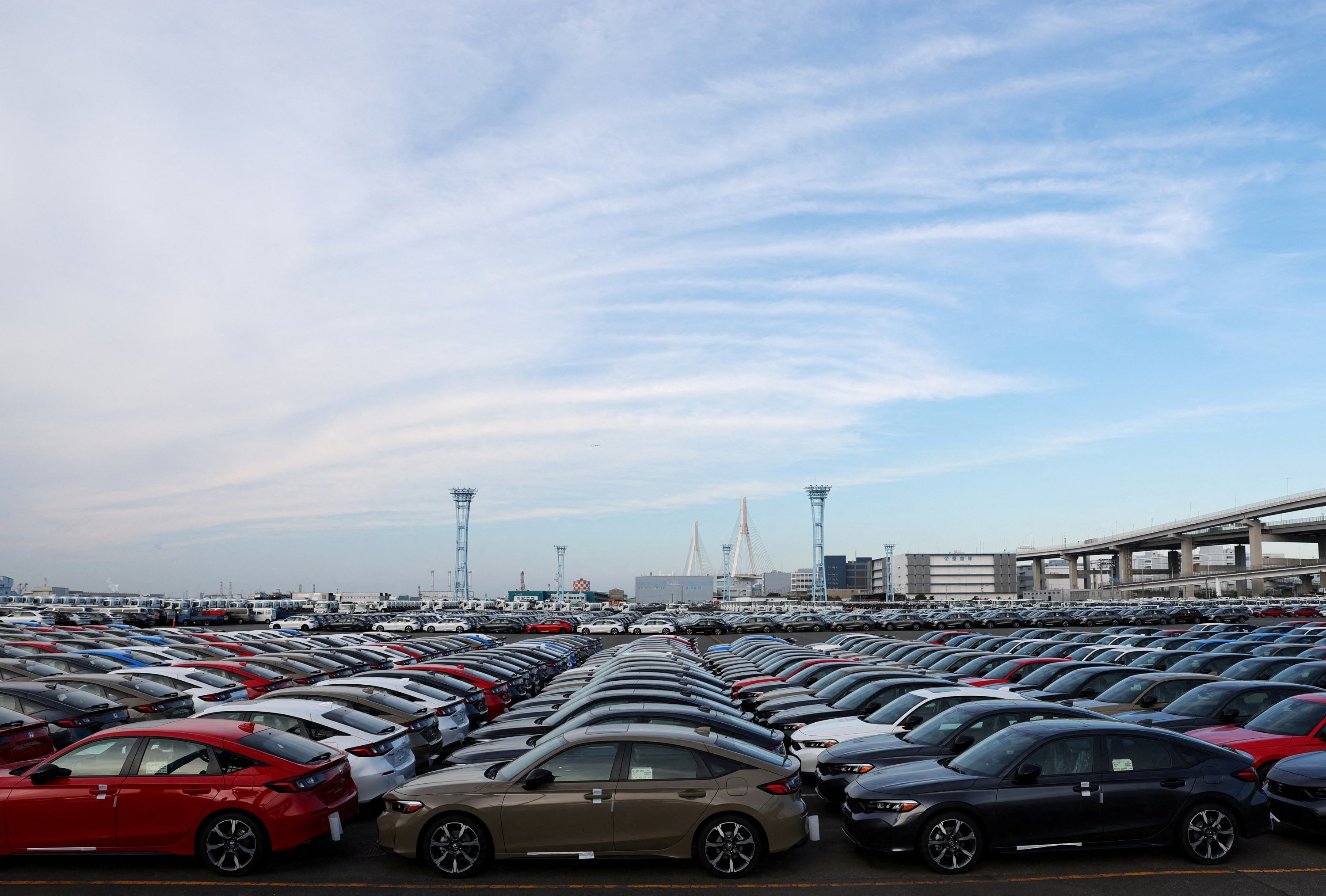
Japan on Friday welcomed U.S. President Donald Trump's signing of an order to implement lower tariffs on automobiles and other Japanese imports, providing some relief to the export-heavy economy.
The order signed by Trump on Thursday reduces tariffs on Japanese automobile imports and other products to 15% from the previous 25%, which was agreed between the two sides on July 22.
Formalizing the deal between the U.S. and a key Asian ally comes after months of negotiations, reduces uncertainty plaguing the massive Japanese auto sector since the July announcement and confirms an agreement for $550 billion of Japanese investment in U.S. projects.
"Tariff negotiations between Japan and the United States was the top priority for the government and we have put all our effort into achieving an agreement in a best possible way as soon as possible," Prime Minister Shigeru Ishiba said Friday. "The way it was achieved... is just excellent."
The step on tariffs comes as the Japanese prime minister faces pressure from right-wing rivals within his party to resign over its July election loss.
In Washington, Japan's top trade negotiator Ryosei Akazawa and U.S. Commerce Secretary Howard Lutnick also signed a joint statement, confirming a $550 billion Japanese investment in U.S. projects.
"Finally," Akazawa posted on social media platform X, in a nod to the months-long trade talks that had frustrated lawmakers in Tokyo. Thursday marked his 10th trip to the U.S. for the negotiations.
Lutnick posted a video clip on X showing a conversation with Akazawa where he said the order "puts into effect the amazing, historic agreement."
Trump's levies on global shipments have dragged down Japan's exports and hit Japanese carmakers hard.
Two-way trade between the two countries reached nearly $230 billion in 2024, with Japan running a trade surplus of nearly $70 billion.
Akazawa said Trump's order brings down tariffs on automobiles and auto parts to 15% and that there will be no stacking on the existing rate, and so-called reciprocal tariffs on most other goods are also set at the same rate without stacking. He said aircraft and aircraft parts will be excluded from reciprocal tariffs.
The two allies agreed on the deal in July but Japanese officials discovered days later the preliminary deal had added 15% on existing rates and objected. Washington acknowledged the mistake and agreed to fix and to refund any excess import duties paid.
Akazawa said he expected the order to take effect within two weeks.
Ishiba said Akazawa carried the prime minister's letter to Trump, stating his wish to build "a golden era of Japan-U.S. relations" together, and inviting the president to visit Japan.
He welcomed the deal as a result of his consistent push for investment instead of tariffs and stressed that "it is important to implement the agreement faithfully and promptly."
Ishiba faces a key test with his ruling party set to vote on Monday on whether to hold an extraordinary leadership election that could result in his ouster.
Ishiba has overseen his ruling coalition lose its majority in elections for both houses of parliament since coming to power last year amid voter anger over rising living costs and weak economic growth exacerbated by the trade tariff uncertainty.
While finalizing the trade deal gives Ishiba an argument to stay on, he is unlikely to survive the backlash from within his own party, said David Boling of political risk consultancy Eurasia Group, estimating a 60% chance that he is forced out.
Meanwhile, rival exporter South Korea is still waiting on an executive order covering a similar trade agreement with the U.S., including a 15% tariff on imports from automakers like Hyundai Motor and Kia, down from 25%.
A South Korean trade official said on Friday that his country was assessing the potential impact of the executive order regarding Japan.
Shares of major Japanese automakers were up slightly on Friday, while those in South Korea were slightly lower.