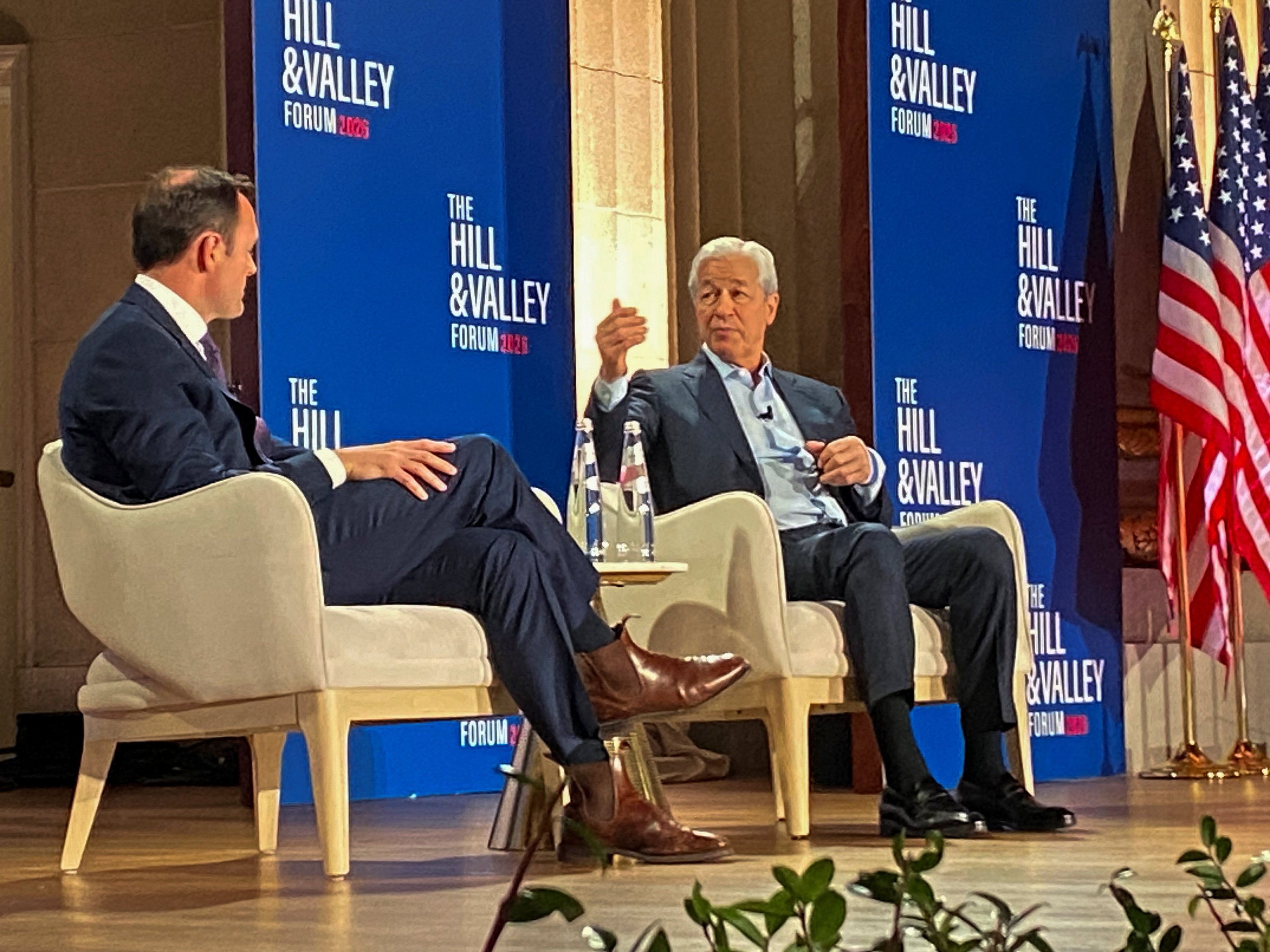
The war in Iran risks oil and commodity price shocks that could keep inflation sticky and push interest rates higher than the market now expects, JPMorgan Chase CEO Jamie Dimon warned Monday.
The warning came in an annual letter to shareholders a day after U.S. President Donald Trump ratcheted up pressure on Iran, threatening to target its power plants and bridges Tuesday if it does not reopen the Strait of Hormuz, a key waterway.
Dimon, 70, who has run JPMorgan, the largest U.S. bank, for two decades, also said the private credit sector "probably" does not present a systemic risk, despite investors' recent moves to pull back from such funds amid worries that advances in AI will hurt underlying borrowers.
"The challenges we all face are significant," Dimon added, citing geopolitical risks such as the war in Ukraine, broader hostilities in the Middle East and tension with China.
"Now, because of the war in Iran, we additionally face the potential for significant ongoing oil and commodity price shocks, along with the reshaping of global supply chains, which may lead to stickier inflation and ultimately higher interest rates than markets currently expect."
Time will tell whether the Iran war achieves the United States' objectives, Dimon said, adding that nuclear proliferation remains the greatest danger from Iran.
War-driven inflation worries have led markets to largely rule out interest rate cuts this year, after monetary easing fueled record equity highs last year.
Last week, the benchmark S&P 500 index closed its worst-performing quarter since 2022, weighed down since late February by the war and the resulting spurt in energy prices.
Dimon said the U.S. economy continued to be resilient, with consumers still earning and spending, though with some recent weakening, and businesses still healthy.
But he cautioned the economy had been fueled by large amounts of government deficit spending and past stimulus, while increased expenditure on infrastructure remained a growing need.
The fiscal stimulus from Trump's "Big, Beautiful Bill," deregulation policies and artificial intelligence-driven capital spending are other positives for the economy, Dimon said.
Dimon said the $1.8 trillion private credit market is relatively small. But once the credit cycle weakens, he warned, losses on all leveraged lending will be higher than expected as credit standards have been weakening modestly across the board.
Private credit also does not tend to have great transparency or rigorous valuation loan "marks," increasing the chance that investors will sell if they think the environment will worsen, he said.
Blue Owl last week told investors it was limiting withdrawals from two funds after a historic level of first-quarter redemption requests, with AI-related worries driving an investor exodus from its technology-focused fund.
Dimon also used the letter to sharply criticize revised capital rules proposed by U.S. bank regulators last month, decrying some aspects as still "nonsensical."
JPMorgan was among the banks that fought hard to water down 2023 drafts of the so-called Basel III and GSIB, or Global Systemically Important Banks, surcharge rules.
But on Monday, Dimon said the proposals were still "very flawed," adding that JPMorgan's GSIB surcharge – an extra capital layer held by such banks – would only fall to 5%, a figure he said punished its success and was "absurd" and "un-American."