Oil prices slipped on Monday while precious metals surged as markets registered a mild and mixed reaction to the U.S. capture of Venezuelan President Nicolas Maduro in a weekend raid.
Asian shares rallied on heavy buying of tech-related stocks, and U.S. futures were flat after small gains on Friday on Wall Street.
"While the capture of Venezuelan president Maduro by American forces has dominated headlines, financial markets seem unperturbed," Thomas Mathews of Capital Economics said in a report. "We agree with the implicit view that the near-term economic and financial implications are minor."
Shortly after trading began, U.S. benchmark crude oil rose slightly. But it later traded 52 cents lower at $56.80 per barrel. Brent crude, the international standard, gave up 49 cents to $60.26 per barrel.
After years of neglect and international sanctions, Venezuela’s oil industry is in disrepair. It could take years and major investments before production can increase dramatically. But some analysts expect Venezuela could double or triple its current output of about 1.1 million barrels of oil a day to return to historic levels fairly quickly.
With oil levels already plentiful, crude already was trading near its lowest level in about six months.
In any case, the U.S. move rippled through financial markets as traders maneuvered to account for the uncertainty brought on by President Donald Trump's unusual military operation and his insistence that the U.S. will be running Venezuela following Maduro's ouster.

The price of gold rose 2.4%, and silver jumped 6%.
Such assets are often considered safe havens in times of geopolitical turmoil.
"Investors are happy to own risk, but they want insurance in the drawer. This is confidence with a hedge, not euphoria," Stephen Innes of SPI Asset Management said in a commentary.
Share prices in Asia shot sharply higher.
In Tokyo, the Nikkei 225 jumped 3% to 51,832.80, its highest close since it hit a record of 52,411.34 on Oct. 31. The index closed at a year-end high for 2025 and only resumed trading on Monday.
"Looking at the environment surrounding the markets, continuously, there are various risk factors. We must keep an eye on geopolitical risks in Ukraine, the Middle East and East Asia, the U.S.-China trade war, monetary policies in other countries and their development, and corporate performance trends in Japan,” Hiromi Yamaji, CEO of the Japan Exchange Group, said in the market's traditional New Year opening ceremony.
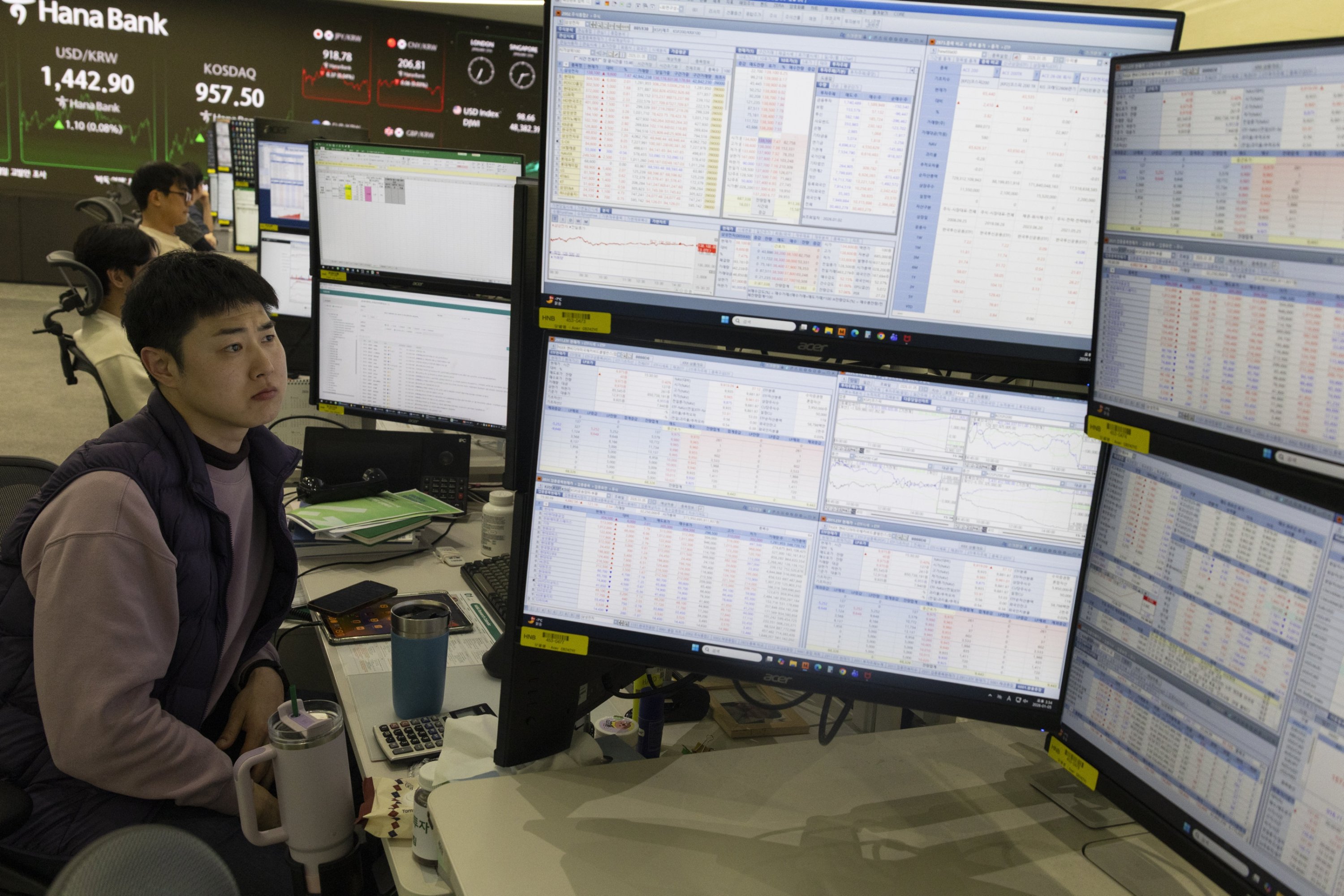
South Korea's Kospi surged 3.4% to 4,457.52, a record. It also ended Friday with a record high close.
Australia's S&P/ASX 200 closed flat at 8,728.60, while Taiwan's benchmark climbed 2.6%.
In other trading early Monday, the dollar rose to 157.04 Japanese yen from 156.82 yen. The euro slipped to $1.1692 from $1.1726.
This week is the first full week of the new year. It will bring several closely watched U.S. economic updates, some of the last big updates the Federal Reserve (Fed) sees before its next meeting at the end of January.
On the agenda are private reports on the status of the services sector, which is the largest part of the U.S. economy, along with consumer sentiment. Government reports on the job market will also be released. The hope is they’ll help paint a clearer picture of how various parts of the U.S. economy closed out 2025 and where it might be headed in 2026.
On Friday, U.S. stocks eked out small gains on Wall Street in a wobbly but quiet day of trading to kick off the new year.
The S&P 500 rose 0.2% and the Dow Jones Industrial Average rose 0.7%. The Nasdaq composite fell less than 0.1%. The index was weighed down by a 2.2% loss for Microsoft and a 2.6% decline for Tesla, after it reported falling sales for a second year in a row.
Nvidia, Microsoft and Tesla are among the most valuable companies in the world, and their outsized valuations give them more influence on the stock market's direction. That includes sometimes pushing the market up and down from hour to hour.