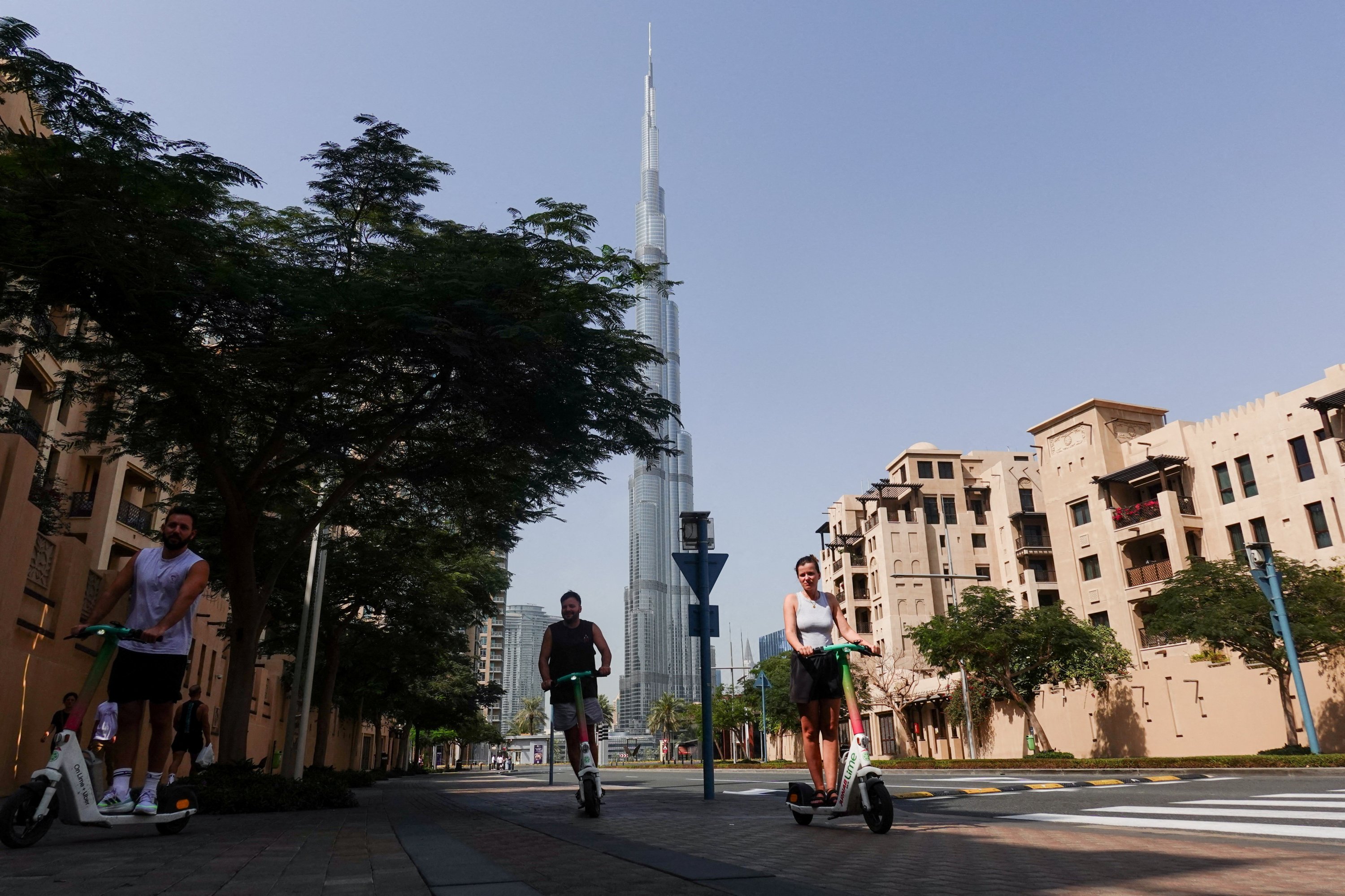
For years, Dubai has been pitched with images of glittering skyscrapers, tax-free incomes, business-friendly policies and something far more intangible: the unspoken promise that whatever was happening elsewhere in the Middle East, this city was different. The conflicts that destabilized the region would somehow stop at Dubai's borders.
Since Saturday, that all changed. Iran's retaliatory strikes across the Gulf hit across Dubai's key sectors, landing on airports, hotels and ports. They also hit the psychological foundations of a city that had spent four decades constructing that identity as one of the world's most reliable places to do business in an unreliable neighborhood.
Authorities in the United Arab Emirates (UAE), a close U.S. ally, moved quickly to contain the damage to confidence as much as the physical fallout.
The UAE's National Emergency, Crisis and Disasters Management Authority said the situation remained under control. For investors and residents watching their landmarks hit by missiles, as they stockpiled supplies, the reassurances were noted. Whether they were enough is another question.
"It's hard to overstate the peril for Dubai's economic model," said Jim Krane, a fellow at Rice University's Baker Institute.
"The physical damage may be slight, and most of the pain thus far is psychological. But Dubai's status as a safe haven for expatriates and their businesses is in increasing doubt. The longer the war continues, the more intense the search will be for alternative locations. Dubai needs this war to wrap up now. International capital is highly mobile," Krane noted.
In a sign of the ongoing strains, the UAE's stock markets were closed on Monday and Tuesday, while tech outages following a hit to Amazon's cloud computing facilities were affecting some banking operations, according to a person familiar with the situation.
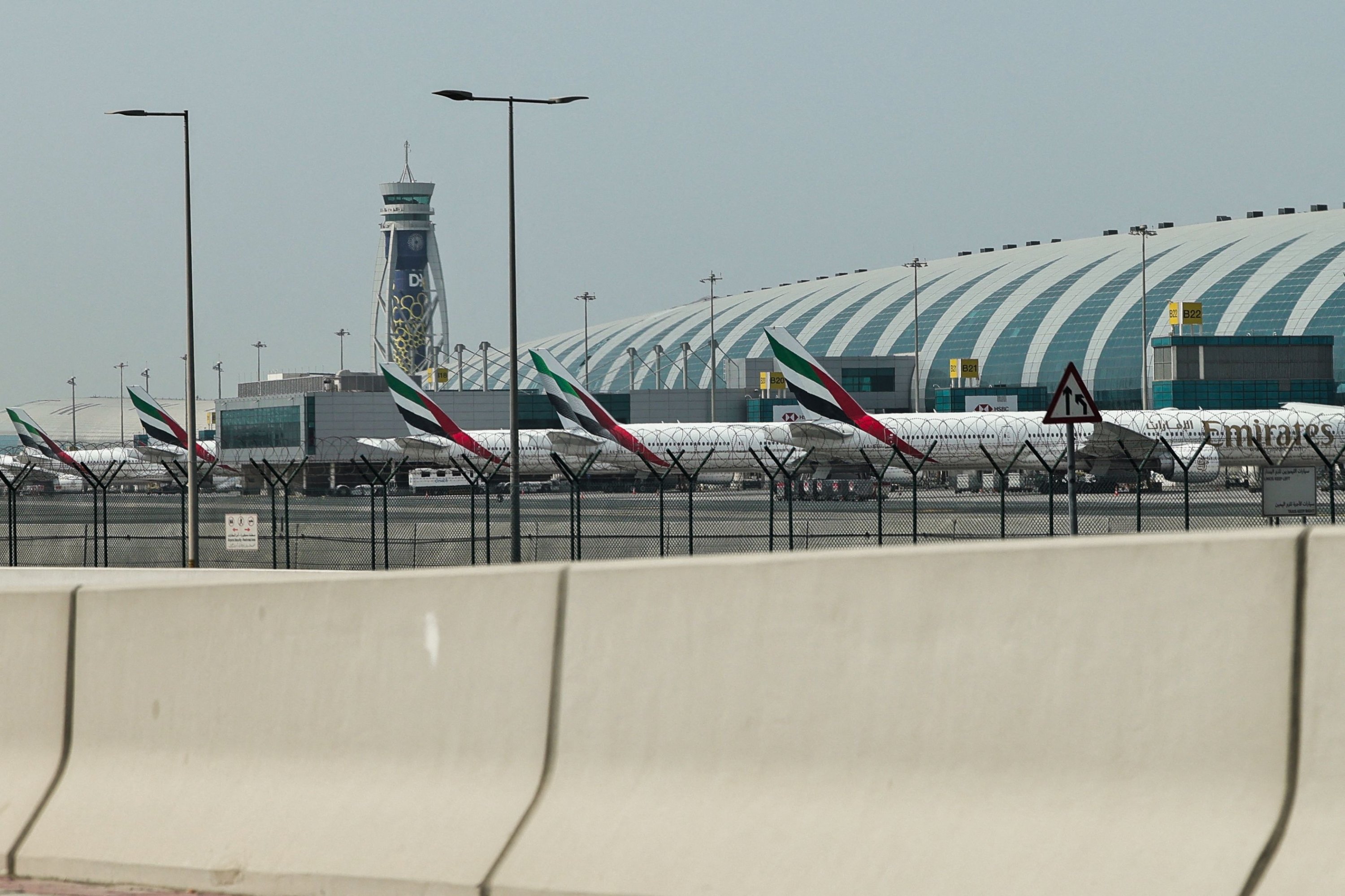
Tens of thousands remained stranded in the UAE as airspaces remained largely closed, with the conflict also laying bare how heavily global air travel relies on a handful of hubs led by Dubai, the world's busiest international airport.
Four decades after the Gulf's trading capital set out to exploit its strategic location by setting up Emirates with two rented jets and two routes, Dubai stands at the center of a global network spanning 110 nations and 454,000 flights a year.
Dubai's transformation from a modest pearling and fishing port into a global financial center was a decadeslong project. The launch of Emirates airline in 1985, the opening of the Burj Al Arab in 1999 and laws in the early 2000s allowing foreigners to own property for the first time were the pillars of Brand Dubai.
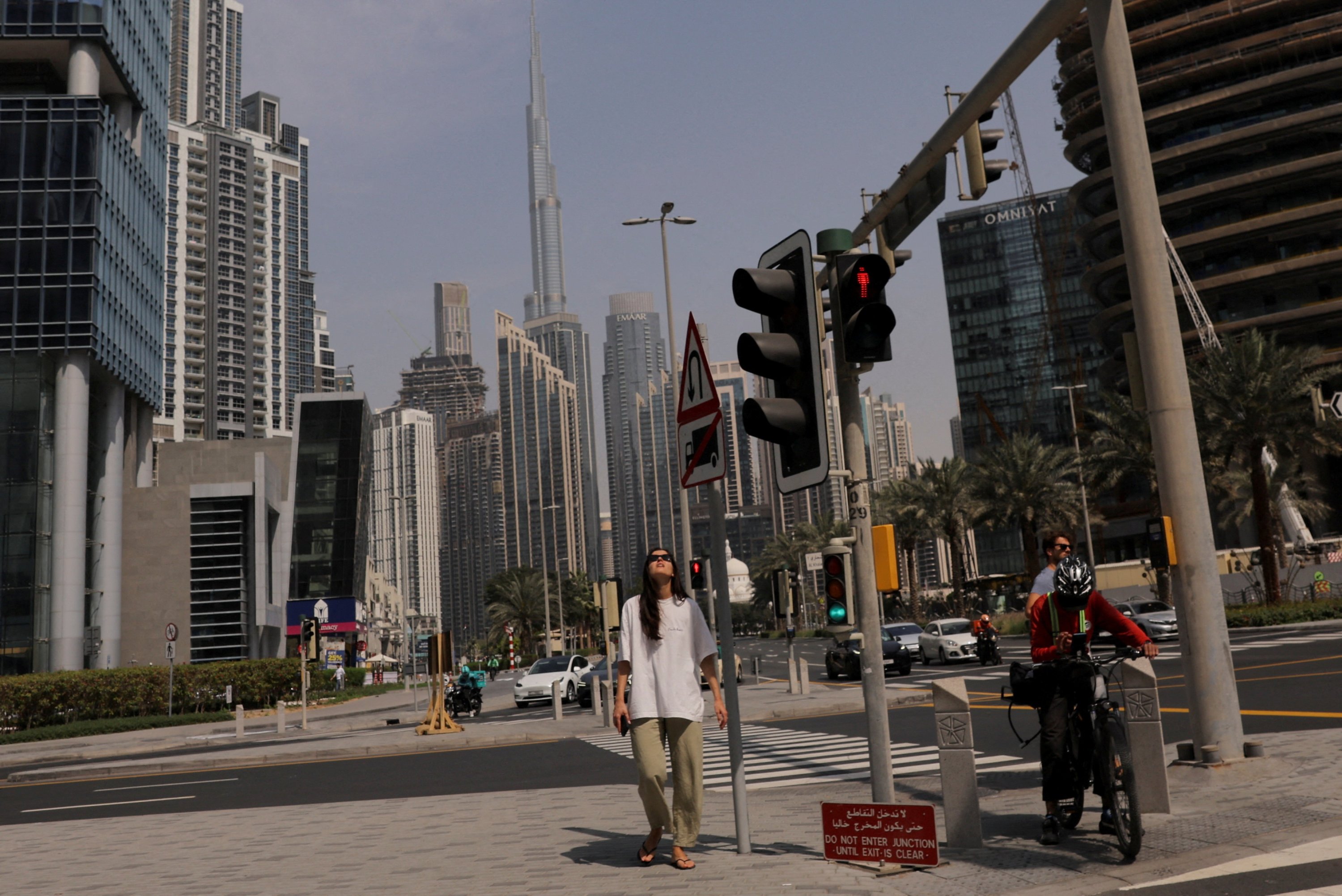
Dubai's economy is almost fully powered by non-oil sectors, with oil now accounting for less than 2% of gross domestic product (GDP). A mix of trade, tourism, high-end real estate and financial services, built on a regulatory framework that mirrored London and New York, has replaced it.
Neighboring Abu Dhabi, which holds more than 90% of the UAE's oil reserves, remains more reliant on oil revenue for growth.
Beirut had been the region's international financial capital until its civil war in the 1970s shattered that image. Bahrain stepped into the vacuum until Dubai's rise rendered it a more modest player. Each succession was built on the same promise: a stable, open alternative to wherever the region's last crisis struck. Dubai executed that promise more completely than any of its predecessors.
Dubai's rise was itself partly built on the instability of others. With Syrians displaced by civil conflict, wealthy families rattled by the Arab Spring, and more recently, Russians fleeing because of the Ukraine war, new residents all poured capital and talent into the emirate.
The population across the UAE ballooned, from about 1 million in 1980 to 11 million in 2024. Last year, the UAE was on track to attract a record 9,800 relocating millionaires, more than any other country on earth, according to Henley & Partners.
Money has poured into real estate, propelling Dubai's developer Emaar Properties to a record high on Feb. 25, valuing the company at about 149 billion dirhams ($40.6 billion).
The creation of the Dubai International Financial Center (DIFC) in 2004 kickstarted a push to draw financial firms. By the end of 2025, DIFC hosted more than 290 banks, 102 hedge funds, 500 wealth management firms and 1,289 family-related entities.
But vulnerabilities have remained.
The Strait of Hormuz, through which roughly a fifth of the world's seaborne crude oil passes, runs through Dubai's backyard. Iran, a country with the capability to destabilize Gulf commerce, sits directly across the water.
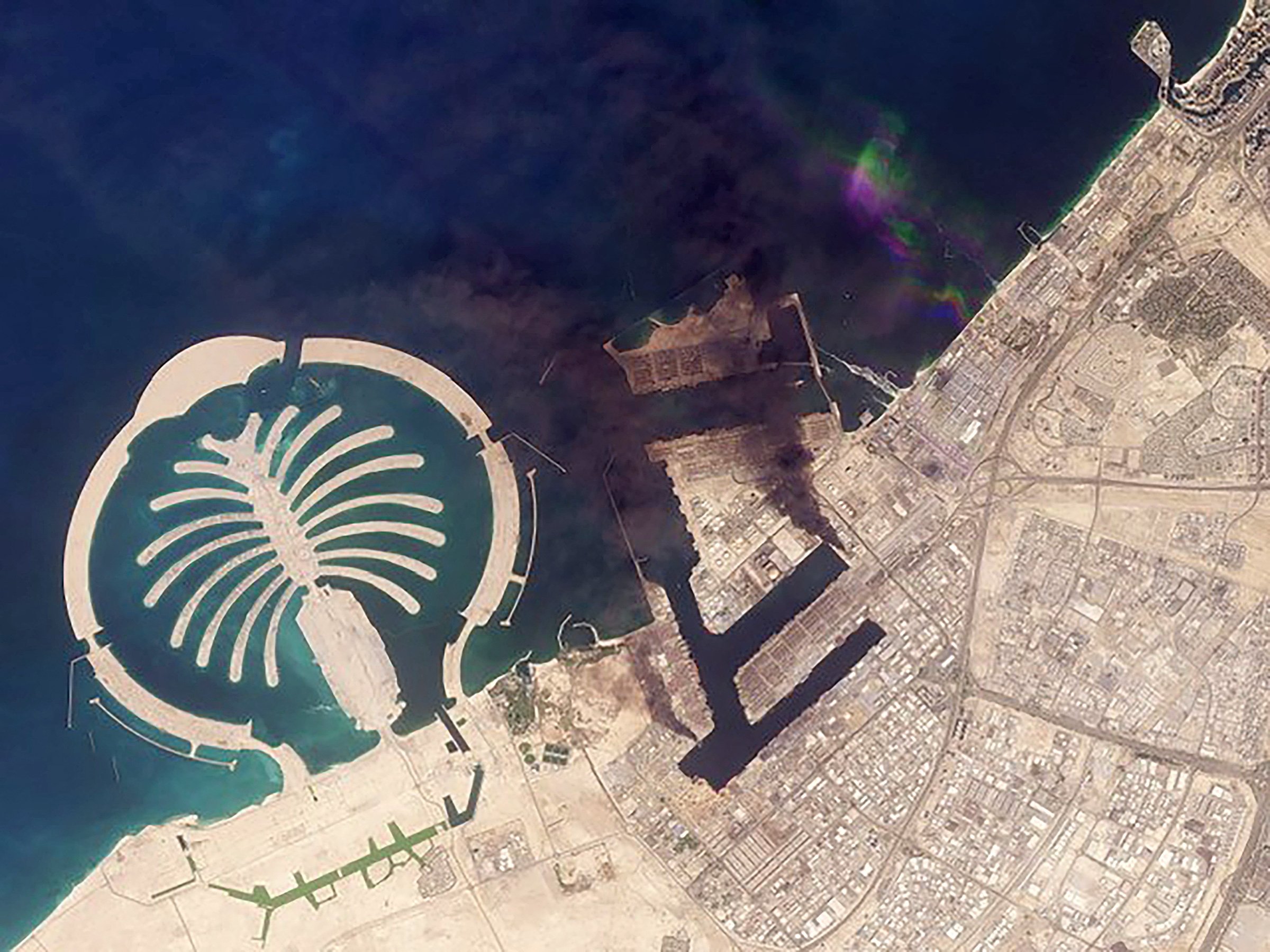
The physical damage over the weekend was stark. Dubai International Airport was hit, a berth at Jebel Ali Port caught fire and the Burj Al Arab sustained damage from interceptor fragments. Three people were killed and 58 injured, according to the UAE Ministry of Defense.
"People are afraid of what's happening. It's the first time they have to hide in underground places. Dubai airport, one of the biggest in the world, has to shut down for a few days," said Nabil Milali, multi-asset portfolio manager at Edmond de Rothschild Asset Management. He reduced the firm's exposure to stocks globally last week to prepare for the possibility of an attack on Iran.
"There's a 70% probability we will keep a geopolitical risk premia (on the region) for a long time."
A source at a UAE-based mid-sized investment firm said their company had begun preemptively planning layoffs and halted fundraising. Demand for gold bars surged, a jewelry industry source said. International private banks, which had been expanding advisory operations in the emirate, may also reassess the scope of their presence, according to a private banker. Firms may begin to rethink serving clients locally versus from another location, the banker said.
"Historically, markets like the UAE have demonstrated resilience during crises, including COVID, supported by strong policy response and governance," said Madhur Kakkar, founder and CEO of Elevate Financial Services.
"At this stage, a broad structural reallocation of institutional capital away from the UAE or the wider Gulf appears unlikely unless tensions escalate materially or persist for an extended period."
There is no data yet on capital outflows. The suspension of trading on the Abu Dhabi and Dubai stock exchanges on March 2 and 3 marks an unprecedented step for UAE regulators.
"It's really quite a big change in perceptions," said William Jackson, chief emerging markets economist at Capital Economics. "The Gulf economies have generally been seen as safe from Iranian retaliation. I think (that) has really changed over the weekend."
The impact will depend on how long the conflict continues, he said. "But I think this is quite a big challenge, particularly when we're thinking about some of the diversification efforts that are underway in the region."
Dubai now has the momentous task of handling tens of thousands of displaced passengers and piecing its network back together while trying to minimize damage to inbound flights that represent half its traffic.
Most analysts say that, barring a prolonged regional war, the Gulf hubs will recover by virtue of the momentum and the power of their networks. But the unprecedented shutdown of all three major hubs – Dubai, Abu Dhabi and Doha – coincides with growing competition from Türkiye, Saudi Arabia and India.
"That we've got such a well-spread geographic business model and are well spread between visitors and those in transit suggests it's very robust and will continue to survive any geopolitical tension that exists, wherever it may be," Dubai Airports CEO Paul Griffiths told Reuters in a recent interview.
The strikes by the U.S. and Israel and Iran's retaliation brought such tensions to Dubai's doorstep, including an attack on the airport itself.
"There's no doubt at all this is temporary. They have seen major incidents before and recovered very quickly due to their importance as global hubs," said U.K.-based travel consultant Paul Charles. "They will recover quickly, even if there is substantial uncertainty in the short term."
Others are less certain. The whole industry bounced back from the beating taken during the COVID-19 pandemic, thanks to demand outpacing supply. This time, however, it is demand that is at risk.
"Travelers are likely to consider more direct flights rather than stop over in Dubai or Doha. All this hub traffic is likely to take a hit," said independent aviation adviser Bertrand Grabowski.
Geography and economics remain strong allies, however.
"One third of the world's population is within four hours' flying time and two-thirds within eight hours," said Dubai Airports' Griffiths.
"We've seen the incredible aggregation power that a hub delivers."
But threats to the Gulf trio are brewing. Turkish Airlines (THY) could be the biggest short-term winner through its own mega-hub outside the conflict zone, said independent aviation analyst John Strickland.
Saudi Arabia is also muscling in, followed by India, with Asian carriers picking up passengers.
Advances in aircraft design – once favorable to Gulf airlines – are also beginning to work against them. Airbus last week began assembling a second ultra-long-range A350 jet to support plans by Qantas to fly directly from Sydney to London.
Emirates was founded at the height of the Iran-Iraq war in 1985. Its rapid growth led to the splintering of Gulf Air – carrier for Qatar, Bahrain, Abu Dhabi and Oman at that time – as, first, Qatar, then Abu Dhabi, set up their own airlines to form what remains a trio of Gulf hubs competing for passengers.
With Dubai's orderly reputation shaken by Iranian attacks and anti-missile shrapnel, analysts say the greatest uncertainty of all hangs over the future of traffic to the city itself.
Questions have also been raised over the timing of the already delayed expansion of a giant new airport outside the city.
Dubai destination traffic "will doubtless recover, but there is likely to be some lasting damage," Grabowski said.
For Emirates and sister airline flydubai, that may involve using their market power to get the system running again.
"People have short memories and they might be incentivised by some bargain deals to bring people back, but I don't think that would need to be there for long," said Eddy Pieniazek, head of advisory at aviation and leasing consultancy Ishka.