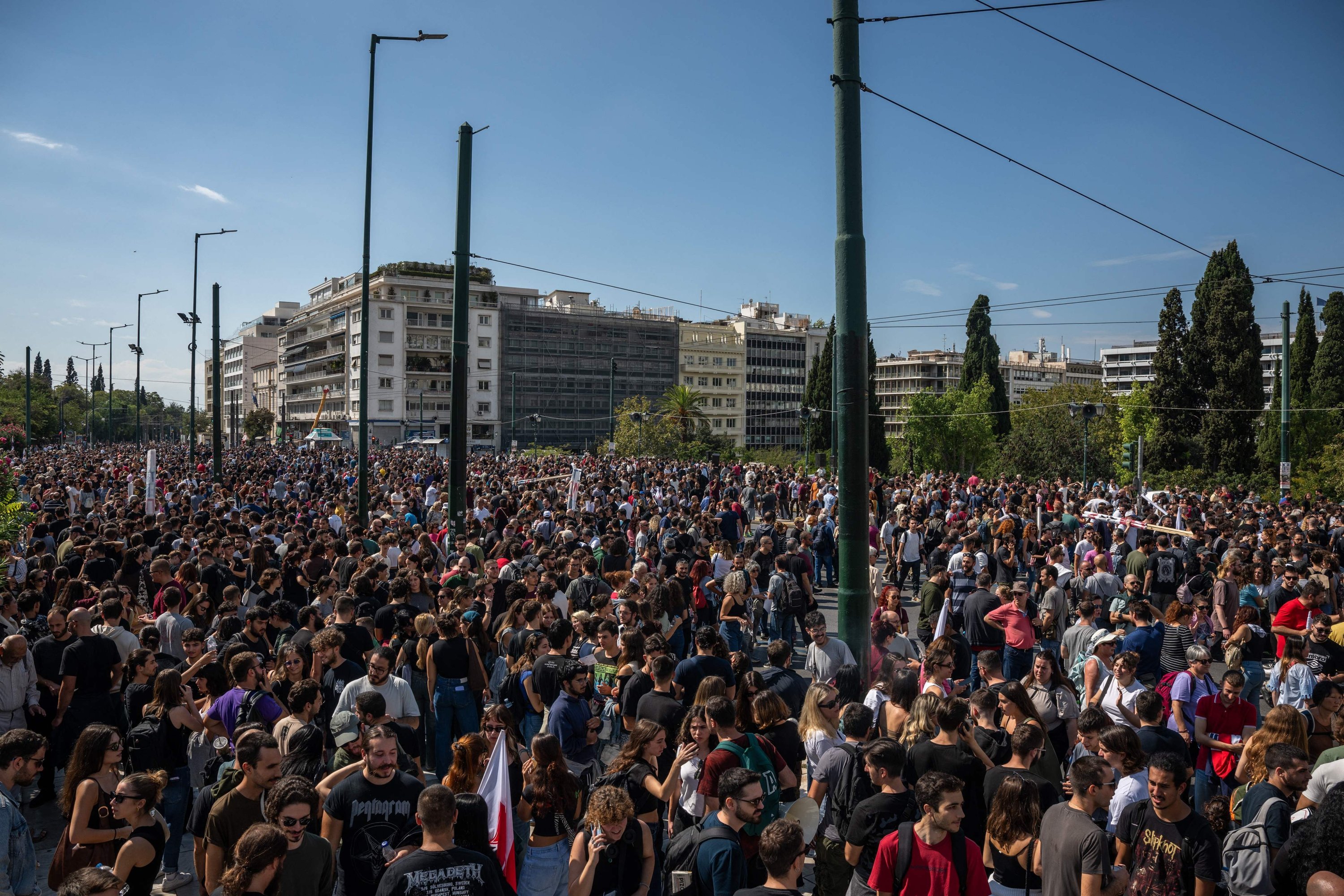
Greek protests against planned labor reforms, which include longer private sector working hours, disrupted transport and train services on Tuesday.
The walkout, the second this month by Greece's largest public and private sector unions, was timed to coincide with a parliamentary debate and a vote this week on the government's draft bill on the reforms.
Striking workers, including hospital doctors and public broadcast journalists, are expected to march alongside other protesters to parliament at noon.
The draft law allows employers to extend working hours, gives them more flexibility on short-term hirings and amends rules on annual leave in the private sector.
The government says that the bill will create a more effective and flexible labor market and that the bill protects workers from being fired if they refuse to work overtime.
But labor unions say it hurts workers' rights, abolishes an eight-hour workday and strips them of their negotiating power in a country where average wages are still low compared with other EU countries, despite wage increases and lower unemployment after a debilitating debt crisis from 2009 to 2018.
Greeks' purchasing power is among the lowest in the European Union bloc, Eurostat data shows.
"Instead of boosting workers' incomes and reinforcing public services, the government chooses to legislate work for multi-employers and gruelling working hours," Greece's main public and private sector unions, ADEDY and GSEE, said in a statement.