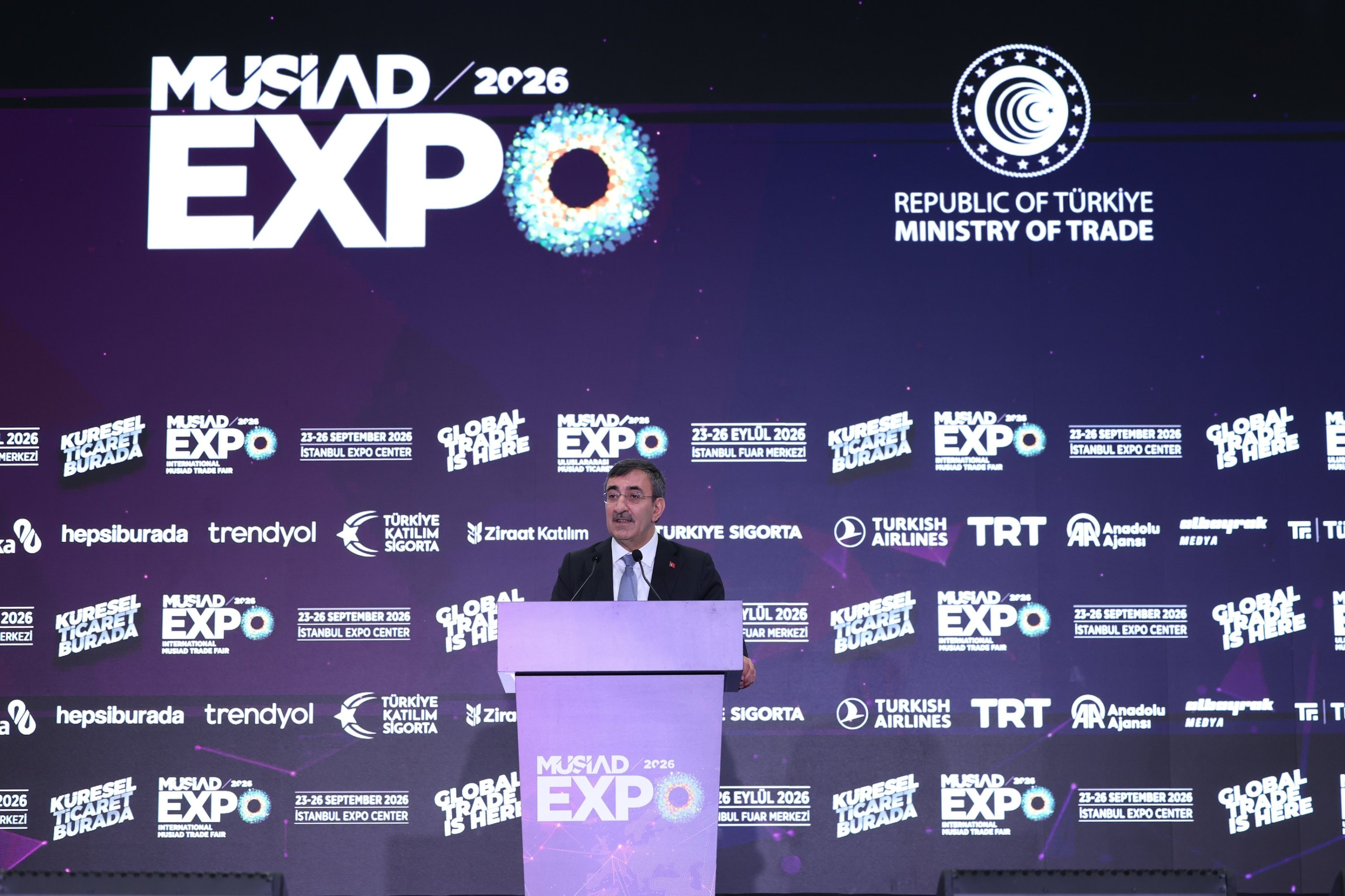
The challenges Türkiye has encountered recently are confined to a limited segment of its capital markets and do not represent a systemic structural weakness, Vice President Cevdet Yılmaz said Wednesday.
Yılmaz said administrative and judicial measures had been taken to address the issues.
Turkish authorities acted last week to support financial stability, including measures to boost Turkish lira liquidity and ease some capital and margin requirements after some funds struggled to meet withdrawals during a stock market sell-off.
"There is no structural problem in our capital markets. We are facing some specific issues in a limited area, and once we overcome them, our capital markets will continue on their path even stronger than before," Yılmaz said.
"All necessary administrative and legal measures have been taken in this regard, and continue to be taken."
He was speaking at the opening of the MÜSIAD EXPO 2026 and the International Business Forum (IBF) in Istanbul, organized by the Independent Industrialists and Businessmen's Association.
Following the volatility last week, authorities filed criminal complaints over alleged market manipulation and ordered the liquidation of 131 funds managed by seven asset managers.
Türkiye’s capital markets regulator said Wednesday that almost half a million investors hold stakes in the investment funds said to be worth more than $18 billion.
Yılmaz went on to stress what he said were strong macroeconomic fundamentals of the Turkish economy.
He cited Türkiye’s low public debt, manageable budget and current-account deficits, stronger reserves and sound banking system.
"The banking system is extremely sound, and the capital adequacy ratio is high. In short, our macroeconomic fundamentals are strong; our citizens should have no doubt about this," Yılmaz added.
He said the country's current-account deficit had remained below 2% of GDP in recent periods, although energy prices that have surged amid the fallout of the Iran war could push it slightly above that level this year.
He also said Türkiye’s banking sector had high capital adequacy ratios and that the country's credit default swap (CDS) premium had declined compared with previous periods.
Globally, Yılmaz said trade was facing a volatile period amid geopolitical tensions, rising protectionism and the green and digital transitions.
He said the Middle East conflict was weighing on expectations for global goods and services trade in 2026, while raising logistics costs and adding inflationary pressure through commodity prices, particularly energy.
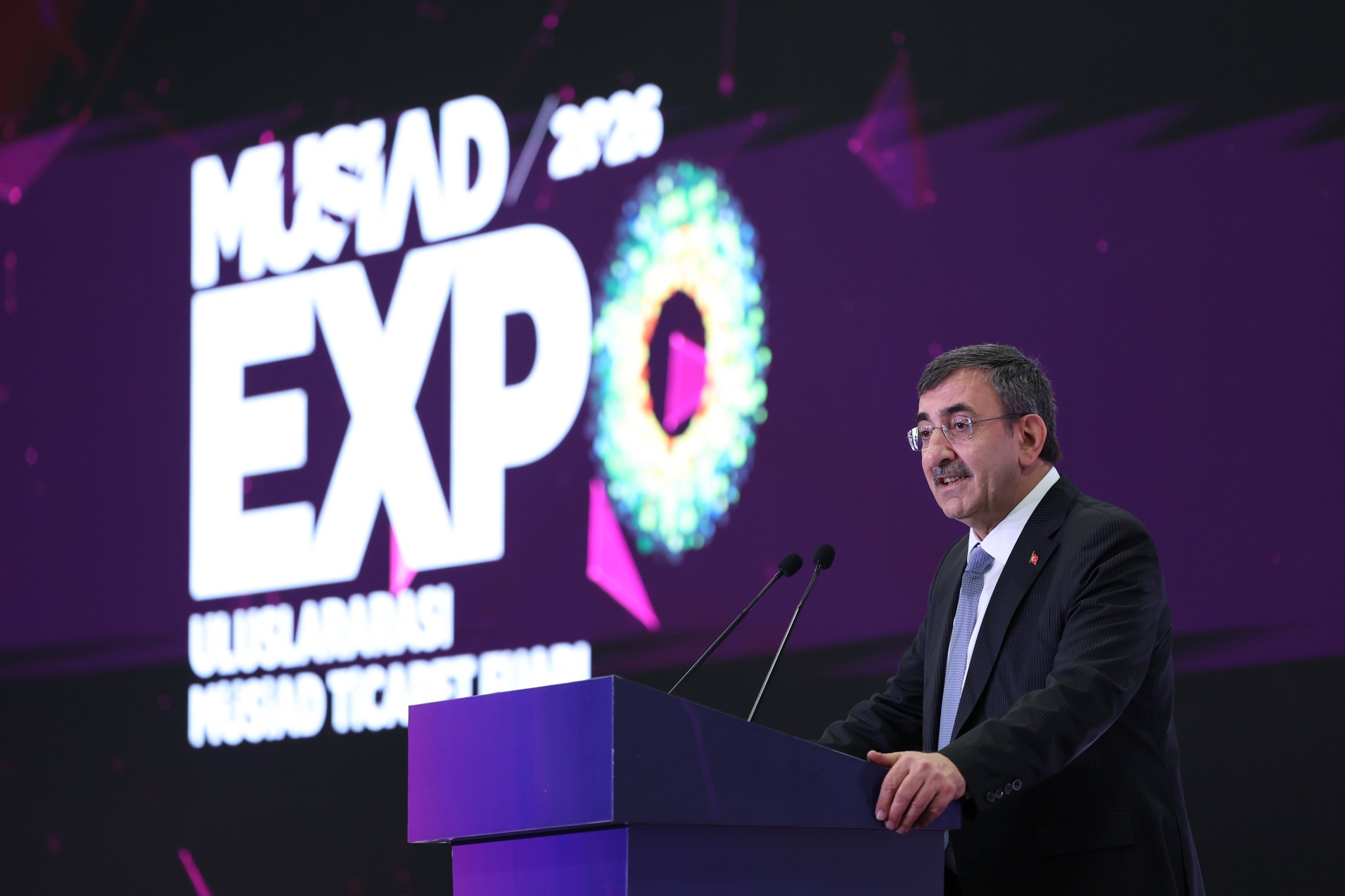
Yılmaz said Türkiye’s economy was showing a relatively positive performance thanks to its production capacity and export strength despite adverse global conditions.
He said the economy exceeded $1.6 trillion in 2025 and annualized national income surpassed $1.7 trillion in the first half of 2026. The government expects GDP to exceed $1.8 trillion by the end of the year.
Goods exports rose from $36 billion in 2002 to $273.2 billion in 2025 and reached an annualized $280 billion as of August 2026, according to Yılmaz.
Services exports increased from $14 billion in 2002 to $125 billion, while combined goods and services exports approached $400 billion in 2025, he said.
Türkiye aims to increase combined goods and services exports from around $400 billion currently to $450 billion by the end of 2029, according to the government’s Medium-Term Program (MTP).
Yılmaz said customs infrastructure, free zones and measures supporting green and circular economic transformation would also be developed to improve competitiveness.
Main markets face weaker growth
Yılmaz said Türkiye’s main export markets, particularly Europe and the Middle East and North Africa (MENA), were facing weaker growth.
He said countries accounting for more than 90% of Türkiye’s trade were expected to grow by around 1.6% this year, making 2026 a challenging year.
However, he said Türkiye’s trading partners were expected to grow faster than the global economy next year, partly due to base effects and developments related to the war.
Yılmaz said Türkiye was pursuing strategies to diversify its export markets, including efforts targeting distant markets, Islamic countries and African economies.
He also highlighted transport and logistics projects including the Development Road, Middle Corridor and Zangezur Corridor, saying Türkiye aimed to increase its role in east-west and north-south trade flows.
The government also plans to integrate ports, logistics centers, industrial zones and railway networks to strengthen Türkiye’s position as a production, logistics and trade hub, he said.
Meanwhile, the four-day MÜSIAD EXPO, which kicked off Wednesday, is a multisector trade fair bringing together producers, brands and international buyers from different industries.
Providing a meeting point for global trade professionals, the event offers participants the opportunity to build direct business connections in new markets.
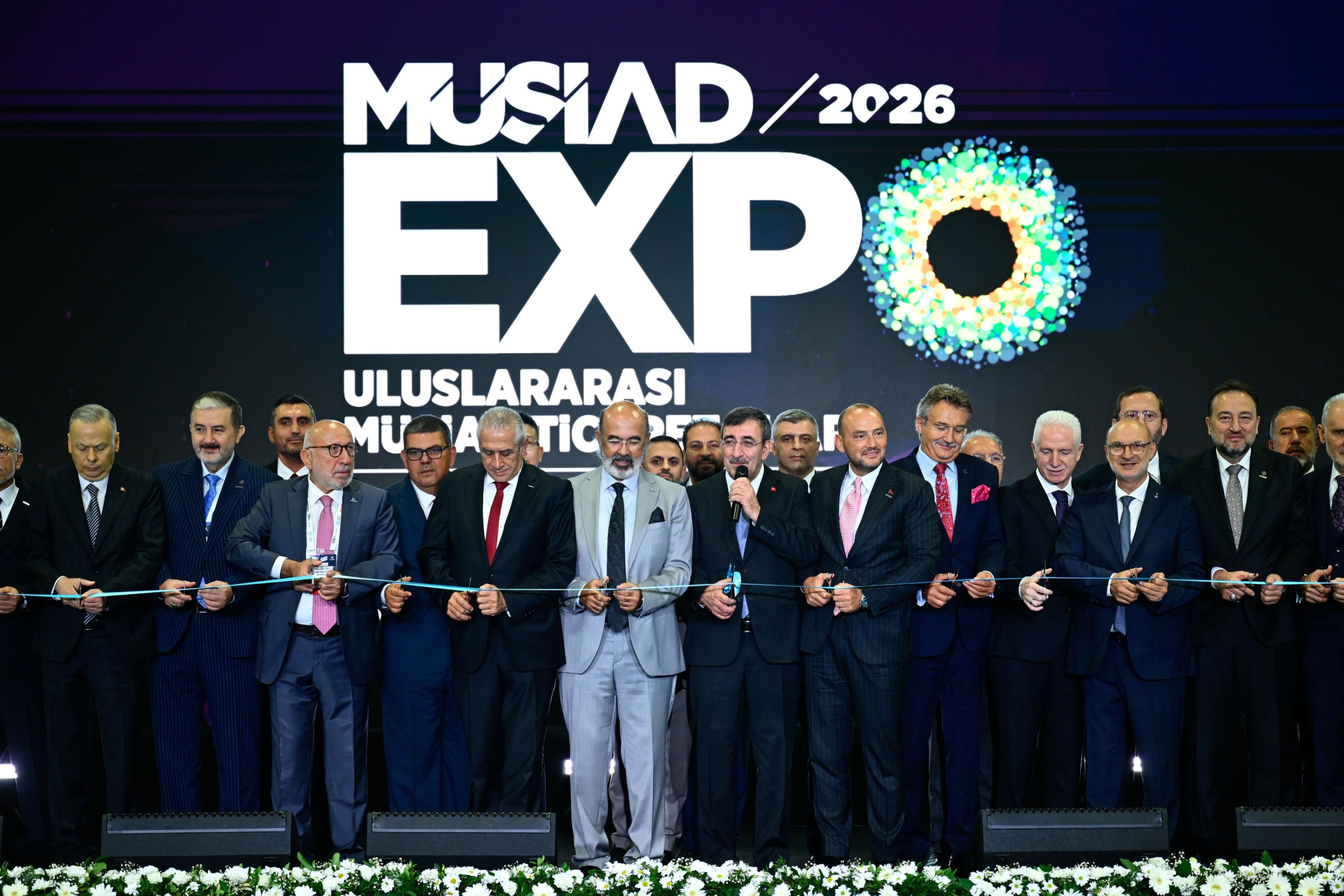
With an increasing number of participants every year, expanding sector diversity and a strong business network, MÜSIAD Expo is a trade platform that brings investors, industrialists, entrepreneurs and business representatives together.
Alongside the event, the 29th International Business Forum also began under the theme "The Transformation of Humanity and the Business World in the Age of AI."
MÜSIAD Chair Burhan Özdemir noted that they gathered to discuss Türkiye's determination to produce, its business ethics, and its global vision.
Özdemir reminded the audience that the first expo took place in late October 1993, and that they represented an approach centering on ethics in trade, responsibility in production, and trust in the business world.
He pointed out that the exhibition became one of the strongest trade gatherings not only in Türkiye but also in the broader region.
Organizers aim to host more than 50,000 visitors over four days at the fair, which represents 369 companies from 18 different sectors in an area of approximately 25,000 square meters.
He stressed that the main issue for them was transforming this gathering into new markets, partnerships, investments, and lasting relations of trust.
MÜSIAD expects the fair to generate at least $5 billion in trade volume.