Türkiye's economy will grow more than previously projected this year, according to the Organisation for Economic Co-operation and Development (OECD) on Tuesday, which also raised its forecasts for the global economy, but warned that the full brunt of the U.S. import tariff shock is still to be felt.
In its latest Economic Outlook Interim Report, the OECD revised up its 2025 gross domestic product (GDP) growth estimate for Türkiye and the world to 3.2%, compared to the 2.9% it had forecast in June.
The upgrade, the Paris-based organization said, reflects stronger-than-expected performance in several emerging economies, while citing Türkiye’s notable inventory buildup.
The global economy has absorbed the shock of U.S. President Donald Trump's tariffs, but their full impact is still unfolding, with firms so far absorbing much of the shock through narrower margins and inventory buffers, the OECD said.
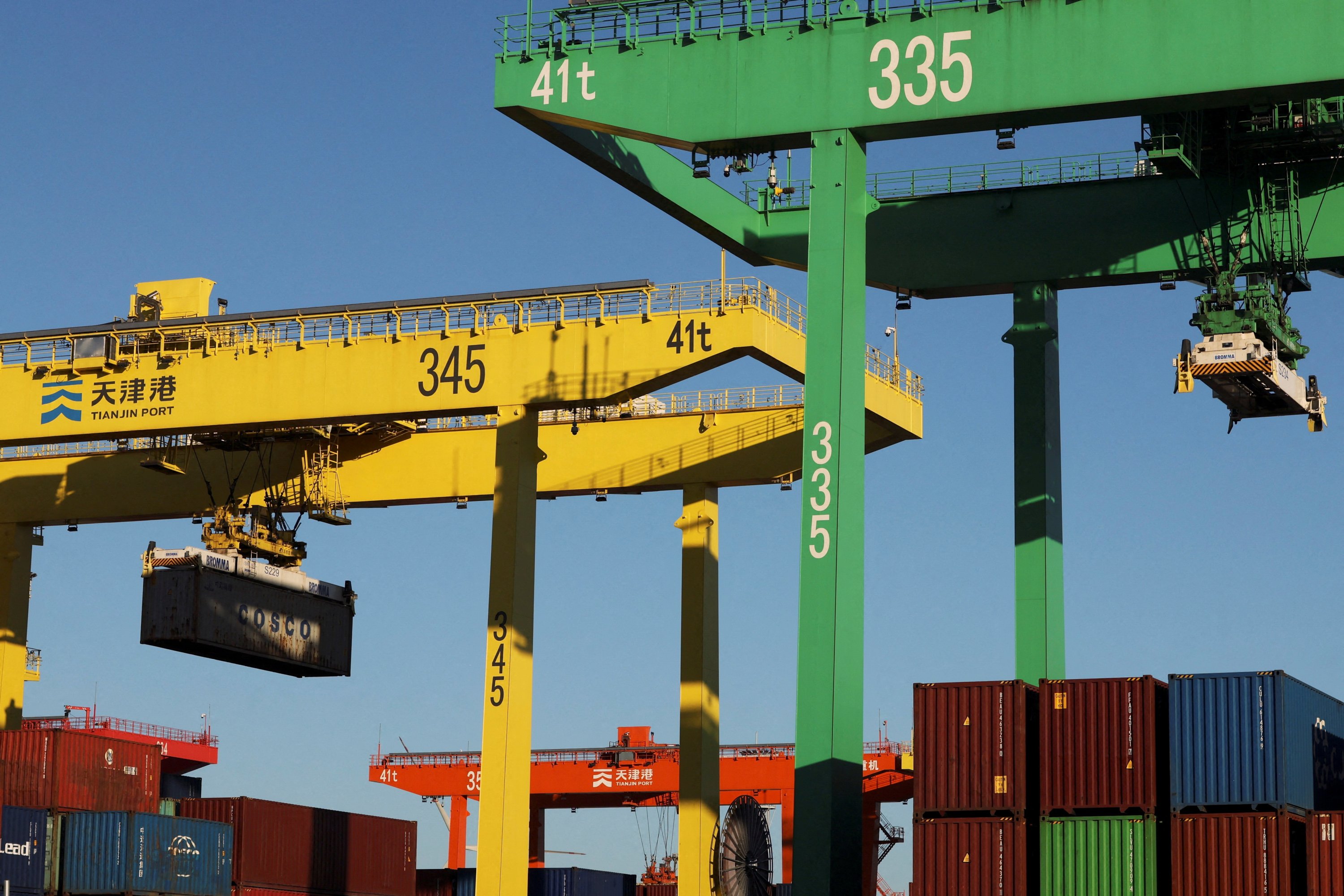
Many firms stockpiled goods ahead of the Trump administration's tariff hikes, which lifted the effective U.S. rate on merchandise imports to an estimated 19.5% by the end of August – the highest since 1933, in the depths of the Great Depression.
"The full effects of these tariffs will become clearer as firms run down the inventories that were built up in response to tariff announcements and as the higher tariff rates continue to be implemented," OECD head Mathias Cormann told a news conference.
In June, the organization had cut its forecast from 3.1%, warning at the time that Trump's tariffs would stifle the world economy.
But in the updated outlook on Tuesday, it said the economy "proved more resilient than anticipated" in the first half of 2025.
The OECD said "front-loading" – companies rushing to import goods ahead of Trump's tariffs – "was an important source of support."
The economy also got a boost from strong artificial intelligence-related investments in the United States and government spending in China.
The updated figure is still a slight slowdown from 3.3% growth in 2024.
"The full effects of tariff increases have yet to be felt – with many changes being phased in over time and companies initially absorbing some tariff increases through (profit) margins," the OECD said.
"But (they) are becoming increasingly visible in spending choices, labour markets and consumer prices," the report said.
The Paris-based organisation kept its 2026 forecast for world growth at 2.9%, with the boost from inventory building already fading and higher tariffs expected to weigh on investment and trade growth.
"Additional increases in barriers to trade or prolonged policy uncertainty could lower growth by raising production costs and weighing on investment and consumption," Cormann said.
In Türkiye, the OECD slightly lowered its growth projection to 3.2% from 3.3% for next year, while warning of persistent inflationary pressures.
Trump imposed a baseline 10% tariff on imports from around the world in April.

He later hit dozens of countries with even higher duties, but the U.S. leader also left the door open for negotiations, striking deals with Britain, Japan and the European Union, among others.
The United States is yet to find a compromise with China, though the world's two biggest economies have temporarily de-escalated their tit-for-tat tariffs while they negotiate.
"Significant risks to the economic outlook remain," the OECD said.
"Amid ongoing policy uncertainty, a key concern is that bilateral tariff rates could be raised further on merchandise imports," it said.
The OECD also upgraded the growth outlook of the U.S. for 2025 from 1.6% to 1.8%. That would still mark a slowdown from 2.8% last year, and the organization sees the U.S. growth easing to 1.5% in 2026, unchanged from the previous forecast.
An AI investment boom, fiscal support and interest rate cuts by the Federal Reserve (Fed) are expected to help offset the impact of the higher tariffs, a drop in net immigration and federal job cuts, the OECD said.
In China, growth is also seen slowing in the second half of the year as the rush to ship exports before the U.S. tariffs recede and fiscal support wanes.
Nonetheless, China's economy is expected to grow 4.9% this year – up from 4.7% in June – before slowing to 4.4% in 2026 – revised up from 4.3%.
In the eurozone, trade and geopolitical tensions are seen offsetting the boost from lower interest rates, the OECD said.
The bloc's economy is seen growing 1.2% this year – revised up from 1.0% previously – and 1.0% in 2026 – down from 1.2% – as increased public spending in Germany lifts growth while belt-tightening weighs on France and Italy.
Japan's economy is expected to benefit this year from strong corporate earnings and a rebound in investment, lifting growth to 1.1% – up from 0.7% – before momentum fades and the expansion slows to 0.5% in 2026, revised up from 0.4%.
The OECD revised its growth forecast for Britain up to 1.4% this year from 1.3%, and kept its 2026 forecast unchanged at 1%.
With growth slowing, the organization said it expects most major central banks to lower borrowing costs or keep policy loose over the coming year, as long as inflation pressures continue to ease.
But it warned that inflation could rise as food prices increase, geopolitical tensions push energy prices higher and companies begin to pass the cost of higher tariffs to consumers.
It projected the Federal Reserve would cut rates further as the labour market weakens – unless higher tariffs trigger broader inflation.
Australia, Britain and Canada are expected to see gradual rate cuts, while the European Central Bank (ECB) is seen holding steady with inflation near its 2% target.
Japan, however, is expected to raise rates as it continues its slow withdrawal from ultra-loose monetary policy.
For Türkiye, the organization lifted its 2025 headline inflation expectation to 33.5%, up from the 31.4% forecast in June. For 2026, it raised its estimate to 19.2% from 18.5%.
Latest official data showed annual headline inflation dropped to below 33% in August, though food and services prices continue to pressure prices.
The OECD sees core inflation in Türkiye at 33.5% this year, compared to its earlier projection of 31.3%. Next year, the rate is expected to cool to 18.9%, still higher than OECD's earlier forecast of 18.6%
Other global concerns, according to the organization, include high levels of public debt as well as risks to financial markets.
"On the upside, reductions in trade restrictions or faster development and adoption of artificial intelligence technologies could strengthen growth prospects," it said.