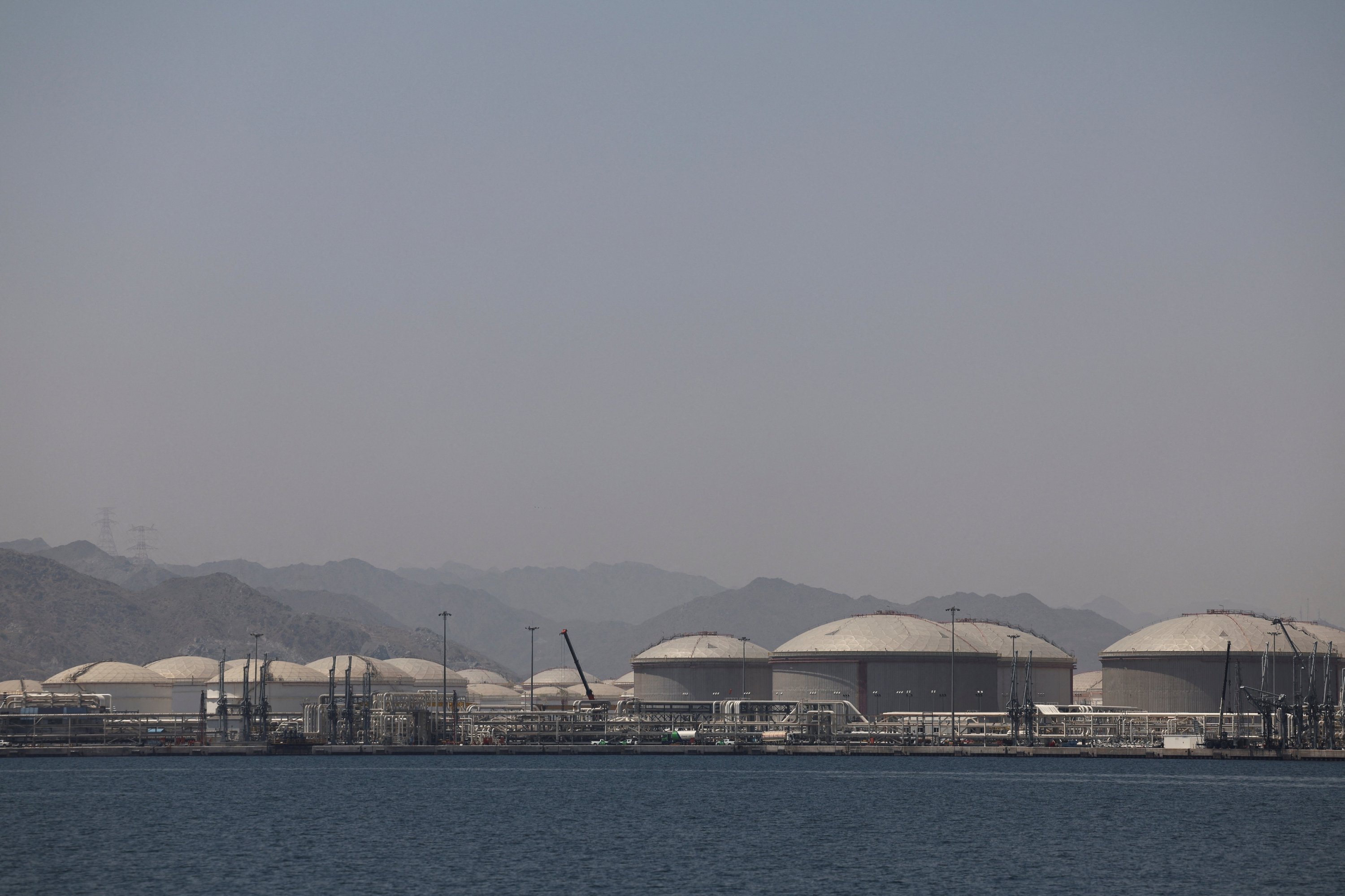
Oil prices slipped nearly 6% to two-week lows on Monday, as optimism grew that the United States and Iran were moving closer to a peace deal, even though they remain at odds over key issues such as blockades on the Strait of Hormuz.
Brent crude futures were down $6.01, or 5.8%, at $97.53 a barrel by 1125 GMT and U.S. West Texas Intermediate futures were down $5.65, or 5.9%, at $90.95. Both contracts traded at their lowest since May 7.
U.S. President Donald Trump had said on Saturday that Washington and Iran had largely negotiated an understanding on a peace deal that would reopen the Strait of Hormuz trade route that carried a fifth of global shipments of oil and liquefied natural gas before the conflict.
However, several difficult issues remain, with Trump saying on Sunday that he had told his representatives not to rush into any deal.
"The underlying supply shortfall of 10-11 (million barrels per day) of crude oil does not go away immediately and will see markets still drawing inventories until Middle Eastern crude production is back online, which is months away," said Sparta Commodities analyst June Goh.
Both sides played down hopes for an imminent breakthrough on Monday, with U.S. Secretary of State Marco Rubio saying there will either be a good agreement or Washington would deal with Iran in "another way."
Iran's foreign ministry spokesperson Esmaeil Baghaei said on Monday that Iran was negotiating an end to the war and was not currently discussing nuclear issues.
Analysts expect a return to normal oil flows through the strait to take months, while damaged oil and gas facilities are repaired.
"We continue to believe that the key factors for the oil market to watch should be the physical oil flows; and so far, flows through the Strait remain restricted," said UBS analyst Giovanni Staunovo.
Two liquefied natural gas tankers were exiting the Strait on Monday, heading to Pakistan and China, and a supertanker with Iraqi crude left the Gulf for China on Saturday after being stranded for nearly three months, shipping data showed.
U.S. energy companies responded to higher local energy prices by adding oil and natural gas rigs for the fifth week in a row, for the first time since February 2025.
The rig count, an early indicator of future output, rose by seven to 558 in the week to May 22, its highest since June 2025. Even so, Baker Hughes said the total count was still down eight rigs, or 1%, from this time last year.