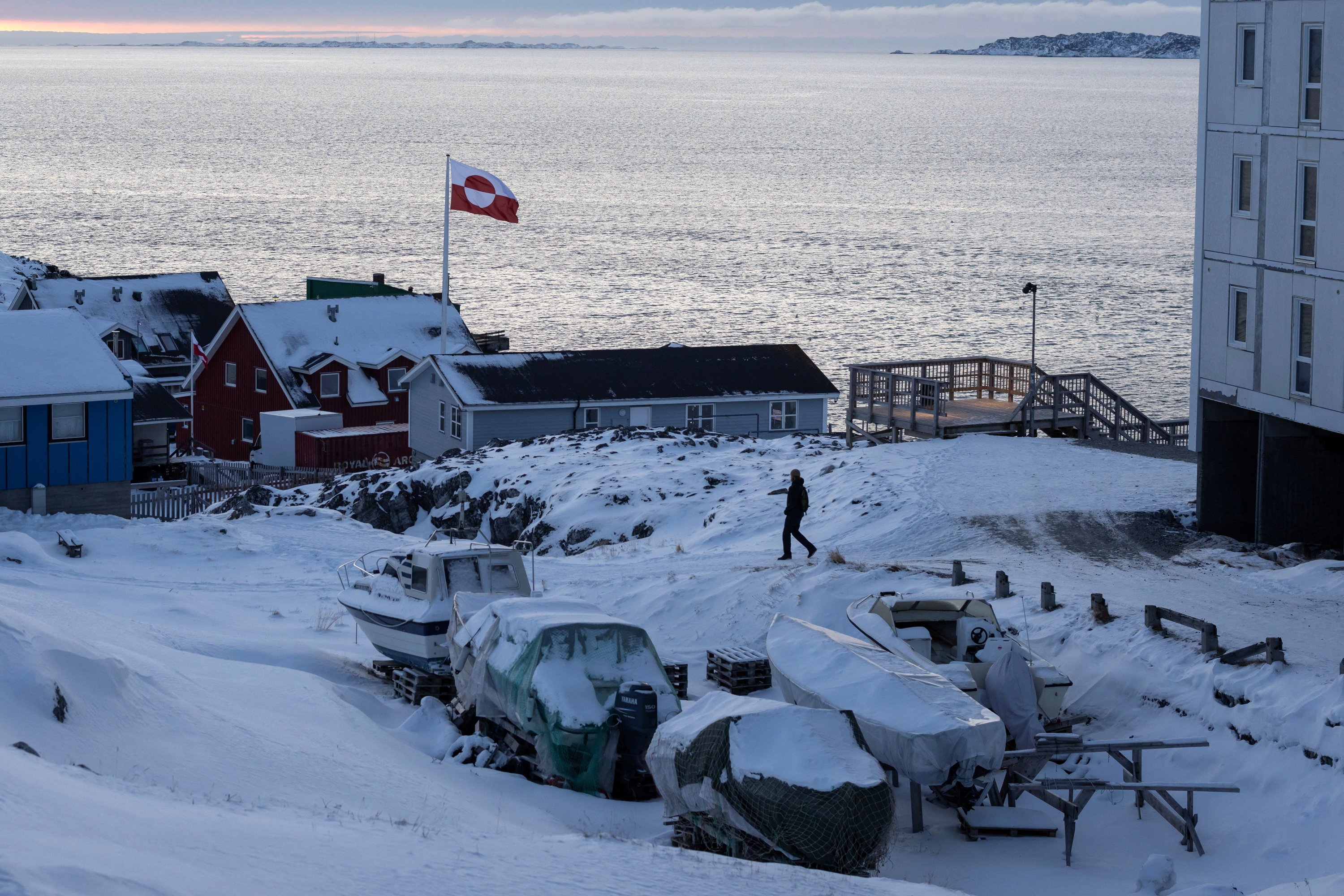
Greenland, an autonomous territory of Denmark, became a central point of geopolitical debate after U.S. President Donald Trump reiterated his interest in taking control of the strategic Arctic island, citing national security concerns.
Greenland covers 2.16 million square kilometers (approximately 0.9 million square miles) and is home to roughly 56,000 people. Its population is concentrated along the western coast, with Nuuk serving as the capital.
While Greenland has pursued greater autonomy from Denmark and self-government in 2009, its foreign and security policies remain under Danish control. Autonomy is extensive but excludes foreign affairs and defense unless agreed. Greenland has limited infrastructure, and no roads between its around 17 towns.
Denmark colonized Greenland in the 18th century when missionary Hans Egede arrived in 1721, marking the start of the colonial era. A statue of Egede still stands on a hilltop in the capital Nuuk's colonial harbor, seen by many Greenlanders as a symbol of lost Inuit traditions.
In 1916, the United States bought the Danish West Indies – now the U.S. Virgin Islands – for $25 million in gold.
Trump's recent rhetoric has fueled debates about Arctic geopolitics and the island's future, highlighting the region's growing strategic importance in the 21st century.
The foreign ministers of Denmark and Greenland meet U.S. Vice President JD Vance and Secretary of State Marco Rubio on Wednesday, after Trump recently stepped up threats to take over the territory.
The island, largely covered by ice, could be useful for the U.S. because of its strategic location and rich mineral resources. A 2023 survey showed that 25 of 34 minerals deemed "critical raw materials" by the European Commission were found there.
Mineral deposits that Greenland is said to have vary from graphite, copper, nickel and titanium, according to a recent Reuters report.
Greenland occupies a critical position between North America and Europe, sitting astride the so-called GIUK gap, a maritime corridor linking Greenland, Iceland and the U.K. that connects the Arctic Ocean to the North Atlantic.
The area has long been viewed as strategically vital for monitoring naval and air activity, particularly amid growing competition in the Arctic involving Russia and China.
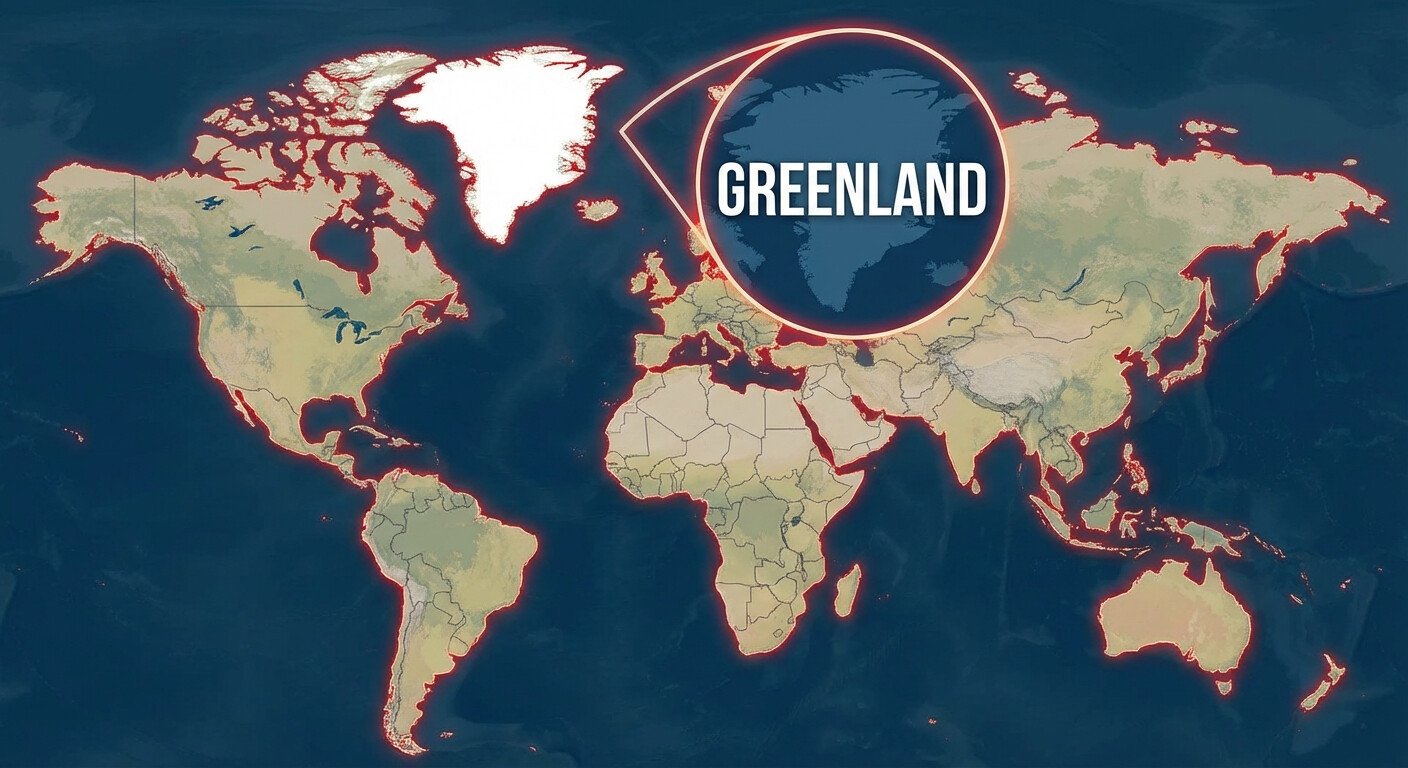
The U.S. already maintains a military presence on the island through Thule Space Base, a key component of its missile defense and early warning systems.
As climate change accelerates the melting of Arctic ice, Greenland's location is becoming even more significant, with northern shipping routes expected to become navigable for longer periods each year.
Beyond its geography, Greenland is rich in mineral resources increasingly seen as essential to modern economies and defense industries.
These include rare earth elements used in electric vehicles, wind turbines, advanced electronics and military equipment.
However, oil and natural gas extraction are banned for environmental reasons, and mining projects often encounter bureaucratic hurdles as well as opposition from indigenous communities.
Three of Greenland's largest rare earth deposits are located in the southern Gardar province, with companies exploring the area. Rare earth elements are essential for electric vehicle motors and wind turbines.
Graphite, used in EV batteries and steelmaking, is widespread, while copper and nickel remain underexplored, with mining company Anglo American holding Western Greenland licenses.
Zinc is mainly found in northern Greenland, with Citronen Fjord among the world’s largest undeveloped zinc-lead deposits, while southern areas around Sermiligaarsuk Fjord host gold, including Amaroq Minerals’ Mt. Nalunaq mine.
Greenland also hosts deposits of diamonds, iron ore, titanium, vanadium, tungsten and uranium, although uranium mining was banned in 2021, halting projects where uranium appears as a byproduct.
Trump first floated the idea of purchasing Greenland during his first term and revived the proposal in late 2024, calling U.S. control of the island "an absolute necessity" for national security.
White House officials have also suggested that the U.S. is "discussing a range of options" to acquire the island, including the use of military force, though Trump has not explicitly committed to such action.
The recent U.S. military operation in Venezuela, which led to the capture of President Nicolas Maduro, has amplified concerns about Trump's foreign policy rhetoric.
In comments after the operation, he again emphasized Greenland's strategic importance, warning that Russian and Chinese activities in the region posed a threat to U.S. security.
His remarks have once again raised tensions with Denmark and other European allies, while reigniting questions over Greenland’s strategic value, its vast natural resources, and its role in Arctic security.
On Wednesday, he said Greenland was "vital" for U.S. air defense and missile system – "Golden Dome."
Denmark has firmly rejected any U.S. claim on Greenland. Danish Prime Minister Mette Frederiksen stressed that Greenland's residents have repeatedly expressed opposition to joining the United States, warning that any U.S. military action against a NATO ally could undermine the alliance itself.
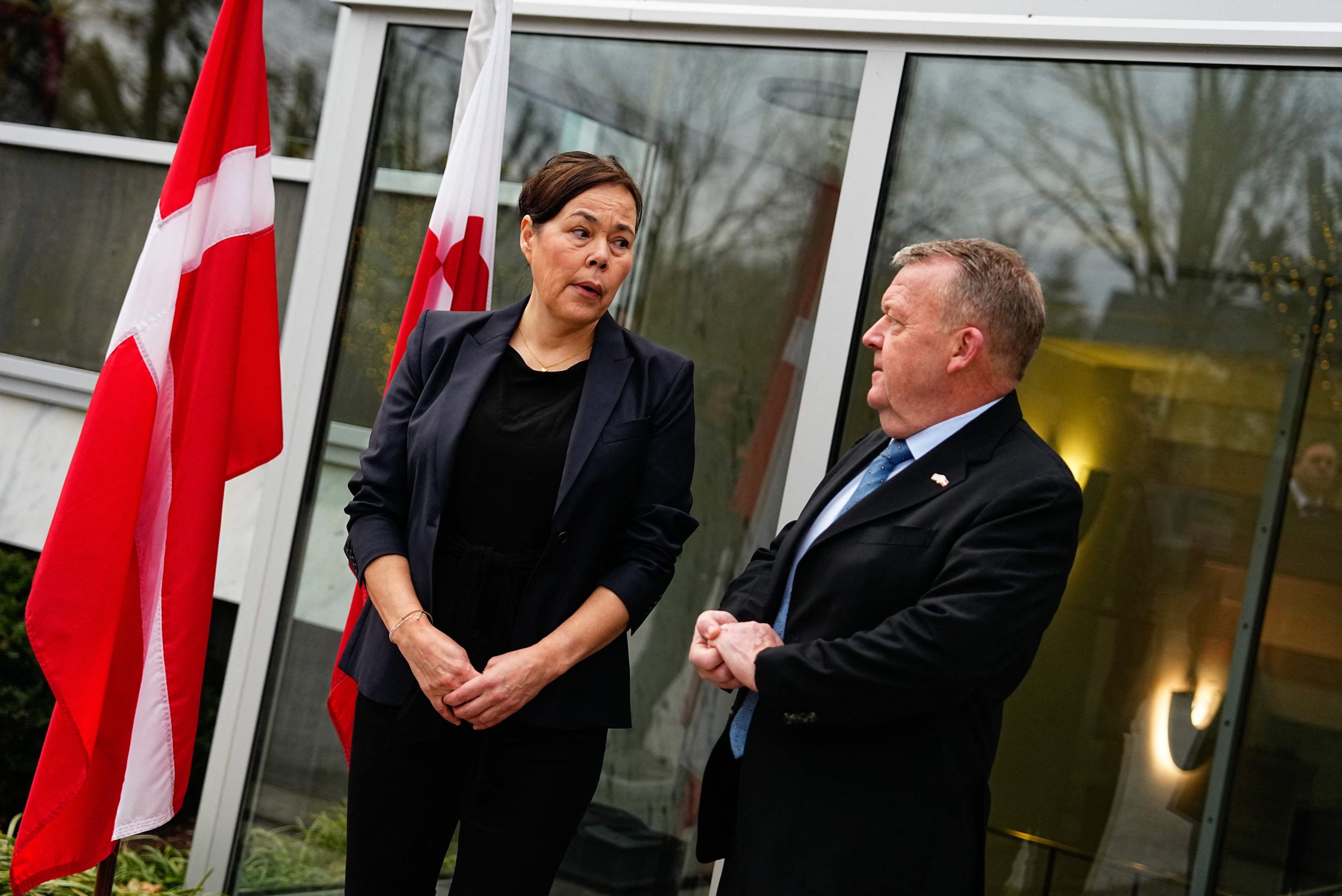
European leaders, including those from France, Germany, Italy, Poland, Spain and the United Kingdom, have expressed support for Denmark, affirming that Arctic security must remain a collective NATO priority.
According to polls conducted in January 2025, 85% of Greenlanders oppose becoming part of the U.S.
Analysts warn that any attempt by the U.S. to seize Greenland by force would have severe consequences for the NATO alliance, potentially undermining the principle of collective defense.
Frederiksen warned that a U.S. military attack on Greenland, which Trump has not ruled out, could fracture the NATO alliance.
Greenland is formally under NATO's security umbrella as part of a member state. Under Article 5, an attack on one member is considered an attack on all.
However, an offensive by the U.S., the alliance's largest military power, against a fellow member would create a scenario without historical precedent. Article 5 presumes mutual defense among members, but there is no mechanism to respond to aggression from the U.S. itself.