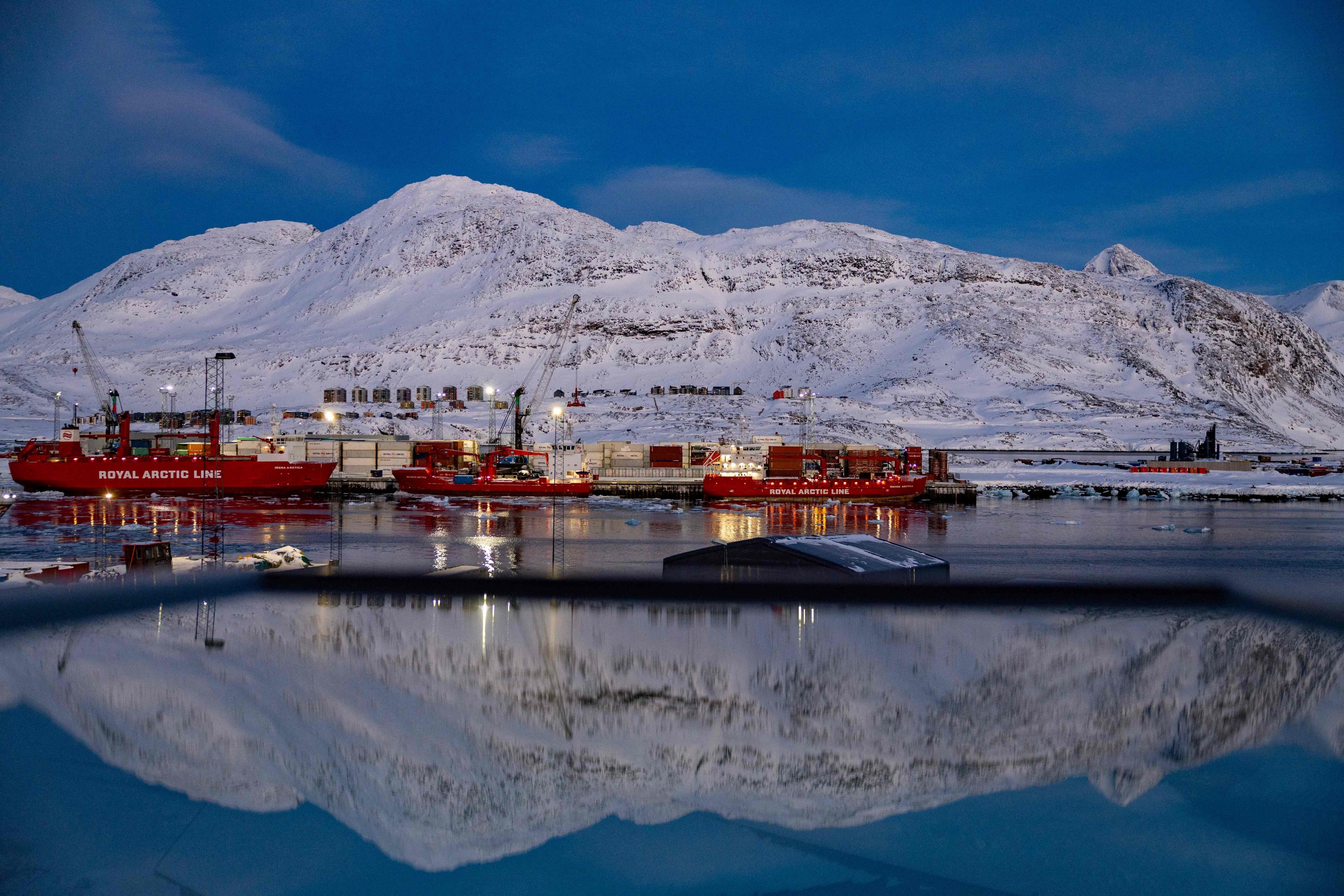
Trump’s turn toward Greenland is not a “surprise.” On the contrary, it is a direct manifestation of the re-emergence of imperial reflexes in the 21st century. As the global system is once again reorganizing around rigid hierarchies among great powers, geography has returned to the very center of politics. Greenland has thus become a pivotal arena in this structural transformation. For this reason, reducing the Greenland question merely to subsoil resources or to geographical positioning would be both incomplete and misleading. What is at stake is a much deeper process of systemic reconfiguration. The power struggle intensifying in the Arctic is not simply about energy and mineral competition. It represents the spatial projection of the question of who will govern the global order. The Arctic is no longer a “white space,” but the new contact zone of global empires. Within the triangular rivalry among the United States, Russia and China, Greenland is not just an island. It has become a strategic lock linking the North Atlantic to the Arctic Ocean.
From Washington’s perspective, it functions as a forward outpost capable of simultaneously constraining Russia’s Northern Fleet, China’s Polar Silk Road and Europe’s energy security. Trump’s worldview aligns not with the liberal international order but with 19th-century imperial geopolitics. Just as the Monroe Doctrine once structured U.S. dominance in the Arctic Hemisphere, U.S. President Donald Trump’s strategic mindset seeks to reproduce this logic once again. The issue, therefore, is not merely defense but the construction of spheres of influence beyond national borders.
In this context, Greenland’s significance is directly tied to the imperative of exercising unlimited control over finite resources. Rare earth elements, hydrocarbon reserves, emerging maritime corridors and military access routes together render Greenland one of the central nodes of the future global power architecture. Accordingly, U.S. initiatives toward Greenland cannot be reduced to the rhetoric of “purchase.” They represent one of the first tangible manifestations of the global system’s transition toward a renewed imperial order. What is unfolding in the Arctic is not a regional rivalry but the opening phase of the 21st century’s new great game. For this reason, the analytical focus must extend beyond Greenland’s energy and rare-earth potential to encompass its role as the geopolitical key to the Arctic within the logic of imperial competition.
The fact that 25 of the 34 minerals classified by the European Commission as “critical raw materials” are found in Greenland significantly enhances the island’s weight in global power competition. In this context, minerals such as neodymium, terbium, yttrium, titanium and platinum-group metals constitute indispensable inputs for high-technology industries, defense sectors and the green transition. In addition, the presence of lithium, zinc and copper further reinforces Greenland’s status not merely as a geopolitical pivot, but as a strategic geo-economic space.
It is no coincidence that Trump proposed buying Greenland in 2019. This was part of his plan to finish earlier imperial moves and pursue them more decisively in his second term. Danish Prime Minister Mette Frederiksen said her government is open to cooperation with Trump and said, “Greenland belongs to the people.” Yet, Denmark’s past and present actions in Greenland undercut this claim. Newly revealed documents show Denmark imposed coercive birth control policies on Greenlandic Indigenous women. Thousands of Inuit girls and women underwent contraception without their knowledge or consent in the 1960s and 1970s. The goal of these policies was to control the Indigenous population growth and preserve Denmark’s demographic dominance over the island.
These policies illustrate biopolitical governance practices that have shaped Europe’s engagement with the Arctic. In this context, Greenland’s current “autonomous” status within the Kingdom of Denmark remains open to legal, moral and political debate. These questions grow more acute when assessed against past experiences. Trump’s characterization of Greenland as a “purchasable space” reflects contemporary imperial logic. Denmark’s long-standing administrative role may also be understood within a broader continuum of colonial governance. The Arctic should be seen not just as an arena of strategic competition between the U.S., China and Russia. It is also a space where Europe’s colonial legacy intersects with the changing global order.
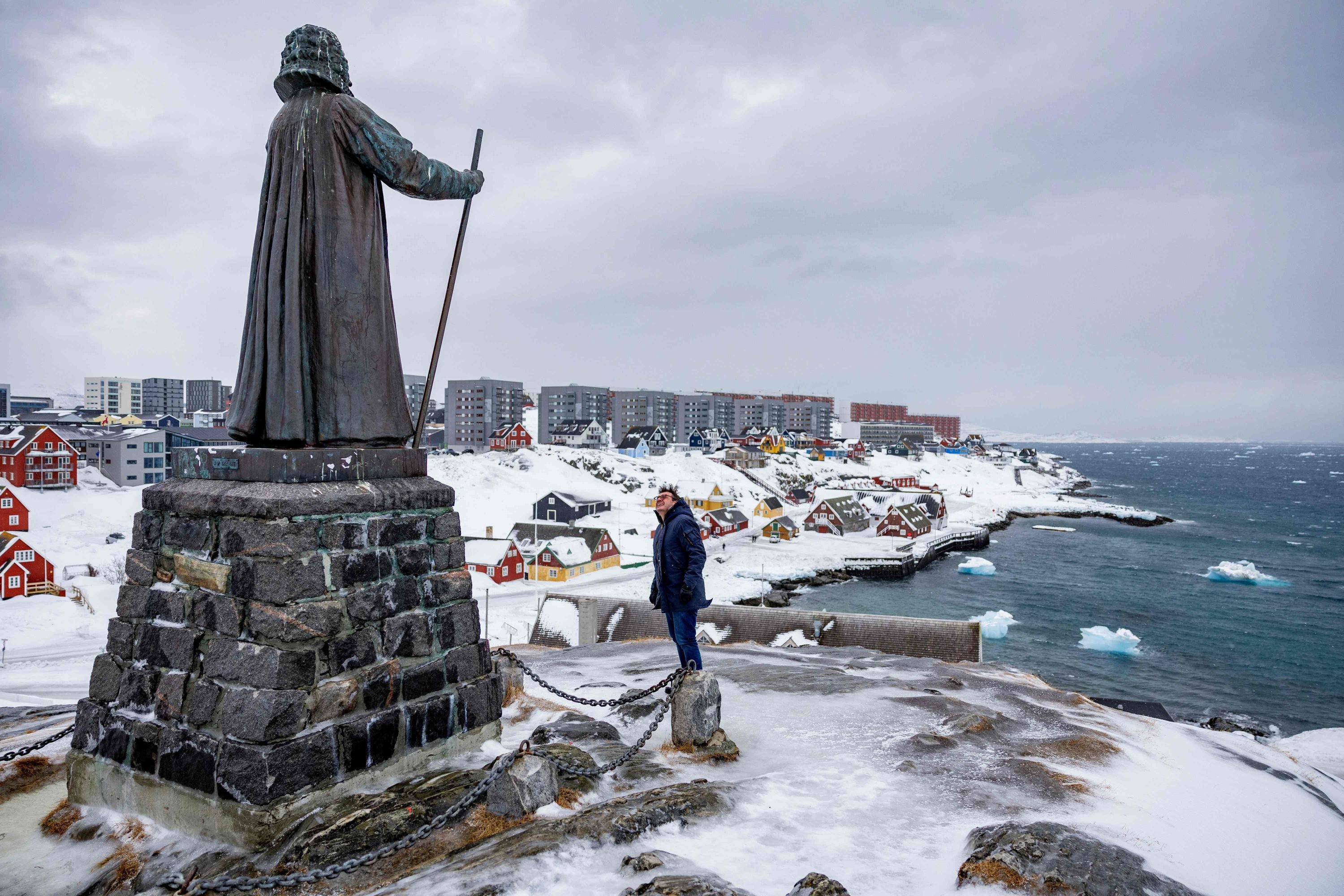
Although Greenland has recently gained prominence due to its subsoil resources, the primary objective of the U.S. is to consolidate strategic dominance across the Arctic region and reawaken its historical expansionist impulses. In this respect, Washington’s interest in Greenland is far from new. During the Cold War, the U.S. sought to purchase Greenland, just as it had acquired Alaska from Russia in 1867, with the broader objective of transforming Greenland into a permanent American geopolitical space along the North Atlantic-Arctic axis.
Should Greenland’s strategic role be interpreted merely as a defensive posture, as articulated in U.S. official discourse? This question is particularly relevant given the long-standing presence of permanent U.S. military installations on the island. When these acquisition efforts failed, the U.S. instead established de facto control through military basing. The Thule Air Base (now known as Pituffik Space Base) constitutes the Arctic pillar of the U.S. ballistic missile early-warning and space surveillance architecture. Indeed, recognizing Greenland’s geostrategic value at an early stage, the U.S. positioned the island throughout the Cold War as a critical forward logistics and early-warning platform for long-range bombardment operations against the Soviet Union.
In this context, the Thule Air Base (today’s Pituffik Space Base), constructed in 1951 under the code name “Blue Jay” in a highly classified operation, became a central pillar of the U.S. Arctic nuclear deterrence architecture. This installation is not only significant within the NATO framework but also functions as a critical instrument of independent U.S. global power projection. Consequently, the American presence in Greenland should not be interpreted merely as an alliance-based arrangement, but rather as a direct expression of U.S. geopolitics.
A second critical dimension concerns Washington’s repeated emphasis that Greenland is increasingly surrounded by Russian and Chinese maritime activity. This must be interpreted in light of the geopolitical reality that the Arctic is, in many respects, already dominated by Russia. Russia currently has the largest territorial footprint in the Arctic, translating into a decisive advantage not only in subsoil resources but also in military capacity and alliance networks. China, for its part, has entered the region through its “Polar Silk Road” initiative, seeking to maximize its strategic and economic gains from the Arctic.
At a time when global crises are intensifying and traditional maritime trade routes are becoming increasingly vulnerable, the Arctic offers a strategic alternative that reduces both costs and security risks. When combined with Russia’s substantial military presence in the region, this reality significantly elevates the Arctic’s geopolitical value. It is precisely for this reason that the U.S., particularly under Trump’s leadership, has adopted a “two birds with one stone” strategy similar to that employed in Venezuela: constraining both Russian and Chinese influence while simultaneously securing control over critical resources. Although it remains uncertain whether Greenland will become the target of a direct intervention, it is evident that Trump is now pursuing with greater determination the agenda he left unfinished during his first term.