World markets will face a fresh dose of volatility this week after U.S. President Donald Trump vowed to slap tariffs on eight European nations until the U.S. is allowed to get Greenland.
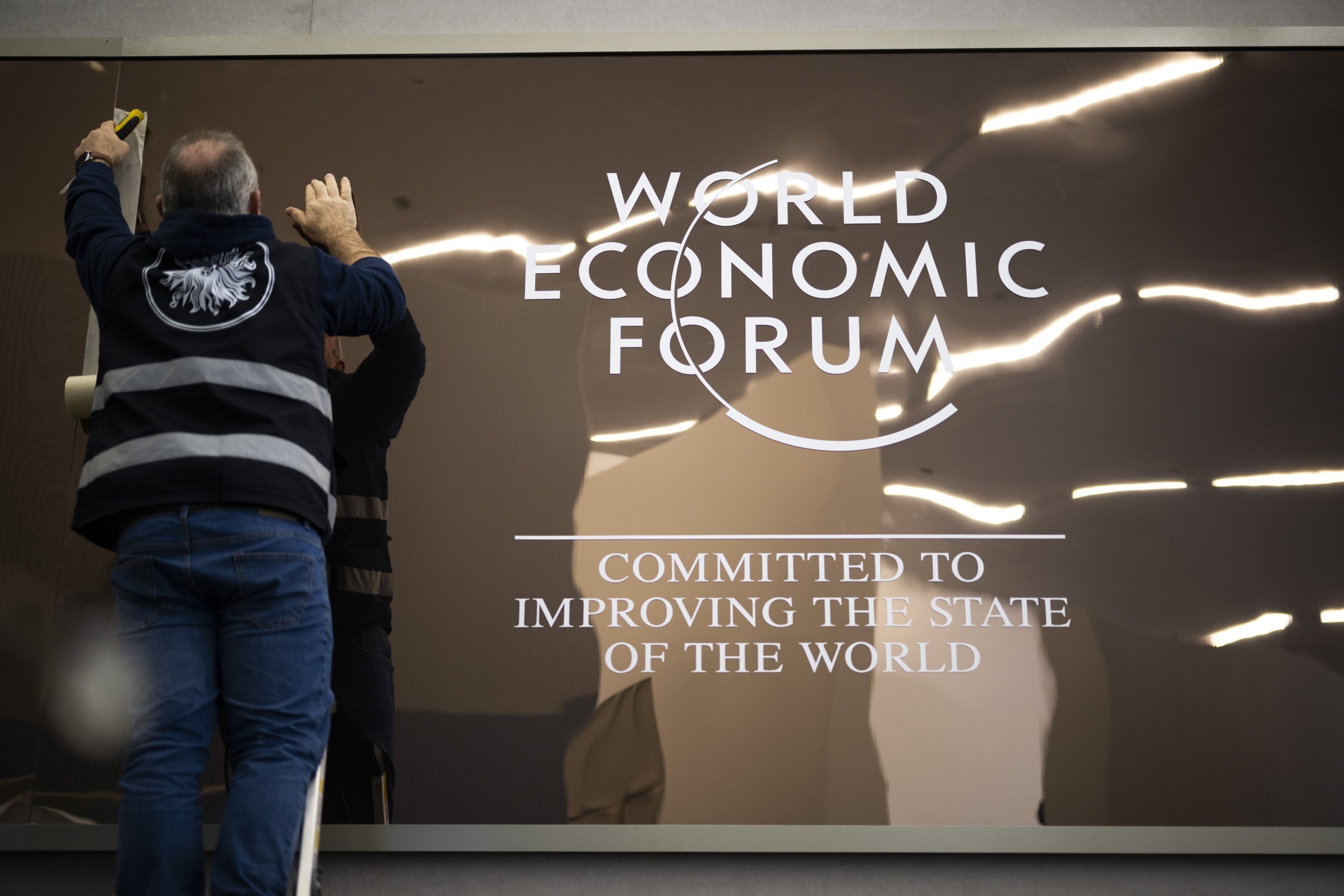
In a wider picture, all eyes will turn to a small Swiss town, where global elites, including Trump, will settle for this year's World Economic Forum (WEF), taking place between Jan.19-23.
Trump, over the weekend, threatened to impose an additional 10% import tariffs from Feb. 1 on goods from Denmark, Norway, Sweden, France, Germany, the Netherlands, Finland and Britain, which will rise to 25% on June 1 if no deal on Greenland is reached.
"Hopes that the tariff situation has calmed down for this year have been dashed for now, and we find ourselves in the same situation as last spring," said Berenberg chief economist Holger Schmieding.
Sweeping "Liberation Day" tariffs in April last year sent shock waves through financial markets. Investors then largely looked past Trump's trade threats in the second half of the year, viewing them as noise and responding with relief as Trump made deals with the likes of Britain and the European Union.
While that lull might be over, market moves on Monday could be dampened by the experience that investor sentiment had been more resilient and global economic growth stayed on track.
Nonetheless, Schmieding expected the euro could come under some pressure when Asian trade begins. The euro ended Friday at around $1.16 against the dollar, having hit its lowest levels since late November.
Implications for the dollar were less clear. It remains a safe haven, but could also feel the impact of Washington being at the center of geopolitical ruptures, as it did last April.
"For European markets, it will be a small setback, but not something comparable to the Liberation Day reaction," Schmieding said.
European stocks are trading near record highs, with Germany's DAX and London's blue-chip FTSE index up more than 3% since the start of the year, outperforming the S&P 500, which is up 1.3%.
European defense shares are likely to remain an outlier, benefiting from increased geopolitical tensions. Defense stocks have jumped almost 15% this month, as the U.S. seizure of Venezuela's Nicolas Maduro fueled concerns about Greenland.
Denmark's closely managed crown will also likely be in focus. It has been weakening, but rate differentials are a major factor and it is still close to the central rate at which it is pegged to the euro. It is trading not far from six-year lows against the euro.
"The U.S.-EU trade war is back on," said Tina Fordham, geopolitical strategist and founder of Fordham Global Foresight. Trump's latest move came as top officials from the EU and the South American bloc Mercosur signed a free trade agreement.
The dispute over Greenland is just one hot spot. Trump has also weighed intervening in unrest in Iran, while the U.S. administration's threat to indict Federal Reserve (Fed) Chair Jerome Powell has reignited concerns about its independence.
Against this backdrop, safe-haven gold remains near record highs.
The World Economic Forum's annual risk perception survey, released ahead of its annual meeting in Davos, identified economic confrontation between nations as the number one concern, replacing armed conflict.
While investors have grown increasingly wary of geopolitical risk, they have also become used to it to some extent.
"Investor sentiment has proven quite resilient in the face of the sort of continuing unthinkable sorts of developments, which probably reflects a combination of like faith that Trump just won't be able to do all of the things that he talks about mixed with a sense that none of this kind of moves the needle on asset prices," said Fordham.
However, much would depend on what actually Trump says in Davos, as he will be alongside many of the leaders of the same European NATO allies that he has just threatened with tariffs if they don't back his extraordinary quest to take control of Greenland from Denmark.
Questions are also swirling about the future of oil-rich Venezuela following the U.S. military operation to topple Maduro, part of Trump's assertive new approach to his country's "backyard."
But Trump may also pause to enjoy his time in the scenic spot he called "beautiful Davos" in his video speech to the meeting a year ago.
Elsewhere, investors will be looking at the fourth quarter gross domestic product (GDP) and full 2025 data in China, which is due to be announced on Monday.
Chinese GDP is expected to have grown 4.9% in 2025, largely meeting the government's annual growth target of around 5%, helped by strong exports and policy support, according to the median forecasts of 73 economists polled by Reuters earlier this week.
The week will also see announcements on U.K. inflation in December, interest rates decision in Türkiye and flash purchasing managers index (PMI) data for all major economies on Friday.