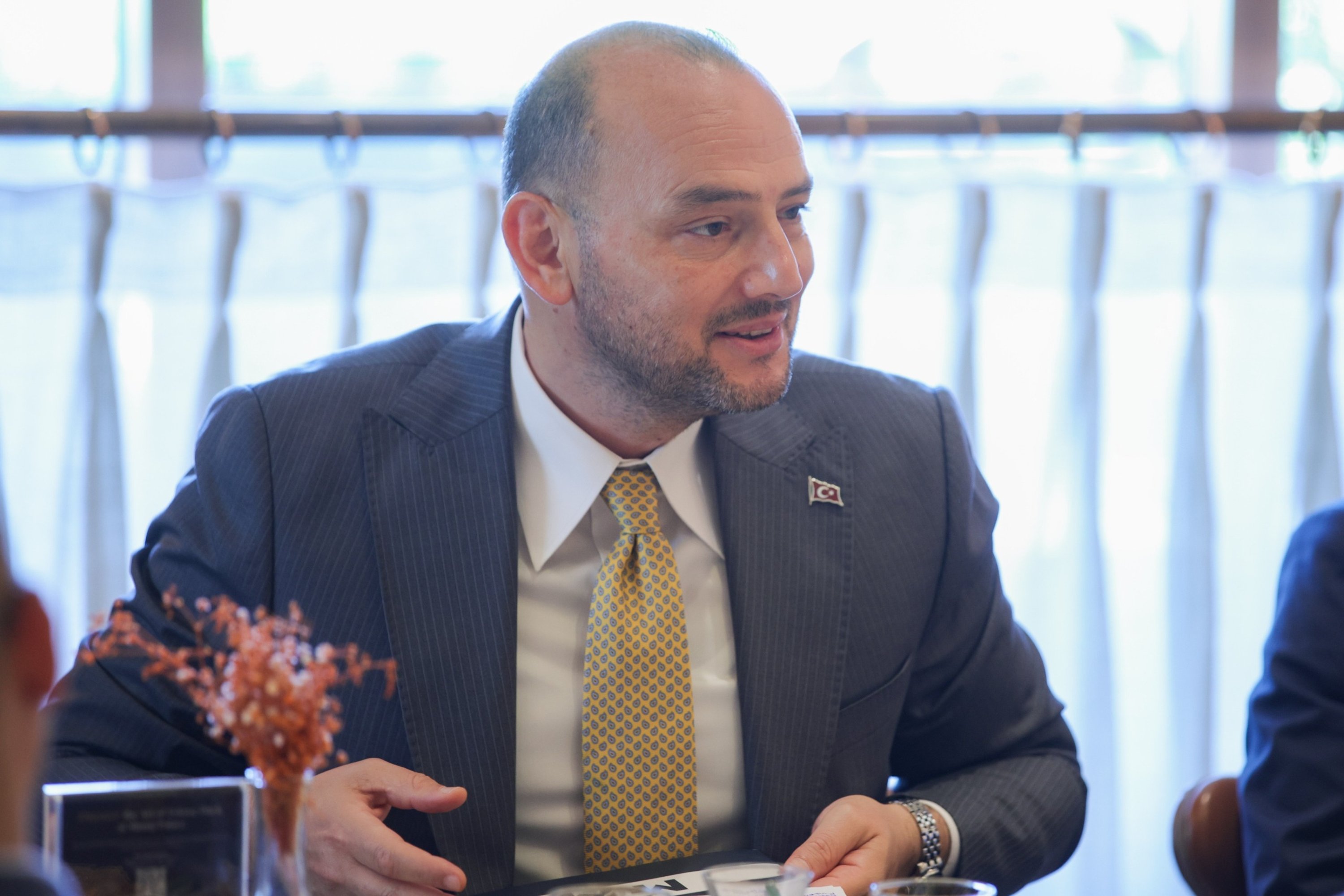
The head of the top Turkish business association called on Sunday for a sustained continuation of the disinflation process, as he also urged strengthening of the selective financing and support for the real sector in the country.
Independent Industrialists and Businessmen's Association (MÜSIAD) Chair Burhan Özdemir shared the business community's main expectations for the upcoming period with Anadolu Agency (AA).
"Today, the most critical agenda item for the real sector is access to finance and financing costs," Özdemir said.
"The business community’s main expectation for the upcoming period is the determined continuation of the disinflation process, making financial conditions more predictable and strengthening selective financing mechanisms that support the investment capacity of the real sector," he noted.
He also said the first half of the year was marked by a period in which uncertainties in the global economy became more permanent, geopolitical risks gained greater importance in economic decision-making processes, and countries searched for new areas of growth.
While noting that economic resilience, supply security, national competitiveness and capacity building in strategic sectors have become among countries’ top priorities in the new period, Özdemir said that the geopolitical developments are now viewed not only "as political risk factors but also as key elements directly affecting economic balances through energy supply security, logistics costs, access to critical raw materials and production costs."
At the same time, according to Özdemir, the main issue that stood out for the Turkish economy in the first half of the year was the growing visibility of the macroeconomic rebalancing process.
He noted that the disinflation process, the recovery in foreign exchange reserves, improvements in the current account balance and a more balanced outlook in financial markets were among the key indicators closely monitored by investors.
The Turkish disinflation process slowed down temporarily following the outbreak of the U.S.-Israel-Iran conflict at the end of February. However, the annual inflation has dipped more than expected to 32.1% in June, according to official data.
Also highlighting the importance of turning existing advantages into lasting competitiveness at a time when global investment competition is intensifying, Özdemir referred to the factors such as digital transformation and high value-added capacity increase.
"Increasing capacity in advanced manufacturing technologies, digital transformation, energy transition and high-value-added sectors is among the key factors that will strengthen Türkiye’s position in the global economy," he argued.
The MÜSIAD head also said the transformation in global trade offers Türkiye important opportunities not only to maintain its current export performance but also to transition toward a higher value-added production structure.
He stated that the decisive factors for the Turkish economy’s performance will be making macroeconomic gains permanent and advancing the reform agenda within a supportive framework.
He also pointed out that the fundamental conditions for sustainable growth, a stable investment environment and competitiveness are the establishment of a low and predictable inflation environment.
Moreover, he added that the success of the disinflation process is important not only for price stability but also for improving economic actors’ expectations and rebuilding the investment environment.
"A permanent improvement in inflation expectations will contribute over time to making financing conditions more predictable and sustainable," he noted.
Furthermore, Özdemir said tight financial conditions, including high interest rates and limited credit availability, have increased financing costs for new investments, raised working capital needs and made financial planning more difficult, particularly in investment-intensive sectors.
He noted that the rebalancing process in domestic demand could create pressure on production volumes, capacity utilization rates and profit margins in some sectors.
"The main policy priority should be establishing a balanced framework between the goal of price stability and preserving production capacity," he said.
Özdemir emphasized that the effectiveness of tight monetary policy should be supported by complementary policies that encourage productive investments, strengthen supply capacity and increase the economy’s long-term growth potential.
"It is important that financing opportunities are directed toward strategic areas that increase economic efficiency and competitiveness rather than general credit expansion," he suggested.
"Strengthening selective financing mechanisms for export-oriented production, technology investments, digital transformation, green transformation, high-value-added production and productivity-enhancing projects will be critical for the long-term competitiveness of the Turkish economy," he added.
Özdemir also underlined that Türkiye’s long-term goal should be creating a balanced economic structure that permanently lowers inflation while preserving production power, export capacity and investment momentum.
He stressed that Türkiye’s goal of becoming a global investment hub should not be viewed merely as an effort to attract more international capital, but rather as a comprehensive economic transformation program aimed at achieving a higher-value position in global value chains.
He also highlighted the importance of strengthening a predictable, competitive and confidence-building investment ecosystem.
"While macroeconomic stability forms the foundation of this ecosystem, strong institutions supported by structural reforms and effectively functioning market mechanisms will be the main factors determining Türkiye’s long-term attractiveness for global capital," he said.
Additionally, he also noted that global companies are making investment and production decisions based not only on cost optimization but also on long-term resilience, strategic security and operational continuity.
"We believe that if predictable policies are strengthened with a long-term investment perspective and reforms supporting structural transformation, our country’s weight in the global economy will increase further," Özdemir said.
Özdemir said that while uncertainties in the global economy would continue in the second half of the year, a more balanced period would emerge as predictability improves through the disinflation process, gradual normalization in financial conditions and macroeconomic rebalancing.
He said expectations from economic policymakers include strengthening policies that preserve production capacity, improve export competitiveness and support private-sector investments.
"Developing long-term investment financing, strengthening export financing mechanisms, facilitating SMEs’ access to finance, and increasing financing and incentive opportunities for productive investments are among the critical priorities," Özdemir said.
“We expect a more balanced economic composition in terms of growth in the second half of the year," he also said.
"As the business community, our expectation is that the policy framework, which considers the balance between production, investment and exports while permanently establishing price stability, will continue decisively," he added.
"If macroeconomic stability is permanently strengthened and the reform agenda continues decisively, we believe Türkiye will increase its attractiveness among international investors, achieve a stronger position in global value chains and consolidate its sustainable growth path," Özdemir concluded.