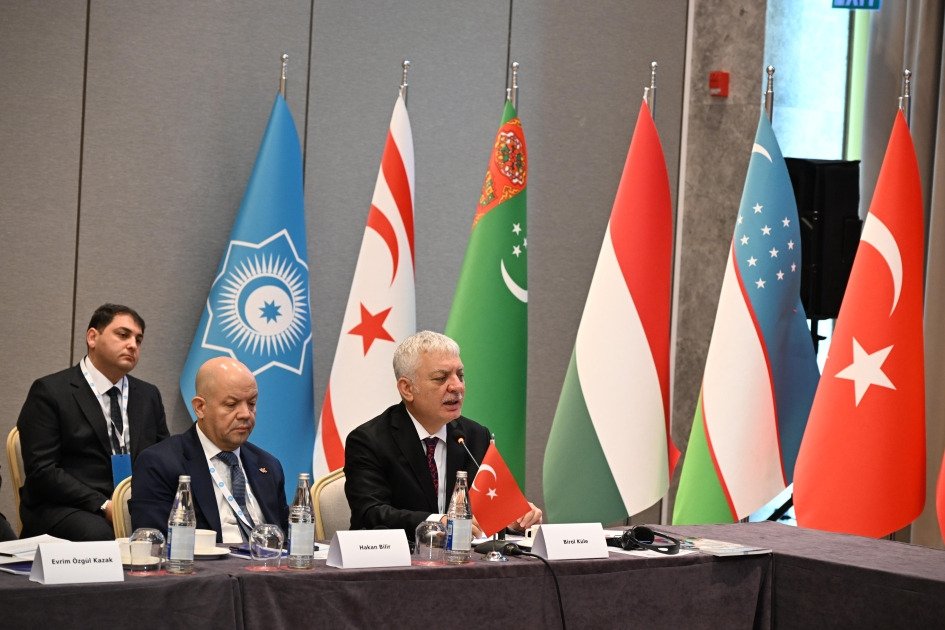
Türkiye has finalized its approval process for a digital economy partnership agreement among members of the Organization of Turkic States (OTS), bringing the bloc closer to a new framework for digital trade and economic integration.
The law approving the ratification of the "Digital Economy Partnership Agreement among the Governments of the Member States of the Organization of Turkic States" was published in the country's Official Gazette on Tuesday, the Trade Ministry said.
With the move, Türkiye became the third country after Azerbaijan and Uzbekistan to complete its internal approval process for the agreement.
The deal will enter into force after Kyrgyzstan and Kazakhstan also complete their domestic approval procedures.
The ministry said the agreement is designed to remove barriers to e-commerce, digital services and cross-border data-based economic activities among Turkic states, while establishing common rules for a more integrated and predictable digital economy framework.
It is also expected to strengthen commercial and technological integration across the Turkic world, support businesses’ access to digital markets, encourage the use of innovative technologies and increase regional competitiveness.
The agreement includes detailed provisions on preventing barriers to payments and money transfers, paperless trade, electronic transaction frameworks, logistics, electronic invoicing, express delivery services, electronic payments, national supplier databases, electronic signatures, commercial electronic messages, online consumer protection and personal data protection.
It also covers cooperation in small and medium-sized enterprises (SMEs), financial and technological fields, cybersecurity and competition policy.
The agreement was signed on Nov. 6, 2024, during the 11th Summit of the Organization of Turkic States in Bishkek, Kyrgyzstan, attended by President Recep Tayyip Erdoğan.
The ministry said the agreement would help Turkic states deepen cooperation based on shared values and contribute to global efforts to shape digital trade rules.