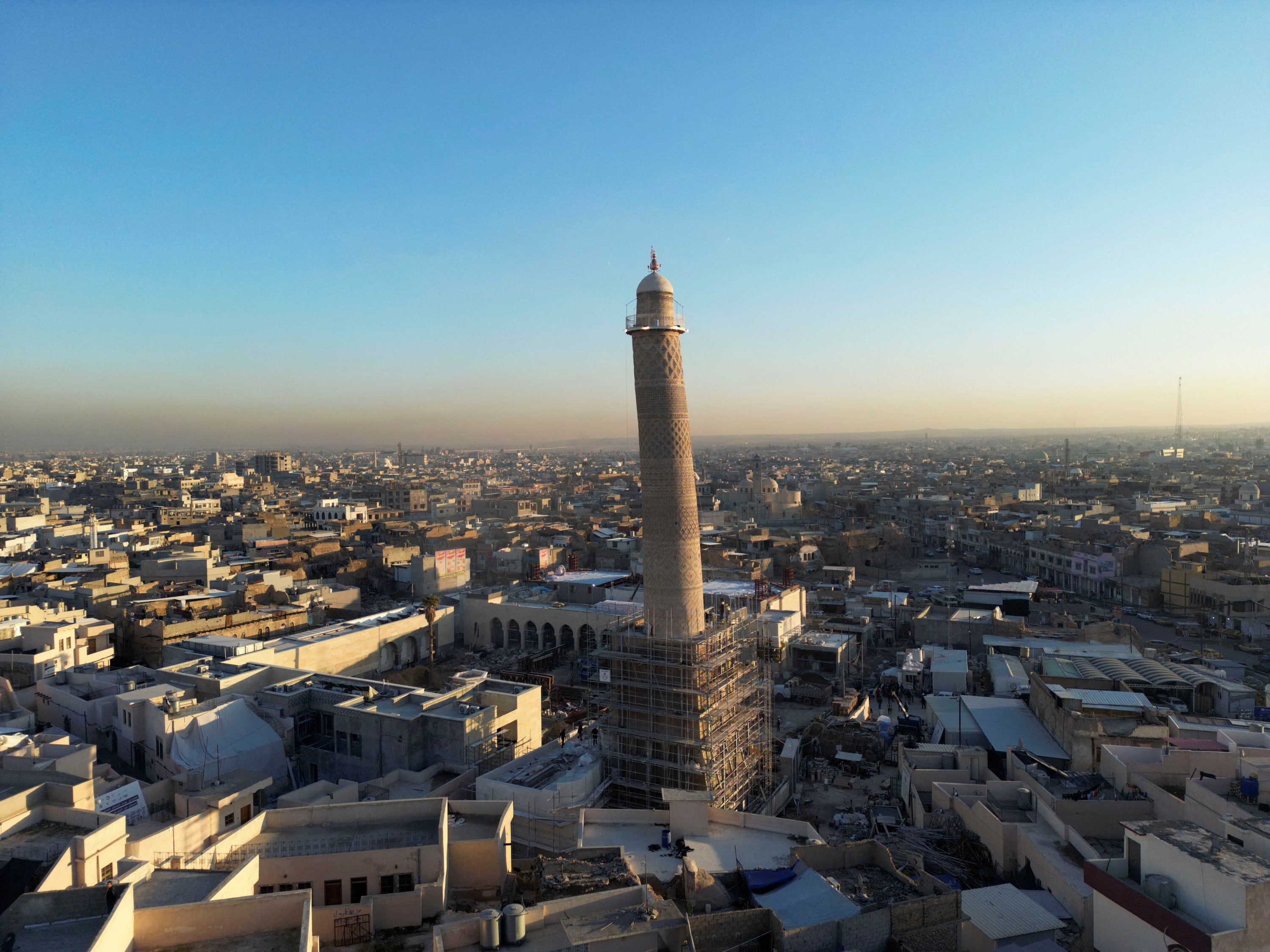
Local officials in Iraq's second-largest city on Wednesday expressed eagerness for greater involvement by Turkish companies in an ambitious project that is planned to serve as a new freight link between Asia and Europe via upgraded rail and road infrastructure through Iraq and Türkiye.
Firms from Türkiye have already played a critical role in the reconstruction of Mosul since what was seen as the last bastion of Daesh was liberated from the terrorist organization in 2017. Officials and residents say there is still a long way to go, with pockmarked buildings with collapsed floors and exposed rebar still seen around Mosul.
The Development Road Project, announced in May 2023 and part of efforts to link Iraq to Asia and Europe via Türkiye, has brought renewed hope to the city on the west bank of the Tigris River.
Mosul Governor Abdulqadir al-Dehl and Mosul Chamber of Commerce chair Mukbil Siddiq al-Dabbagh outlined the potential impact of the project on the region and praised Turkish firms for their contributions to Mosul's revitalization.
They also shared their expectations for a deeper partnership with Turkish investors and entrepreneurs.
Al-Dehl described the Development Road Project as a cornerstone of strategic importance, not just for Iraq, but also for countries like Türkiye, Qatar and the United Arab Emirates (UAE), which are sides in the initiative.
He said they are thrilled that Mosul would be one of the main benefitor as half of the project's route within Iraq will pass through the city.
The governor expressed confidence that the initiative would stimulate Mosul’s industrial, commercial, and agricultural sectors. "The construction of factories, businesses, and stations along the route passing through Mosul will elevate the city's economy," he told Anadolu Agency (AA).
The project is expected to cost some $17 billion and is designed to facilitate the transport of goods from the Gulf to Europe via the Grand Faw Port in Basra in southern Iraq. The port would be linked to Türkiye and subsequently to Europe through an extensive network of railways and highways.
The initiative would turn Iraq into a transit hub by shortening travel time between Asia and Europe to rival the Suez Canal.
Al-Dehl noted that Turkish companies have been instrumental in Mosul's post-conflict reconstruction and expressed satisfaction with Ankara's robust support for the Development Road Project.
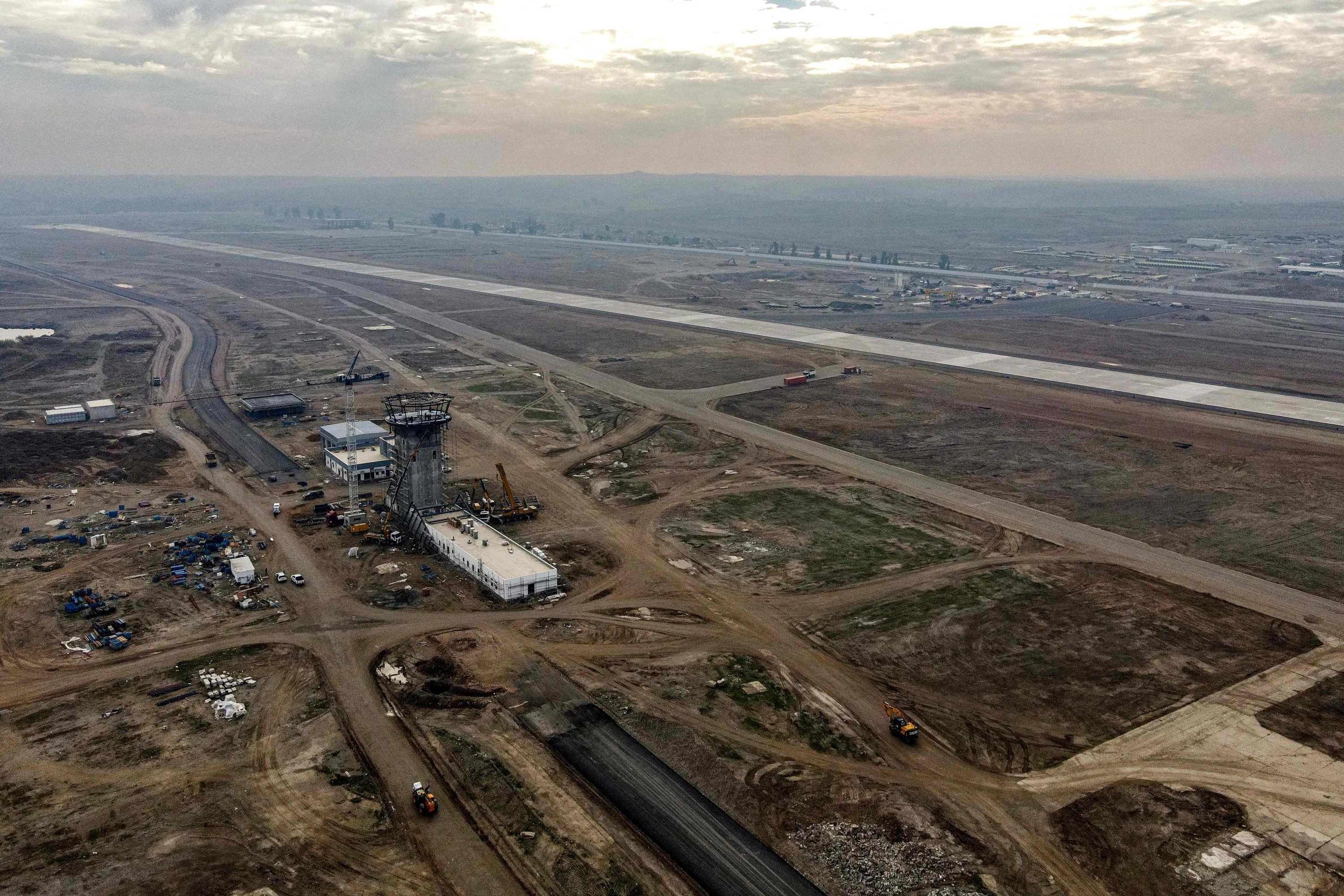
The city's international airport, which fell into disuse after the occupation by Daesh in 2014, is currently undergoing repairs by Turkish companies. It is anticipated to be reopened for flights around June this year, according to officials.
"We want to witness the quality of Turkish firms here in Mosul," al-Dehl stated.
Drawing attention to Türkiye’s industrial expertise, he said, “Gaziantep (southern Türkiye), one of the cities closest to us, hosts over 1,000 companies. We hope to see many of them operating here in Mosul.” He also stressed the city's need for Turkish experience in industrial and agricultural development, believing the Development Road Project could lay the groundwork for such advancements.
Mosul Chamber of Commerce’s al-Dabbagh underscored the transformative potential of the initiative.
For a city like Mosul, which has witnessed rapid recovery in recent years, this project will have a profoundly positive impact, he told AA. “With this international initiative, Iraq – and especially Mosul – will be reconnected to the world.”
Al-Dabbagh also highlighted the historical and economic ties between Iraq and Türkiye. “One of our key priorities at the Mosul Chamber of Commerce is strengthening trade relations with Türkiye,” he noted.
He pointed to the mutual trust and robust partnerships between Mosuli and Turkish entrepreneurs and said there is “significant trust and cooperation” between business communities in both countries.
“We have established agreements with trade chambers in cities like Mersin, Istanbul, Gaziantep, and Bartın. We are also attending and benefiting from fairs organized in many fields in Türkiye,” he added.