Türkiye's government is pinning its hopes on the new economic program it believes will help it with the goal of restoring price stability by sustaining disinflation and breaking entrenched inflationary inertia.
The updated medium-term program (MTP), unveiled on Monday, revised down growth projections and raised near-term inflation estimates, signaling that the government is prioritizing price stability over rapid expansion.
One of the central goals of the program covering the period from 2026 through 2028 is to chart a growth path that is both sustainable and aligned with the ongoing disinflation process.
The government forecasts growth to slow to 3.3% this year, down from its earlier 4% projection, as tight monetary policy weighs. It sees the economy expanding by 3.8% next year and 4.3% in 2027, before it rebounds and returns to its average pace of about 5% over the past two decades.
The most significant shift is the downward revision of GDP growth forecasts, signalling that price stability has been the policy priority, Dutch banking giant ING said in a note.
"The growth trajectory outlined in the MTP remains below Turkey's long-term average, signalling that policymakers are prioritising disinflation over rapid expansion," its analysts said.
Authorities will seek to gradually raise the potential for growth through structural transformation while driving inflation down to single-digit levels, Vice President Cevdet Yılmaz told an event to present the program.
Yılmaz underscored that disinflation remains the government's top policy priority and pledged continued coordination between monetary, fiscal and income policies to ensure inflation continues on a downward path, having already eased to its lowest level since late 2021.
Official data last week showed the annual CPI softened less than expected to 32.95% in August, while it rose 2.04% on a monthly basis.
The government expects inflation to slow to 28.5% this year and to 16% in 2026 before dropping to single digits the following year. That marks a retreat from last year's medium-term program in which the government predicted single-digit consumer price inflation by next year. The central bank estimates end-2025 inflation at a range of 25%-29%.
Overall, Yılmaz acknowledged the short-term trade-off between inflation and growth, reiterating the government's commitment to curbing inflation without triggering a recession, according to the ING analysts.
Disinflation will be pursued "resolutely and without interruption," the MTP states, with the Central Bank of the Republic of Türkiye (CBRT) set to use all available tools to anchor expectations.
The program reaffirms commitment to a floating exchange rate regime, with market supply and demand determining the Turkish lira's value, except in cases of "unhealthy" pricing behavior or excessive volatility.
Yılmaz noted that authorities intervene at times to smooth "extreme" moves in the foreign exchange rate, but reiterated that Türkiye has a floating FX regime and no target for the lira.
Administered prices will be managed more closely to align with inflation targets, while authorities will take a "holistic" approach to counter rigidities in pricing behavior by more effective management of inflation expectations, the program says.
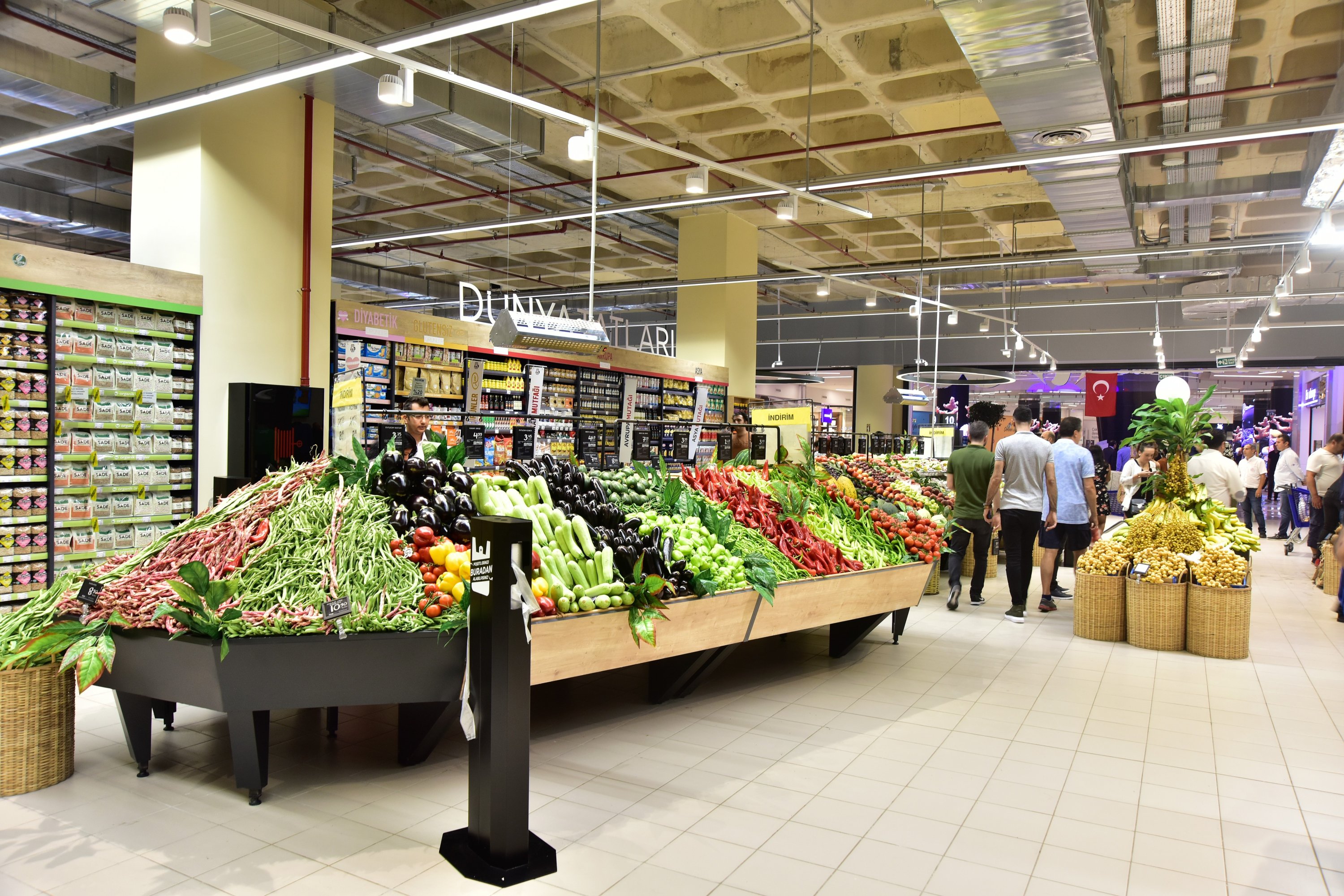
Food inflation – one of the key drivers of overall inflation – receives special emphasis in the program. Agriculture is designated a priority sector, with measures aimed at boosting production capacity and ensuring supply security to reduce vulnerability to shocks.
Procurement prices for agricultural products will be set with regard to public finances, market dynamics and program objectives, in order to avoid backward-looking indexation. Production targets will be introduced for strategic crops to reinforce food security, while an "early warning system" will track shifts in supply, demand, trade flows and logistics.
To support disinflation, the MTP foresees the development of new lira-denominated savings and investment tools to channel resources into priority areas. It also includes measures to standardize and digitize short- and long-term rental contracts over the program period.