Türkiye on Tuesday signed a financing agreement with the World Bank worth 1.67 billion euros (about $1.97 billion) for the long-awaited railway project that will cross over the Bosporus.
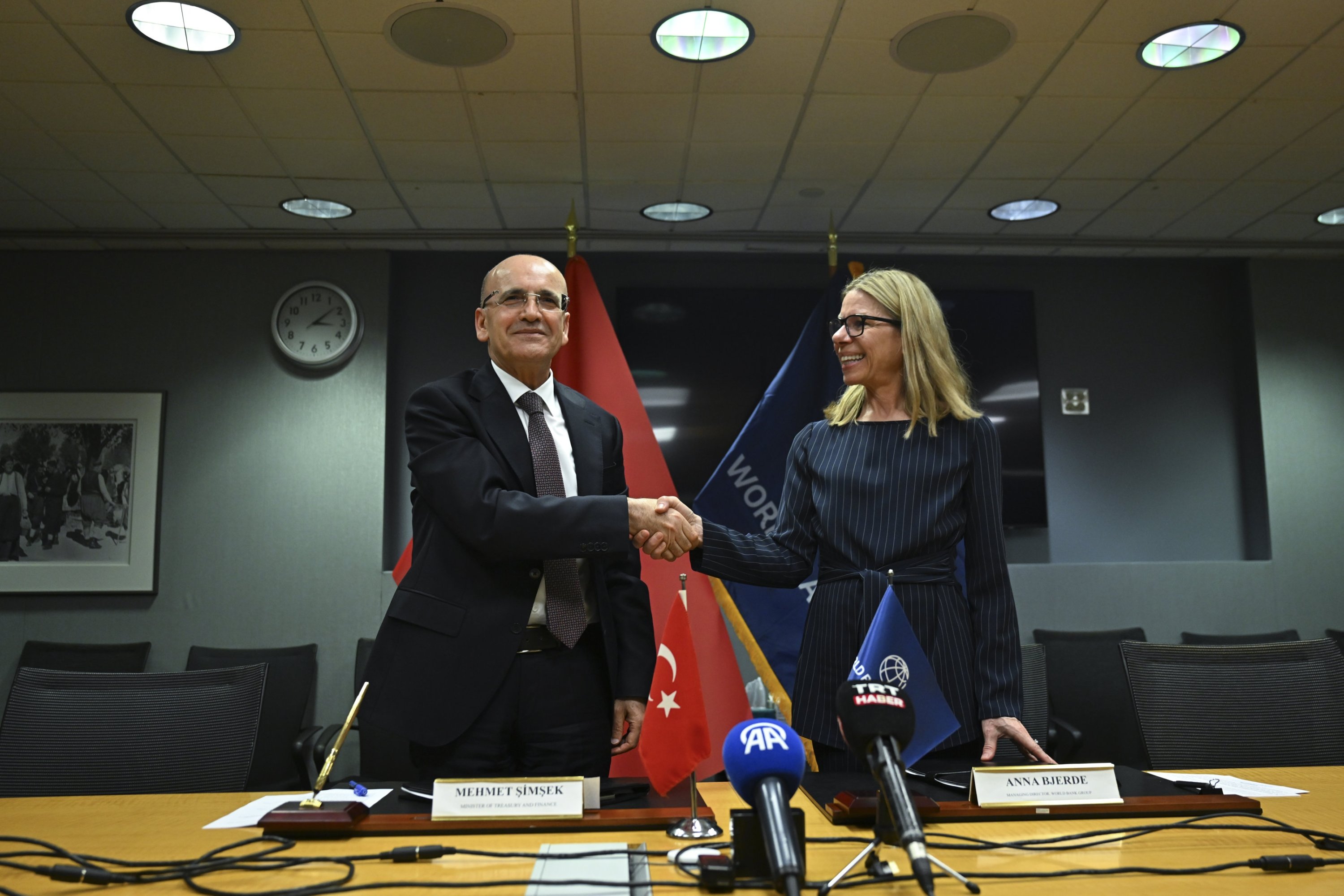
The deal was signed by Treasury and Finance Minister Mehmet Şimşek in Washington, where he is attending the spring meetings of the International Monetary Fund (IMF) and the World Bank.
Known as the Istanbul North Rail Crossing Project (INRAIL), the investment that is estimated to top $8 billion is expected to create a new high-capacity rail line to strengthen freight and passenger connections between Asia and Europe.
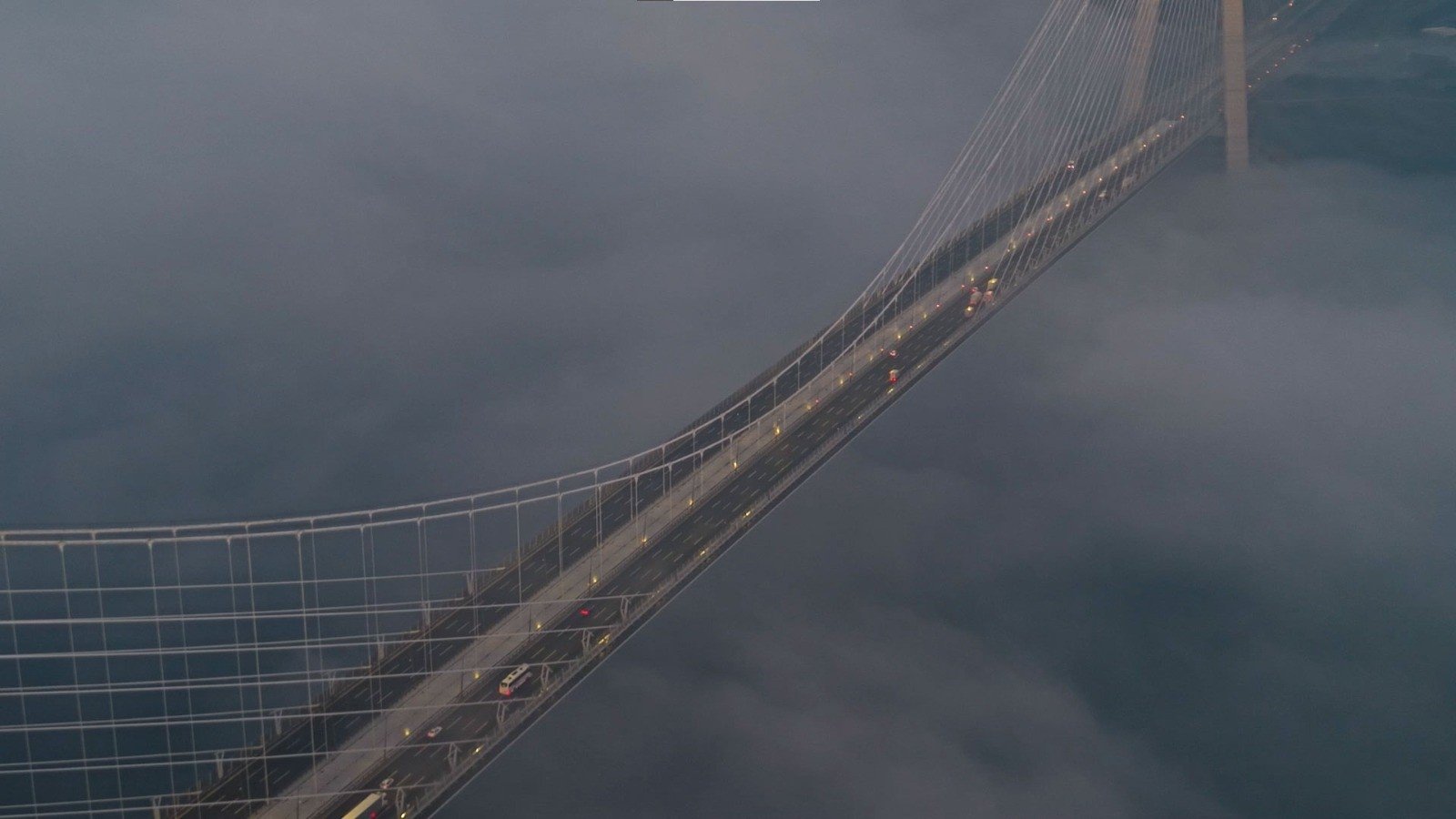
The planned double-track electrified line stretching roughly 126 kilometers (78.29 miles) will link the metropolis' two airports by crossing over the Yavuz Sultan Selim suspension bridge, one of the longest and widest of its kind in the world. It is also known as the third bridge to span the Bosporus
Speaking at the signing ceremony, Şimşek said global energy security and trade corridors are under strain due to conflicts, fragmentation and years of underinvestment, underscoring the need for coordinated international responses.
He highlighted the importance of the so-called Middle Corridor, describing it as the fastest route between Beijing and London, with a transit time of around 18 days.
Şimşek said infrastructure has been a cornerstone of Türkiye's development strategy, noting that the country has invested $355 billion in transport infrastructure over the past two decades, including $180 billion in highways and a major expansion of its airport network.
The partnership with World Bank "provides financing, strengthens standards and sends a signal of confidence to global markets," Şimşek said, describing the project as more than a conventional infrastructure investment.
The Istanbul North Rail Crossing Project is designed to address one of the most constrained transit points along the Middle Corridor by offering a high-capacity rail alternative across the Bosporus.
It is expected to significantly boost the corridor's reliability and strategic importance for global trade, Şimşek noted.
The project is aimed at easing passenger and freight traffic on the Marmaray line while directly connecting Istanbul Airport and Sabiha Gökçen Airport by rail for the first time.
Marmaray is the world's first underwater rail link between two continents. Opened in 2013, it carries subway commuters and serves freight trains.
According to Şimşek, the project will increase annual rail freight capacity across the Bosporus from 3 million tons to 50 million tons, marking what he called a "transformational leap" and contributing to the development of carbon-neutral freight infrastructure for intercontinental transport.
With a total estimated cost of $8.1 billion, around 83% of the project's financing will come from international financial institutions, he added.
"This is the third-largest project ever approved in the entire history of the World Bank. This fact alone demonstrates the scale of our ambition and the confidence our partners have in Türkiye's capacity to bring the project to fruition," Şimşek said.
He added that the project is expected to generate more than 400,000 higher-income jobs, emphasizing that infrastructure investments not only facilitate trade but also create livelihoods.
Anna Bjerde, the World Bank's managing director of operations, said the project would deliver lasting benefits for Türkiye's transport system and economic growth.
She described its impact as "transformational," noting that it would relieve one of the country's most critical transport bottlenecks by increasing rail capacity along the Bosporus.
Bjerde said the project would strengthen connectivity across three strategic corridors, namely the Middle Corridor, the Development Road and the Türkiye-Europe Corridor, making crossings faster, more reliable and more efficient.
"This is significant not only for Türkiye but also for regional and international trade."
Bjerde said the project is expected to attract around $6.75 billion in international financing.