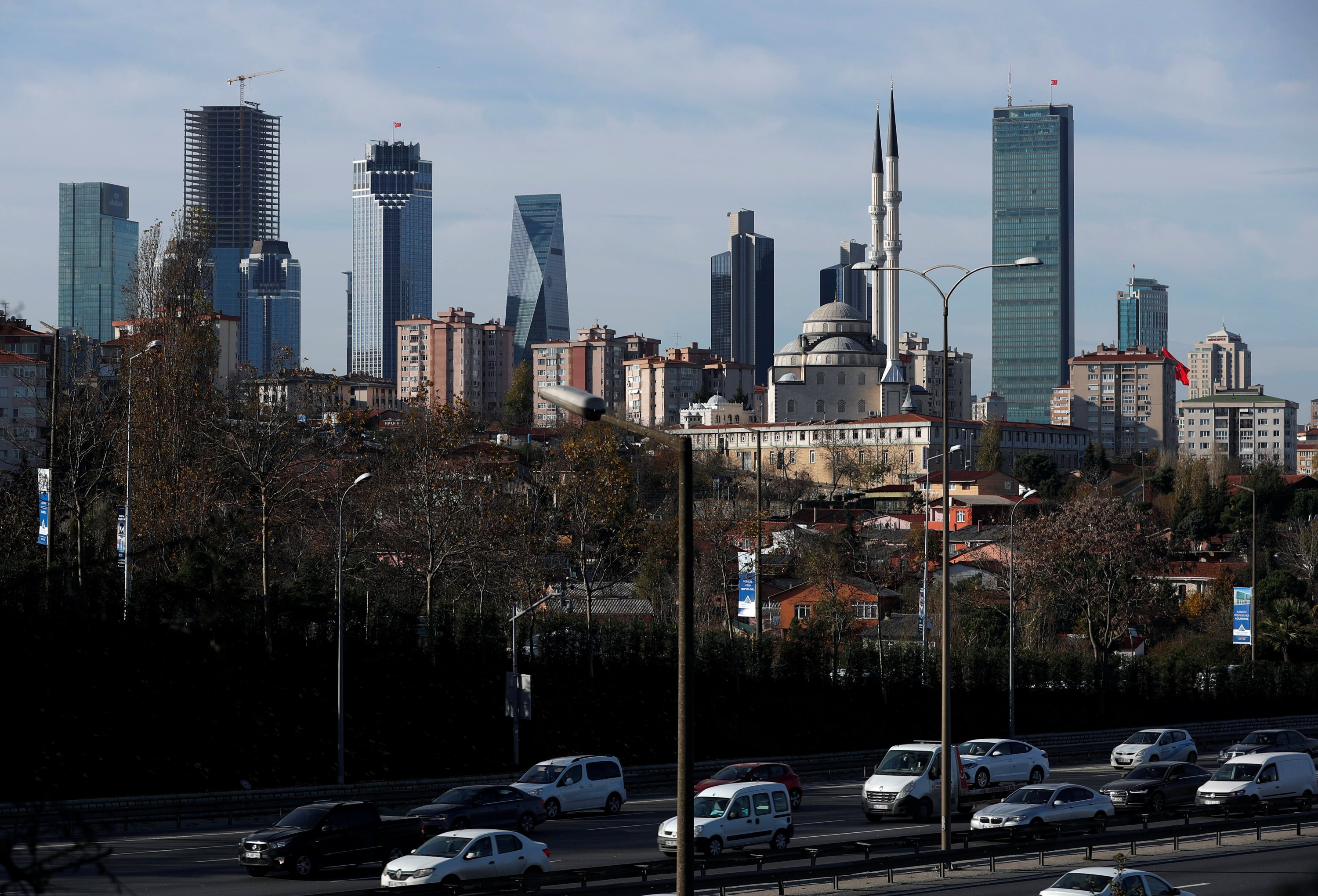
Türkiye attracted $11.3 billion in foreign direct investments (FDIs) last year, according to the central bank, maintaining its appeal to international investors despite global economic challenges.
FDI inflows rose 5.6% from a year ago, data from the Central Bank of the Republic of Türkiye (CBRT) showed.
The Presidency's Investment Office recently said Türkiye had upheld its position as a stable and competitive market, even as global investment flows faced pressure.
The largest investor in Türkiye was the Netherlands, making up 23.6% of the total FDI inflows in 2024, followed by Germany with 11.5% and the U.S. with 10.3%.
Other notable countries with large FDIs were Ireland, Azerbaijan, Switzerland, the U.K., the United Arab Emirates (UAE), France and Norway.
The Turkish manufacturing sector attracted $2.3 billion in investments, ranking first among industries and accounting for 34.5% of the total inflows and rising 32.5%.
FDIs in wholesale and retail trade made up 25.3% and transportation and storage 7.2% of the total.
Meanwhile, global FDI declined 8% last year, according to the U.N. Trade and Development (UNCTAD) Global Investment Trends Monitor.
Inflows into Europe fell 45%, led by Germany and Poland, both down 60%, while FDI in Italy declined 35%, Spain 13% and France 6%.
Ahmet Burak Dağlıoğlu, head of the Investment Office, said in a statement that Türkiye continues to increase its attractiveness for international direct investments by continuing a structural transformation process aimed at strengthening the investment environment.
Dağlıoğlu said that Türkiye’s performance was "remarkable" in an environment where uncertainties caused by negative developments such as low growth performance in the global economy and international trade volumes, a high inflation and interest rate environment, protectionist reflexes displayed by countries in trade and investment areas, fragmentation experienced in international economies and geopolitical tensions negatively affected the capacity of many countries.