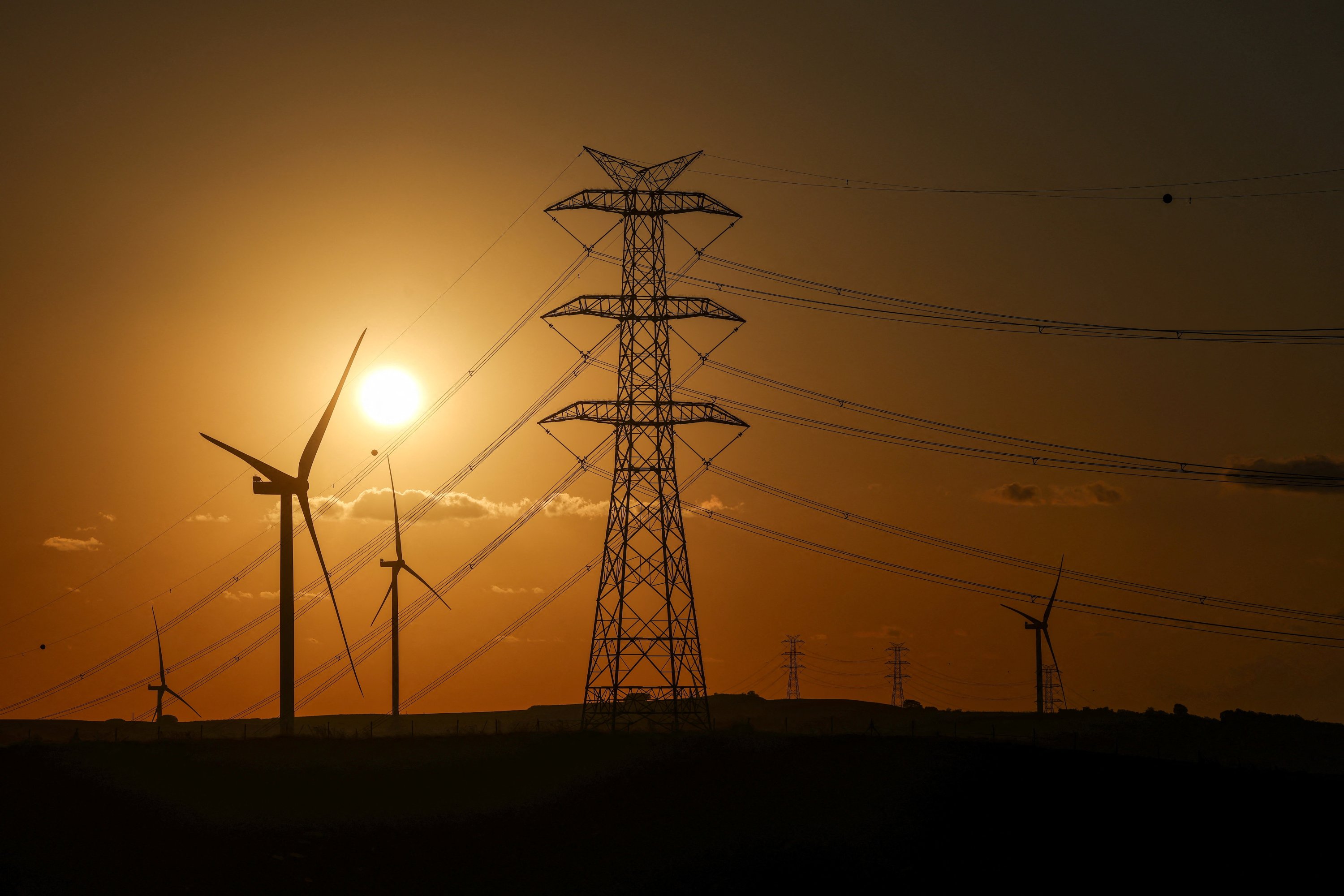
Türkiye's electricity demand increased at an average annual rate of around 5% between 2005 and 2024, marking the strongest growth among member countries of the International Energy Agency (IEA), according to a report.
The expansion has been driven mainly by economic activity, particularly in the industrial and services sectors, the IEA said in its Türkiye Energy Policy Review.
Electricity demand is expected to continue growing in the coming years, with Türkiye's National Energy Plan projecting electricity consumption to reach 510 terawatt-hours by 2035.
The IEA said grids, energy storage, system flexibility and demand-side management will become increasingly critical as renewable capacity expands.
Residential electricity consumption increased 14% from 2023 to 2024, driven by greater use of air conditioning and electrical appliances, as well as the growing electrification of heating and cooking in some parts of the country.
Peak electricity demand also reached a record 59.5 gigawatts (GW) during a heat wave in July 2025.
Renewable energy sources are expected to play a greater role in meeting the country's growing electricity demand.
Renewables accounted for 43% of Türkiye's total electricity generation in 2025, with the share targeted to rise to 55% by 2035.
Solar power capacity is projected to increase from around 20 GW in 2024 to 77 GW by 2035, while wind capacity is expected to rise from 13 GW to 43.1 GW.
The IEA said this rapid expansion will require greater flexibility across the electricity system, alongside investments in grids and energy storage.
Türkiye's energy transition will require not only new generation capacity but also investments to ensure electricity can be reliably delivered and available when demand is high.
In this context, Türkiye's smart grid road map envisages creating a total of 35 GW of flexible resources by 2035.
Of this total, 10 GW will come from rooftop solar and storage, 10 GW from large-scale energy storage, 5 GW from grid management and 10 GW from demand-side management.
Türkiye also plans to significantly increase its electricity interconnection capacity with neighboring countries by 2035.
The country aims to triple its electricity export capacity to 6.75 GW and increase its import capacity fivefold to 6.6 GW. It also intends to build 14,700 kilometers of high-voltage direct-current transmission lines.
The IEA said Türkiye needs to accelerate investments in grids, energy storage and other sources of flexibility to meet rising electricity demand.
IEA Executive Director Fatih Birol said investments in grids, flexibility and energy efficiency, as Türkiye's energy demand continues to grow rapidly, would strengthen energy security, support economic competitiveness and reduce the country's exposure to volatility in international fuel prices.